 ConciseTravel

Warsaw and Krakow are Poland's two essential cities, and they're close enough by fast train that combining them in one trip is straightforward. They're also genuinely different: Warsaw was almost completely destroyed in World War II and rebuilt, while Krakow survived intact. That difference shapes everything about how each city feels.
Why This Combination Works
Warsaw gives you a capital city with a complicated, layered history, a rebuilt old town that's honest about being a reconstruction, and one of the best World War II museums in Europe. Krakow gives you a medieval old town that actually is medieval, a castle, and the Wieliczka Salt Mine nearby. They complement each other well and the journey between them is short enough not to eat into your trip.
Recommended Split
For a 7-day trip: 3 nights Warsaw, 4 nights Krakow. Krakow earns the extra time for Auschwitz-Birkenau (a full day from Krakow) and the Wieliczka Salt Mine.
For a 5-day trip: 2 nights Warsaw, 3 nights Krakow. Warsaw gets compressed but the main sites are walkable and manageable in 2 days.
For a 4-day long weekend: 1 night Warsaw, 3 nights Krakow. Warsaw becomes an arrival/departure city more than a full leg.
Getting Between the Cities
The PKP Intercity express trains (EIP) run Warsaw Centralna to Krakow Glowny in 2 hours 20 minutes to 2 hours 40 minutes. Multiple departures throughout the day. Book through the PKP Intercity website or app. Tickets range from 15 to 60 PLN (roughly 3 to 15 euros) if booked in advance, rising to 150 PLN or more for last-minute bookings. Book ahead for the cheapest prices. FlixBus runs the route for less but takes 4 to 5 hours. Take the train.
Which City to Visit First
Start in Warsaw. International flights into Warsaw Chopin Airport (WAW) are more frequent and better connected than Krakow John Paul II Airport (KRK). Warsaw is also the more intense and historically heavy city; visiting it first and finishing in Krakow's more relaxed old town feels like the right direction of travel.
What Each City Adds to the Trip
Warsaw
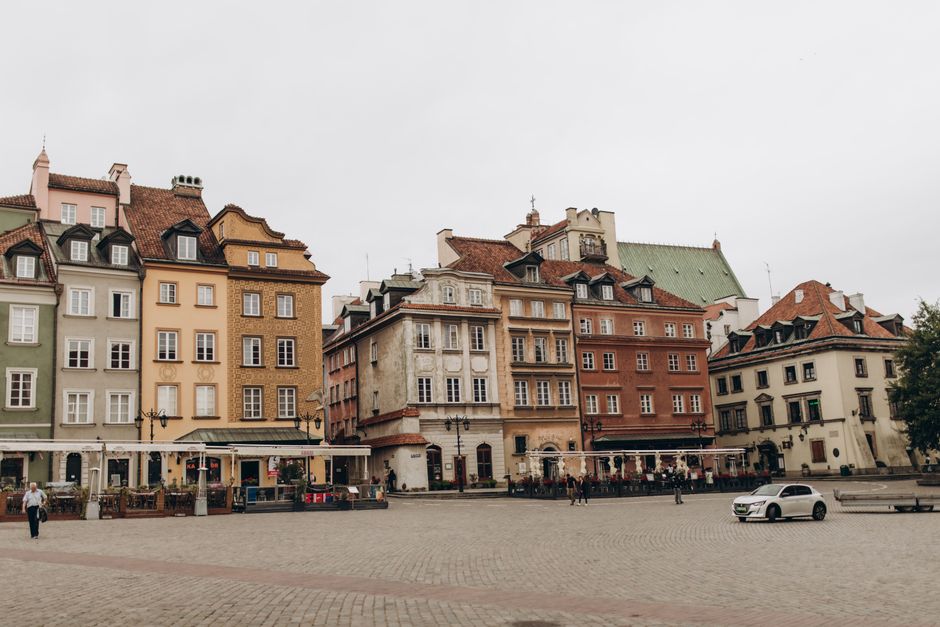
Warsaw's main contribution is historical weight: the Warsaw Rising Museum, the POLIN Museum of the History of Polish Jews, and the rebuilt Old Town that carries its own complicated story about memory and reconstruction. The Royal Route and Wilanow Palace round out the sightseeing. The food scene has improved dramatically and the city's nightlife is underrated.
Krakow
Krakow delivers the medieval fabric that Warsaw can't: Wawel Castle, the enormous Rynek Glowny (Main Market Square), the Kazimierz Jewish Quarter, and St. Mary's Basilica. The day trips to Auschwitz-Birkenau (90 minutes by bus) and Wieliczka Salt Mine (30 minutes by minibus) are among the most significant excursions in Central Europe. Book Auschwitz in advance.