ConciseTravel
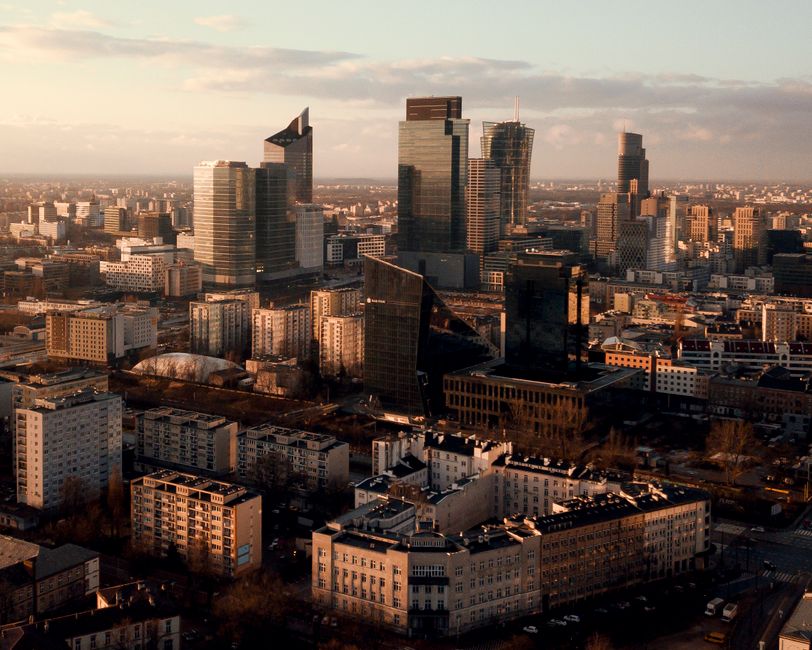
Warsaw is one of Europe's most underrated capital cities for a one-day visit. It's a city that was almost entirely destroyed in the Second World War and rebuilt afterwards, and that history is visible in the contrast between the reconstructed Old Town and the socialist-era architecture that surrounds it. It's also genuinely interesting, well-priced, and easy to navigate.
Getting In and Out
Warsaw Chopin Airport is around 20 to 30 minutes from the city centre by train (SKM or KM lines to Warszawa Centralna). Straightforward and inexpensive. The new Warsaw Modlin Airport (used by Ryanair) is around an hour away by bus. Trains from Krakow take around 2.5 hours; from Berlin, around 5.5 hours.
Morning
The Royal Castle in the Old Town is the starting point. The castle was completely destroyed in 1944 and rebuilt brick by brick between the 1970s and 1980s using historical records and prewar photographs. The reconstruction story is as remarkable as the building itself. Allow 90 minutes for the interior.
Walk through the Old Town (Stare Miasto) and the New Town (Nowe Miasto) adjacent to it. Both are reconstructions, and walking them with that knowledge adds a layer of meaning to what might otherwise seem like a standard Central European medieval quarter.
Wilanów Palace, a baroque royal residence on the south edge of the city, is sometimes called the Polish Versailles. It requires a separate trip (around 30 minutes by bus) and is best saved for a second day.
Afternoon
The Warsaw Rising Museum (Muzeum Powstania Warszawskiego) is the most important museum in the city and one of the most significant in Europe. It covers the 1944 Warsaw Uprising, when the Polish resistance fought the Nazi occupation for 63 days before being crushed. It's comprehensive, moving, and takes around 2 hours. Allow for the emotional weight of the visit.
Lunch in the Śródmieście (city centre) rather than the Old Town: the streets around Nowy Świat and Aleje Jerozolimskie have better value restaurants and give a sense of the modern city rather than just the tourist quarter.
The Palace of Culture and Science, the Soviet-era skyscraper dominating the city centre, has a viewing platform on the 30th floor. It's both the most iconic and most controversial building in Warsaw.
Evening (if time allows)
The Praga district, across the Vistula river from the Old Town, is Warsaw's most authentic neighbourhood: it was one of the few areas not completely destroyed in the war and the pre-war architecture survives. The Różycki bazaar and the Soho Factory arts complex are both worth visiting.
For dinner, Nowy Świat and the surrounding streets have a good concentration of restaurants and bars. Warsaw's nightlife scene is excellent; if you're staying late, the Mazowiecka Street bar strip is the most reliable choice.
What to Skip
The POLIN Museum of the History of Polish Jews is outstanding but requires three to four hours and competes for time with the Warsaw Rising Museum. Pick one for a one-day visit.
Łazienki Park (Palace on the Water) is beautiful and worth a visit, but best combined with a longer stay rather than squeezed into an already full day.
Warsaw has more depth than most visitors expect. Our Warsaw guide covers the full city, the history, and how to see it beyond the Old Town.
Master Warsaw in Minutes
Don't waste hours planning. Get our condensed, digital cheat sheet with everything you actually need.
Shop Guide on Etsy →