 ConciseTravel

The Dish Valencia Is Protective About
Valencia has a complicated relationship with paella. It invented it. And then watched the rest of the world take it, add cream and chorizo and prawns and broccoli, and call it "paella."
Valencians have opinions about this.
The original version — paella valenciana — contains rice, chicken, rabbit, green beans, butter beans, tomato, saffron, water, and olive oil. Snails are traditional and appear in the oldest recipes. There is no seafood. There is no chorizo. There is no cream. There are no peas.
Coming to Valencia and eating a menu-del-día seafood rice is the equivalent of going to Naples and ordering a Hawaiian pizza. Technically a thing. Not the point.
What Authentic Paella Valenciana Contains
The essentials:
- Bomba rice — a short-grain variety grown in the Valencia region that absorbs stock without going mushy
- Chicken — traditionally free-range, cut on the bone (the bone adds flavour to the stock)
- Rabbit — cut into pieces. If you've never eaten rabbit, this is the best possible first encounter
- Green beans (bajoqueta) — the long flat variety, not the round French bean
- Butter beans (garrofó) — large flat white beans, traditional and creamy
- Tomato — grated or finely chopped, cooked down at the start
- Saffron — for colour and flavour. Real saffron, not yellow food colouring
- Olive oil, salt, water
Optional but traditional:
- Snails (vaquetes) — small land snails added during cooking. They add flavour to the rice. Don't pick them out.
- Rosemary — a sprig laid across the pan at the end, briefly flamed
What is never in authentic paella valenciana:
- Seafood (prawns, mussels, squid — that's a different dish, arròs a banda)
- Chorizo (this is not a thing, ever)
- Cream
- Onion
- Peas
- Capsicum/peppers
How It's Cooked
Paella is cooked in a wide, shallow paella pan over an open wood fire or gas ring. The width of the pan is the point — it creates a large surface area so the rice spreads thin, which is essential for the socarrat.
The socarrat is the slightly caramelised, crispy layer of rice at the bottom of the pan. It forms in the last few minutes of cooking when the stock has been fully absorbed and the base is left to dry against the hot metal. It should not be burnt; it should be lightly toasted and fragrant.
The socarrat is the best part of the paella. Valencians argue over who gets it.
Where to Find the Real Thing
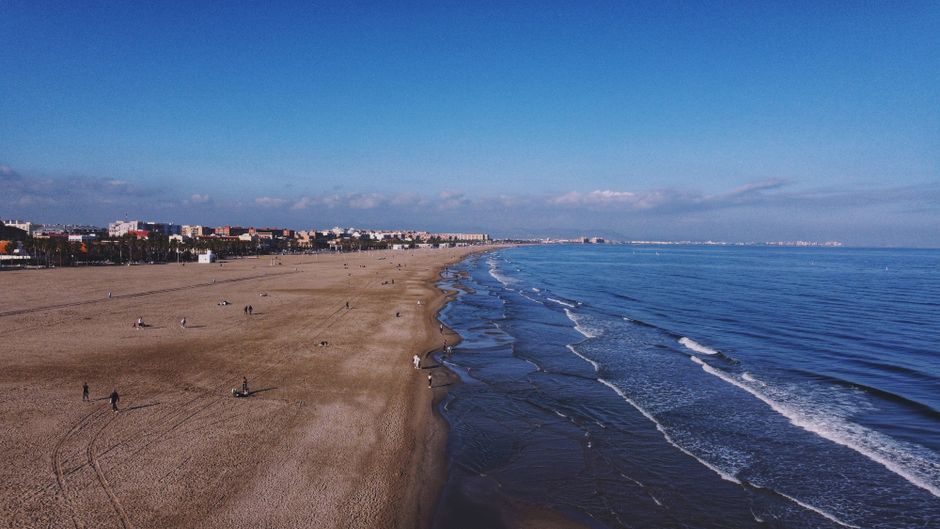
Near the beach: The cluster of restaurants along the Malvarrosa promenade — specifically on Carrer del Rosari and the streets just behind the seafront — includes some of Valencia's most established paella restaurants. These are places that have been serving the dish for 40 or 50 years. They know what they're doing.
Look for:
- A queue of Valencians at lunchtime (not just tourists)
- A menu that clearly lists paella valenciana as a separate, distinct dish from seafood rice
- Staff who will tell you it takes 25–30 minutes (because it's cooked fresh)
- No aggressive touts standing outside trying to get you in
Avoid:
- Restaurants with English menus prominently displayed as the first thing you see
- "Paella available immediately" — this means it's pre-cooked and reheated
- €10 "paella" (this is yellow rice with a few bits in it)
Further inland, the original paella birthplace: The dish actually comes from the huertas around the city — villages like Catarroja, Albal, and El Palmar in the Albufera lake area (30 minutes south of Valencia) are where family paella restaurants have been operating for generations. If you rent a car or take a day trip, a paella lunch at El Palmar is the definitive version.
The Ritual: How to Order and Eat Paella
When: Lunch only. Paella is a midday dish. Ordering paella for dinner at most traditional restaurants will either confuse staff or result in a reheated version. Sit down by 14:00.
How much: Paella is ordered by portions minimum. A single portion is unusual — order for two or four. Most restaurants have a two-person minimum.
Wait: 25–35 minutes from order to arrival. This is the time it takes to cook it properly. This is fine.
The socarrat: When the pan arrives, gently scrape the bottom. If the socarrat is good — lightly toasted, fragrant — you've found a good restaurant.
Don't mix it: Some people add lemon. Fine. Don't stir additional ingredients in. The paella arrives as it is.
Wine: Order a cold dry rosé or a local white. Don't overthink it.
The Honest Take
Rabbit makes it better. If you're uncertain about rabbit, order it anyway — in this preparation, it's tender, mild, and the bone adds everything to the flavour of the rice. The snails are almost invisible in the finished dish; you'll find them by texture more than taste.
The best paella you'll eat in Valencia probably won't be at a famous restaurant. It'll be at an unremarkable-looking place with plastic chairs and a wood fire, at 14:30 on a weekday, because that's where the real thing lives.
For specific recommended restaurants by neighbourhood, what to order alongside the paella, and how to spot the socarrat, the Valencia guide has the detail.
Check out the Valencia Cheat Sheet & Itinerary Planner on Etsy →