ConciseTravel
Jože Plečnik (1872–1957) is the most significant architect in Slovenian history and one of the defining figures of 20th-century European design. He studied under Otto Wagner in Vienna, worked with Jan Kotěra in Prague, and returned to his home city of Ljubljana in 1921 to transform it. Over the following thirty years, working with a modest budget and an extraordinary clarity of vision, he redesigned the riverfront, the bridges, the market, the cemetery, and dozens of public spaces. Ljubljana is, more than almost any other European capital, the product of a single architectural intelligence.
Plečnik's work was recognised with a UNESCO World Heritage listing in 2021.
The Triple Bridge (Tromostovje)
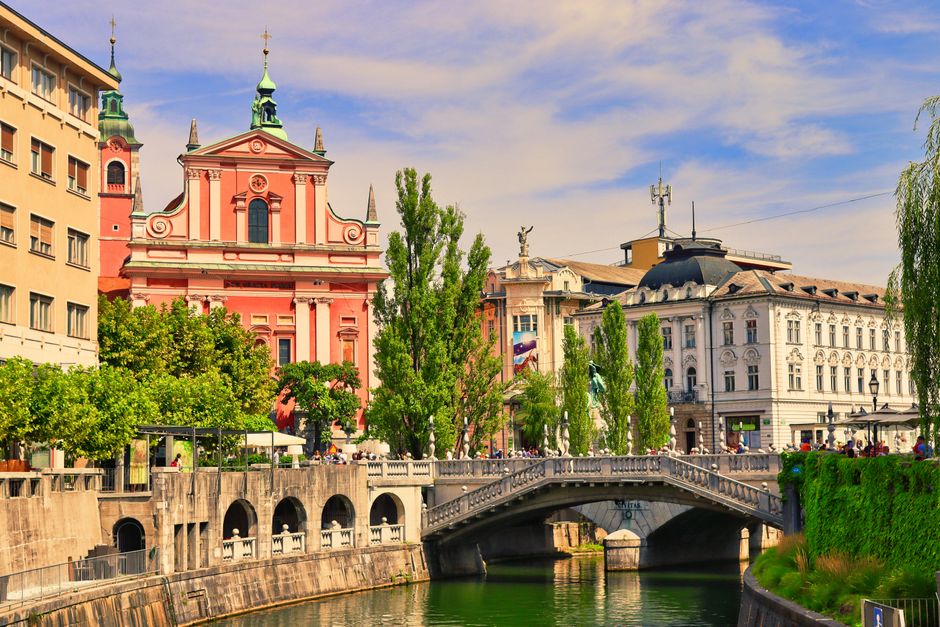
The most photographed structure in Ljubljana. The original central bridge dates from 1842; Plečnik added two flanking pedestrian bridges in 1931–32, creating the distinctive triple structure. The balustrades, the lamps, and the stone detailing are all Plečnik's. From above, the three bridges fan out from the old town onto Prešeren Square. Cross it from both directions to understand the geometry.
The Central Market and Colonnades (Tržnica)
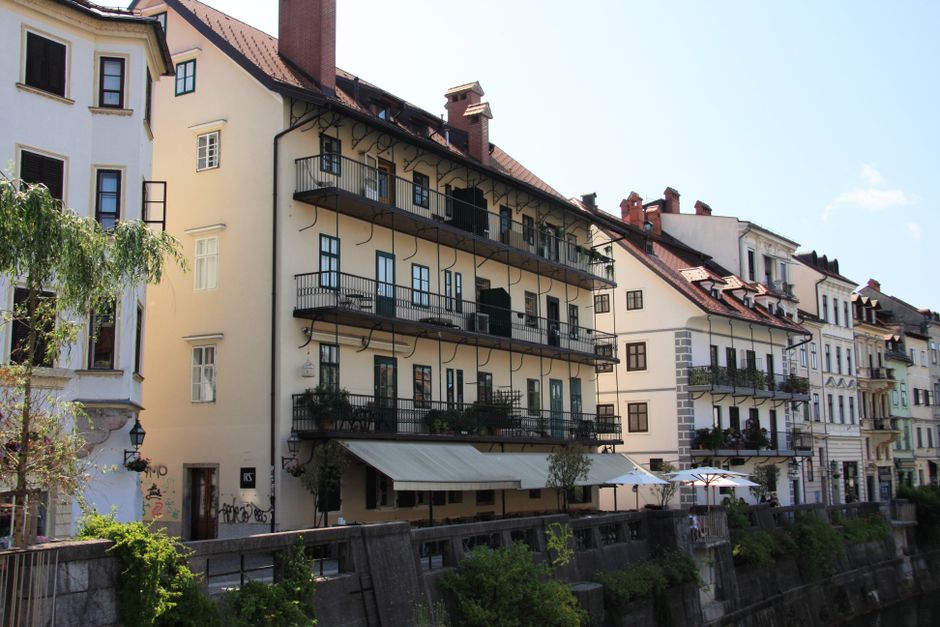
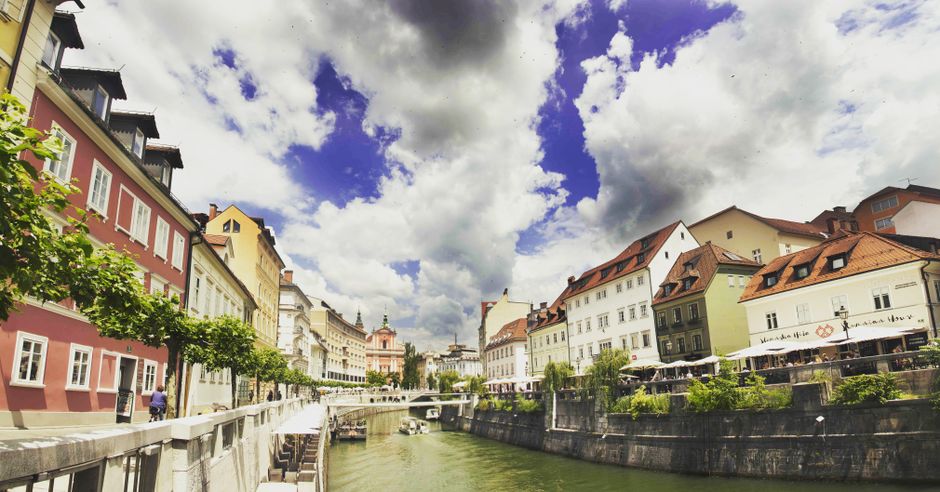
The riverside colonnades running along the Ljubljanica from the Triple Bridge to the Dragon Bridge were designed by Plečnik in the 1940s. The covered arcade on the upper level houses fish and flower stalls; the lower riverside level opens onto the water. The columns are Doric — deliberately referencing classical antiquity while remaining entirely Plečnik's own. The Plečnik Arcade (Plečnikove arkade) on Vodnikov trg extends the market inland.
The National and University Library (NUK)
Plečnik's most debated building. The library on Turjaška ulica (completed 1941) uses a combination of rough stone, brick, and classical references in a way that still divides critics. The main reading room is accessible during opening hours — the transition from the dark granite staircase into the high-windowed reading hall, with light flooding in from above, is one of the great interior sequences in Central European architecture. Worth seeing.
The Butchers' Bridge (Mesarski Most)
A pedestrian bridge added in 2010 designed in the spirit of Plečnik's work — bronze sculptures by Jakov Brdar, the now-famous padlocks attached to the railings by couples (Ljubljana's version of the Paris tradition). A short walk from the Triple Bridge.
Prešeren Square (Prešernov trg)
The central square, framed by the Franciscan Church and the art nouveau Hauptmann House. Plečnik contributed the Franciscan Church forecourt paving and the layout of the square. The equestrian statue is of France Prešeren, Slovenia's national poet.
The Žale Cemetery
Outside the city centre but worth a specific visit if Plečnik's work interests you. The ceremonial entrance gate, the chapel, and the columbarium are among his finest designs — civic architecture of unusual dignity and originality. Tram from the centre.
Our Take
The Triple Bridge and the market colonnades are unavoidable — you'll walk through them regardless. The NUK reading room for the interior experience. The Žale Cemetery if the architecture specifically draws you.
Master Ljubljana in Minutes
Don't waste hours planning. Get our condensed, digital cheat sheet with everything you actually need.
Shop Guide on Etsy →