 ConciseTravel
The Market That Makes Every Supermarket Feel Like a Failure
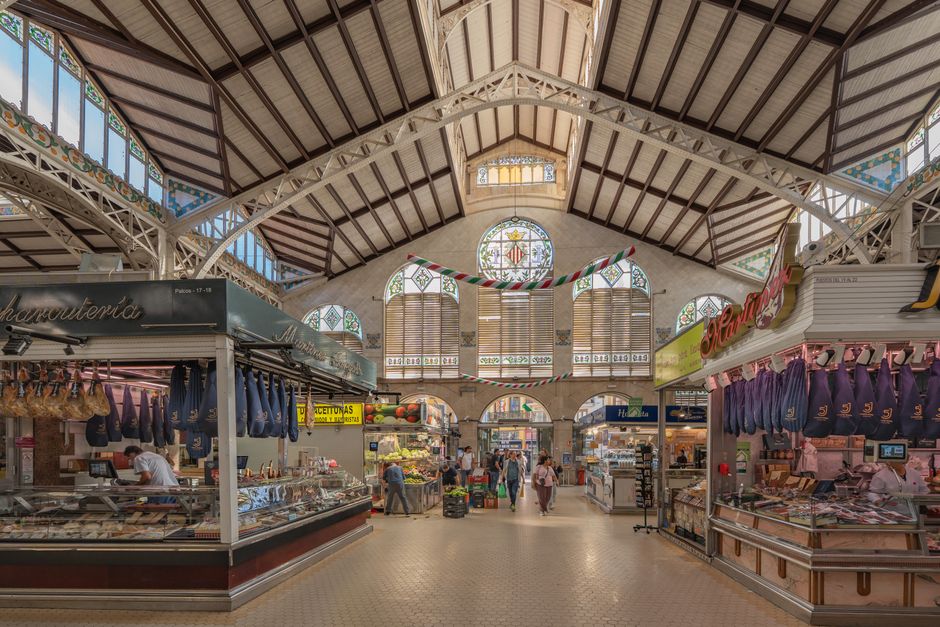
The Mercat Central (Central Market) in Valencia is, by floor space, one of the largest food markets in Europe. It occupies an entire city block opposite La Lonja de la Seda, beneath a domed Modernista building that opened in 1928 and has been running at full capacity ever since.
It sells fresh produce — vegetables, fish, meat, fruit, cheese, olives, spices. It is not a tourist market. It is not a craft fair. It is a working food market where Valencians buy their actual food. That distinction matters, because markets that exist primarily for tourist footfall tend to be expensive, staged, and hollow. This one isn't.
What You'll Find Inside
1,200 stalls spread across the market floor under the famous stained-glass dome. The sections are roughly organised by food type.
Produce and vegetables: Valencia is one of Spain's most productive agricultural regions — the huerta (market garden belt) around the city supplies citrus, peppers, tomatoes, artichokes, and a dozen other staples year-round. The produce here is fresher and cheaper than anything in a supermarket.
Seafood: Valencia is a coastal city and the fish market section reflects it. You'll see whole sea bass, red prawns from Dénia (among Spain's most prized), cuttlefish, clams, and seasonal catches that change with the season. Don't come mid-afternoon when the day's stock is thinning out.
Meat and charcuterie: Full-service butchers, jamón ibérico hanging from the ceiling, local sausages, rabbit and chicken for the paella pots at home.
Cheese and olives: Several dedicated stalls with Valencian and wider Spanish varieties. The olives come in more configurations than you thought possible.
Spices and dried goods: Saffron (essential for paella), dried peppers, rice varieties including the short-grain bomba rice used for authentic paella.
Horchata and fresh juice: Several stalls sell chilled horchata (the tiger nut drink unique to Valencia) and fresh-squeezed orange juice from Valencian oranges. This is where you have your first one.
When to Go
9:00–11:00am: Best time. The market is busy but not overwhelmed. Fish and produce are freshest. Vendors are fully stocked.
11:00am–1:00pm: Busiest period. Tourist groups arrive around this time. Still fine, but expect to queue at popular stalls.
After 1:00pm: Stock starts depleting, some stalls begin closing. The market officially runs until 15:00 on most days, but peak variety is in the morning.
Market days: Monday through Saturday. Closed Sunday.
Avoid: Saturday afternoon during peak tourist season — it gets genuinely hectic.
What to Buy (and What to Eat On the Spot)
To take home:
- A pot of saffron from a dedicated spice stall (substantially cheaper than UK or US supermarkets)
- Bomba rice if you're planning to attempt paella at home
- A cone of olives dressed in the stall's house marinade
- Local almonds and dried fruit
To eat immediately:
- Horchata — cold, milky, faintly sweet, unlike anything else. Order it from one of the horchata stalls inside. Paired with a fartó pastry.
- Freshly squeezed orange juice — Valencia oranges, squeezed to order. Around €2–3 for a large glass.
- Jamón — several stalls will slice and serve ibérico by the portion
To watch:
- The fish section around 10:00am is an experience in itself — the scale and variety of what's on display is remarkable even if you don't buy anything
The Building
The Modernista architecture of Mercat Central is worth appreciating even if you're not shopping. The building was designed by Francesc Guàrdia and Àngel Romaní, opened in 1928, and features:
- A central dome with stained glass casting coloured light across the market floor
- Ornate ceramic tile work and wrought-iron details throughout
- The scale is genuinely impressive — this is not a small neighbourhood market
The exterior is on Plaça de la Reina (facing La Lonja) and is photographically good from across the square.
Practical Notes
- Entry is free — you pay only for what you buy
- It gets busy — keep your bag in front of you in the main hall
- Pricing: Most vendors display prices clearly. Nothing in Mercat Central should cost significantly more than the same product in a Valencian supermarket
- Cards: Many stalls are cash-only. Bring at least €20 in cash
The Combination: Market + La Lonja + Cathedral
These three sit within a 3-minute walk of each other. Spend a morning at the market (09:00–11:00), then cross to La Lonja de la Seda, then the Cathedral. It's the most concentrated history-plus-food-plus-architecture stretch in Valencia.
For the best stalls by section, what to order for a proper market breakfast, and the fastest route between market and La Lonja without getting lost in the tourist crowd, the Valencia guide has the detail.
Check out the Valencia Cheat Sheet & Itinerary Planner on Etsy →


