ConciseTravel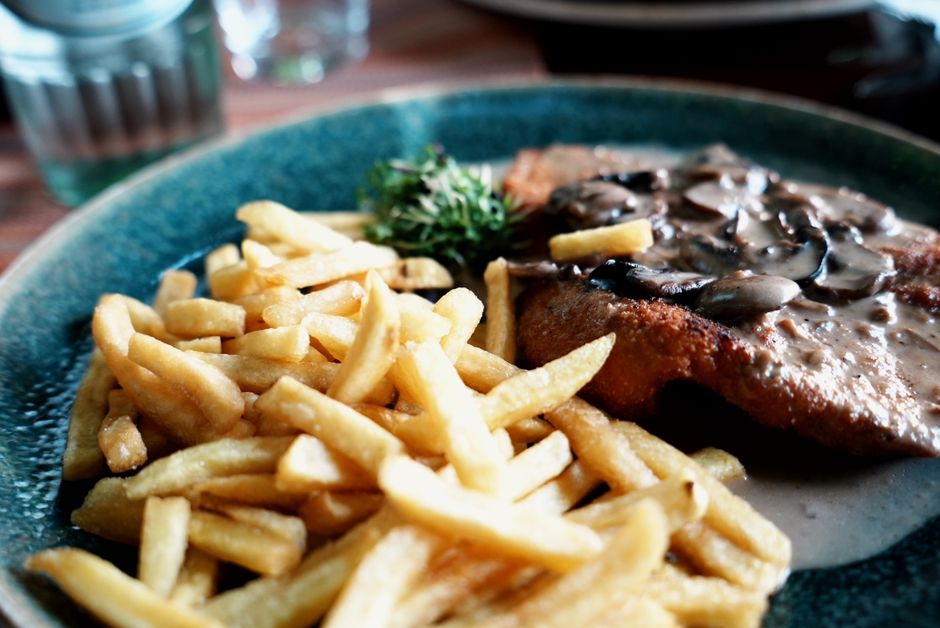
Austrian cuisine does not get the attention it deserves. Salzburg specifically has its own food identity — Alpine, hearty, with one or two dishes so local they barely exist elsewhere. This is what to order.
Wiener Schnitzel: The Real Version vs. the Tourist Version
Wiener Schnitzel is veal. Specifically, it is a thin escalope of veal — pounded flat, breadcrumbed, and pan-fried in clarified butter until golden and slightly puffed away from the meat. It arrives with a wedge of lemon and lingonberry jam on the side.
If a menu says "Schnitzel Wiener Art" (Viennese-style), it is probably pork. Pork schnitzel is fine. It is not Wiener Schnitzel.
How to identify the genuine article:
- The breading should be loose and billowing — not tight to the meat
- It should be larger than the plate
- It should cost around €18–26 — if it is €12, it is pork
- Clarified butter gives it a different flavour than vegetable oil; a real one tastes noticeably richer
The best Wiener Schnitzel in Salzburg tends to come from traditional Gasthäuser (inn-style restaurants) rather than tourist-facing places on the main squares. The Augustiner area and streets south of the Old Town are your best hunting ground. Ask locals; they will have a preference.
Kasnocken: The Alpine Comfort Dish
Kasnocken is cheese spaetzle — small irregular egg noodles tossed with melted alpine cheese and topped with a heap of golden crispy fried onions. It is the Austrian Alps equivalent of mac and cheese, except better in almost every way.
It is heavy, caloric, and exactly right on a cold September evening or after a long walk up to the fortress. It is not a dish for summer salad energy.
Served as a main course, it costs around €12–16 in most Gasthäuser. Sometimes arrives with a small side salad, which is the kitchen's acknowledgment that the dish alone is aggressively rich.
Order it. Do not plan anything strenuous for the following two hours.
The Bosna: Salzburg's Unlikely Hot Dog
The Bosna is a Salzburg-specific fast food item that has become an institution despite — or because of — its humble origins. It was created in 1950 by a Macedonian immigrant named Zanko Todoroff, who adapted a Balkan sausage to local tastes and sold it from a stand near the Mönchsberg.
What it is:
- A bratwurst (sometimes two thin ones) in a baguette-style roll
- Topped with fried onions, parsley, and curry powder — a specific combination that reads as odd on paper and works completely in practice
- Served hot from a market stand, eaten standing up
It costs around €3–5 and takes two minutes to eat. It is not a restaurant dish. Look for it at market stands near the Alter Markt or Universitätsplatz, particularly during morning market hours.
If you are eating one Salzburg street food item, it should be this.
Salzburger Nockerl: Order It Before You Need It
The Salzburger Nockerl is a dessert that arrives as a performance. It is a soufflé-style meringue baked in an oval dish, puffed into three golden mounds representing Salzburg's three hills (Mönchsberg, Festungsberg, and Kapuzinerberg). It is enormous, cloud-like, and made to be shared.
The logistics of ordering one:
- It takes 15–20 minutes to prepare — order it when you order your main course, not after
- It feeds two people comfortably, sometimes three
- It costs around €14–18 at most restaurants
- It must be eaten immediately — it deflates within minutes of leaving the oven
- The flavour is delicate: egg-white lightness, hint of vanilla, served with lingonberry sauce or strawberries
It is theatrical. When the waiter carries it out, other tables will turn to look. This is appropriate.
Do not order it alone unless you are committed to the full experience of eating something the size of a small pillow.
Where to Eat Well in Salzburg Without Paying Fortress Prices
The main tourist zones — immediately around the cathedral, Getreidegasse, the Residenzplatz — are convenient and uniformly overpriced. You are paying rent on the view.
A few practical principles:
- Move two or three streets away from any major square and prices drop significantly
- Lunch over dinner — many Salzburg restaurants offer Mittagsmenü (lunch menus) at around €10–14 for a main course with soup or salad
- Gasthaus over restaurant — informal inn-style places serve the same dishes for less in less theatrical settings
- Ask where locals eat — hotel staff and hostel receptions always know
For a complete neighbourhood-by-neighbourhood eating guide — which streets, which types of venues, and which areas to steer clear of at dinner — the Salzburg ConciseTravel guide has the detail.
Master Salzburg in Minutes
Don't waste hours planning. Get our condensed, digital cheat sheet with everything you actually need.
Shop Guide on Etsy →