ConciseTravel
Seville is one of the most walkable cities in Europe, and it is generous about what it gives away for free. The historic centre is compact, the streets reward slow exploration, and a lot of the best architecture sits outdoors. Here is what to do without spending money.
Barrio Santa Cruz
The old Jewish quarter northeast of the cathedral is one of the most pleasant neighbourhoods in Seville to walk through. The white-washed lanes, hidden courtyards, tiled doorsteps, and the orange trees overhead make it a reasonable argument for slow travel. There is no entry fee and no single destination: the point is the neighbourhood itself. Wander south toward the Jardines de Murillo for a quieter stretch.
The Cathedral Exterior
The Seville Cathedral is the largest Gothic cathedral in the world and charges entry (around €13). The exterior, however, is free and worth taking time over. The scale of the building from street level, the ornate doorways, and the Giralda tower (visible from much of the city) are all experienced from outside for nothing. The tower was originally a minaret from the Almohad mosque that stood on the same site: you can read the transition in the architecture.
The Giralda and Adjoining Courtyard
The Patio de los Naranjos (Courtyard of the Orange Trees), the old ablutions courtyard of the mosque, is accessible free of charge. You can enter from the Calle Alemanes side and look up at the Giralda from within the courtyard. The climb inside the tower is part of the paid cathedral ticket.
Plaza de España
The Plaza de España in the Parque de María Luisa is free to walk and one of the most spectacular public spaces in Spain. Built for the 1929 Ibero-American Exposition, the semicircular building has a canal with rowing boats (small hire fee), tiled alcoves for each Spanish province, and a long ceramic bench that runs the full length of the facade. The plaza and the park around it are free. The tile alcoves are a good place to find the section representing whichever region interests you.
Parque de María Luisa
Seville's main public park borders the Plaza de España and is free to enter. The formal gardens, fountains, and shaded paths make it a good midday retreat when the city is hot. The park contains the Museo Arqueológico de Sevilla, which has free entry for EU citizens and small charges for others; worth checking the current policy before you visit.
The Alameda de Hércules
The Alameda is a long, tree-lined boulevard in the north of the old town, one of the first public promenades in Europe. The Roman columns at the southern end, topped with statues of Hercules and Julius Caesar, bookend the avenue. The atmosphere is relaxed and local: this is not a tourist spot, which is partly what makes it worth visiting.
Triana
Triana across the Guadalquivir river is Seville's ceramics and flamenco neighbourhood and has a distinct identity from the old town. The Mercado de Triana is the covered market at the foot of the Puente de Isabel II, free to walk through in the mornings. The riverfront on the Triana side, looking back toward the Torre del Oro and the cathedral, is one of the best views in Seville.
The Guadalquivir Riverside
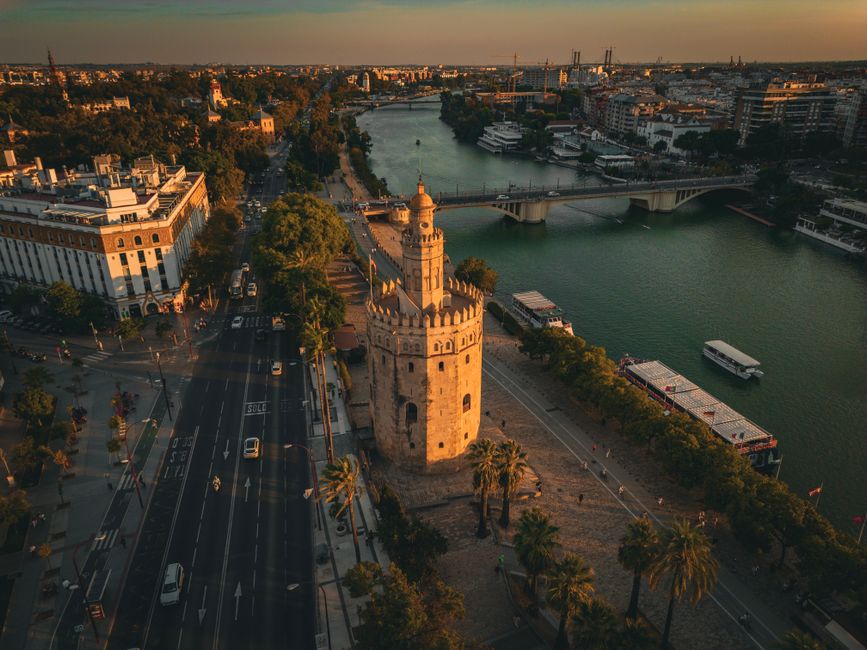
The riverside promenade from the Torre del Oro north to the Puente de la Barqueta is a long, flat walk along the water. The Torre del Oro charges a small entry fee, but the exterior and the waterfront around it are free. The walk covers the oldest part of the port, where Columbus departed for the Americas, and the newer residential areas further north.
The Metropol Parasol (Las Setas)
The Metropol Parasol structure in the Plaza de la Encarnación is free to walk under. The market and archaeological museum inside the base charge entry. The rooftop walkway charges a fee, but the structure itself and the plaza below are free public space. The form of the building, a series of interlocking wooden parasols, is unusual enough to be worth seeing even from ground level.
Palacio de las Dueñas and Neighbourhood Walking
You can walk the streets of Santa Catalina, San Lorenzo, and the parishes north of the old town for free. The Palacio de las Dueñas exterior is visible from the street, and the neighbourhood around it has the same whitewashed lane atmosphere as Santa Cruz but without the tourist density.
Free Museum Entry
The Museo de Bellas Artes de Sevilla in Plaza del Museo has free entry for EU citizens and a small fee for others. It holds one of the best collections of Spanish Baroque painting outside Madrid, including major works by Murillo and Zurbarán. Check current access policy before your visit.