 ConciseTravel
Seville is warm, beautiful and runs on its own clock. First-timers who understand three things (the heat, the meal times and how to book the big sights) have a much better trip than those who arrive expecting another European capital. Here is what we would want to know first.
Season matters more than in most cities
Seville is one of the hottest cities in Europe in summer, regularly passing 40°C in July and August. Sightseeing at midday is genuinely unpleasant then.
The best times for a first visit are spring (March to May) and autumn (October to November). Winter is mild and sunny, and an underrated choice. If you must go in summer, structure the day around early mornings and late evenings.
Eat on Spanish time
Lunch is usually served from around 2pm, and dinner rarely starts before 9pm. Restaurants that are packed at 9.30pm may be empty at 7pm, and some won't serve full meals at "tourist" times at all.
The easiest adjustment is tapas: graze at a bar in the early evening, then have a later dinner, or simply make an evening of several tapas bars.
Book the Real Alcázar ahead
The royal palace and its gardens are the highlight for most visitors, and entry is by timed ticket. Book Real Alcázar timed-entry tickets (GetYourGuide) or through the official site before you go, especially for spring weekends. Morning slots are cooler and calmer.
The cathedral and the Giralda tower are next door. Climbing the Giralda is easier than it sounds, as it uses ramps rather than steps.
The centre is walkable, with one caveat
The main sights are close together, and the old quarter is best explored on foot. The caveat is the shade: in warm months, you'll find yourself planning routes by which side of the street is cooler. Locals do it too.
See flamenco, but choose carefully
Flamenco in Seville ranges from intimate tablaos with serious performers to rushed tourist shows. Small venues are usually better than big dinner-and-show packages. If you prefer to book ahead, flamenco show tickets (GetYourGuide) list the established venues with reviews. Triana, across the river, is the neighbourhood most associated with flamenco tradition.
Siesta is real
Many independent shops close in the mid-afternoon and reopen in the early evening. Big chains and central sights stay open, but plan your shopping for the morning or evening.
Don't skip Triana
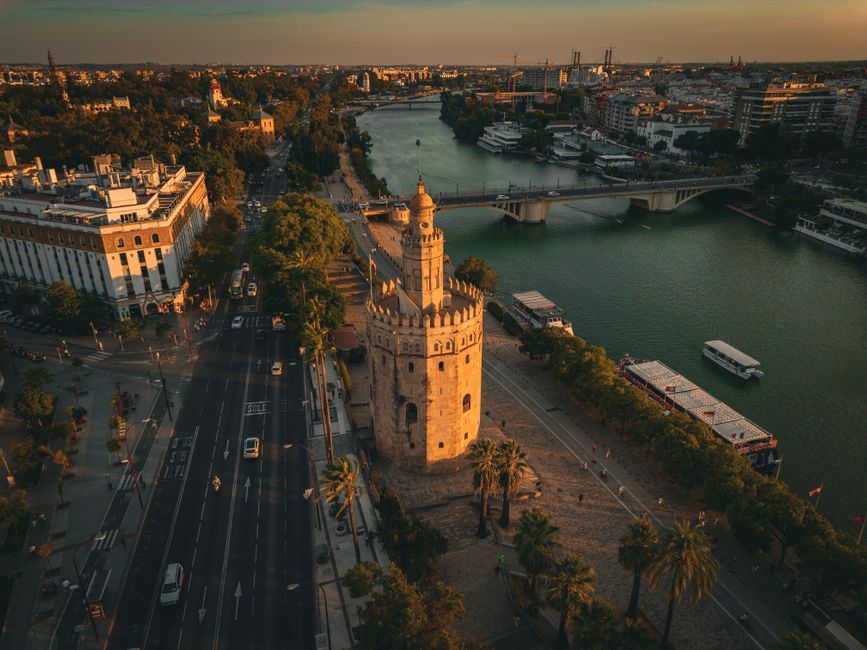
Most first-timers stay on the cathedral side of the river. Crossing to Triana for the market, the ceramic workshops and the riverside bars gives you a more local view of the city, and some of the best sunset views back towards the old town.
How many days do you need?
- Two days: enough for the Alcázar, the cathedral, the Plaza de España and Triana.
- Three days: the sweet spot, with a slower pace and a flamenco show.
- Four days or more: add a day trip to Córdoba or Cádiz.
The short version
Choose your season carefully, eat late, book the Alcázar and save time for Triana. Seville is at its best when you slow down to its rhythm.