ConciseTravel
One Technical Fact Worth Knowing
Despite being called the Lake District, only one body of water here is technically called a "lake" — Bassenthwaite Lake. The rest are "meres" (like Windermere), "waters" (like Coniston Water and Derwentwater), and "tarns" (the smaller mountain lakes scattered across the fells). This is either charming trivia or mild geographic irony, depending on your mood.
There are 16 major bodies of water. Here's what makes each of the main ones worth visiting.
Windermere: The Superstar
England's largest natural lake at 18 kilometres long and 1.6 km wide. Windermere is the first thing most visitors head to, and it earns its reputation — the combination of scale, surrounding fells, and easy access from the train station makes it a natural centrepiece.
Windermere Lake Cruises run year-round between Bowness, Waterhead (Ambleside), and Lakeside. The southern end of the lake has a more commercial feel; the northern end near Waterhead is quieter and more scenic.
Best for: First-timers, boat trips, wide lake views, easy access without a car.
Honest note: In peak summer, Bowness Pier and the lakefront can feel genuinely crowded. The lake itself is big enough to absorb people, but the town around it can feel more like a seaside resort than a national park.
Ullswater: The One Locals Love Most
Often described as the most beautiful lake in the Lake District, Ullswater runs for about 13 kilometres through a valley flanked by dramatic fells. It's where Wordsworth saw the daffodils that inspired the famous poem.
The Ullswater Steamers offer one of the best day-trip structures in the entire Lakes: take the boat to Howtown, walk back along the southern shore to Glenridding. Around 9 kilometres, mostly easy, with the lake always visible and the fells close on both sides.
Best for: Walkers, anyone who wants drama without the crowds of Windermere, steamer trips.
Derwentwater: The One Surrounded by Fells
Derwentwater is smaller than Windermere but arguably more dramatic — it sits in a bowl of mountains that frame the water from every angle. Keswick sits at its northern end, and the Keswick Launch service stops at multiple jetties around the lake throughout the day.
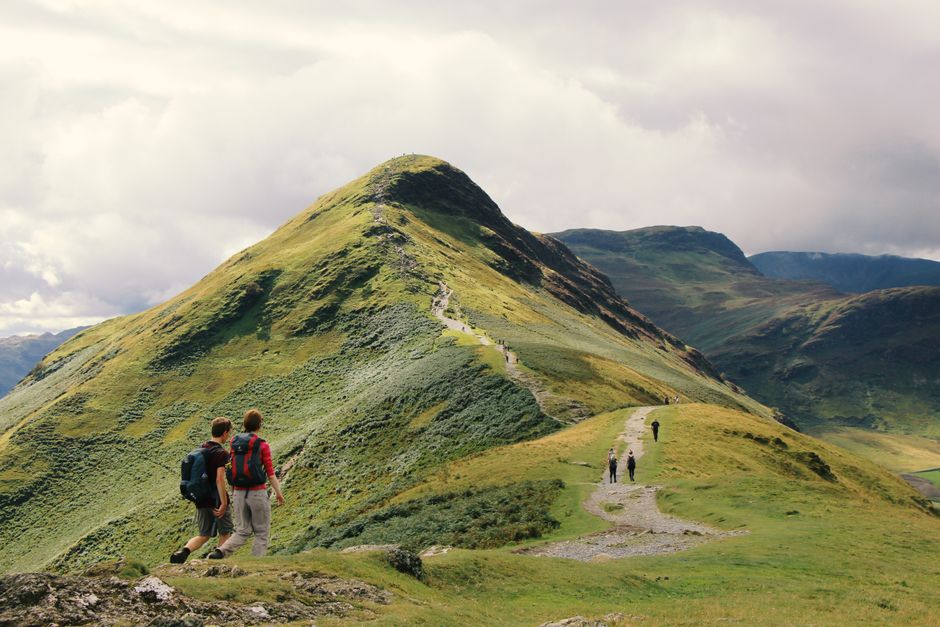
Catbells, one of the most popular family walks in the Lakes, rises directly from its western shore. On a clear day, the view from the summit down to the lake is one of the defining Lake District images.
Best for: The combination of accessible town (Keswick), lakeside walking, and fell access all in one compact area.
Coniston Water: History and Quiet
Coniston Water has two claims to fame. It's where Donald Campbell died attempting a water speed record in his jet-powered boat Bluebird K7 in 1967 — a tragedy still felt locally. And it's linked to John Ruskin, the Victorian art critic who lived at Brantwood on the eastern shore.
The lake itself is long and relatively narrow, with the Old Man of Coniston rising steeply above the western side. It's quieter than Windermere or Ullswater and attracts a slightly different visitor — more interested in the Old Man and the surrounding hills than in boat trips.
Best for: Walkers targeting the Old Man of Coniston, anyone interested in the speed record history, quieter shores.
Buttermere: Small and Properly Photogenic
Buttermere is not large, but it might be the most photogenic lake in the district. The circuit walk around it — about 7 kilometres on mostly flat paths — is excellent and genuinely accessible to most people.
The lake sits between High Stile and Fleetwith Pike, with the valley creating a sense of being properly enclosed by mountains.Best for: The circular walk, photography, a quieter feel, combining with Crummock Water (immediately adjacent) for a longer day.
Wast Water: Remote and Brooding
England's deepest lake at 79 metres. Wast Water sits in the remote western Lakes with the scree slopes of the Wasdale Head fells dropping almost vertically into the water. It's genuinely dramatic in a way that feels different from the other lakes — bleaker, quieter, more serious.
Getting there requires a car and commitment. The road to Wasdale Head is narrow and the valley is one of the most remote in the national park. It's also where England's highest mountain (Scafell Pike) is most commonly climbed from.
Best for: The serious walker, anyone who wants the wild and remote Lake District, Scafell Pike approaches.
A Useful Framework
If you have one day: Ullswater steamer plus the Howtown walk covers more ground than almost anything else you could do.
If you have a full trip: spend time at Derwentwater (northern base in Keswick), Ullswater (a day trip), and either Windermere or Buttermere depending on whether you prefer convenience or solitude.
The ConciseTravel Lake District guide maps out specific routes, timings, and combinations for each lake so you can plan which ones to prioritise for your available days.