 ConciseTravel

This Is a Working Landscape, Not a Theme Park
The Lake District is a national park but it's also farmland, with active farms, working walls, grazing livestock, and communities of people who live there year-round. Around 40,000 people live within the national park boundary. They navigate the same roads, pubs, and paths as the 19 million annual visitors.
Understanding that changes how you interact with the place.
The Countryside Code
The Countryside Code is the official guidance for visiting rural England. It's been around since the 1950s and is worth knowing.
The Key Points
Take your litter home. There are limited bins on the fells and in remote areas. Whatever you carry in, carry out. This includes banana skins, orange peel, apple cores (people think these are fine to leave — they're not in a landscape context), dog waste bags, and anything else you brought.
Close gates behind you. Every time. Even if the gate was already open when you arrived. Gates exist because livestock escape through them. An escaped sheep on a road causes accidents. A Herdwick bull that's got into the wrong field causes farmers considerable grief and expense. Close the gate.
Keep dogs on a lead near livestock. Between 1 March and 31 July particularly, when ground-nesting birds and newborn lambs are vulnerable. Year-round near sheep. A dog doesn't have to be aggressive to cause a sheep to panic, run, and injure itself or abandon a lamb.
Don't light campfires or barbecues in open country. This applies particularly in dry periods. The Lake District had significant wildfire incidents in recent years. Campfires are fine in designated camping areas; on the fells they're a fire risk and they damage the ground.
Stay on footpaths when asked to. The path network is maintained and legally established. Walking off-path, particularly repeatedly, causes erosion on steep slopes and disturbs vegetation.
On the Footpaths
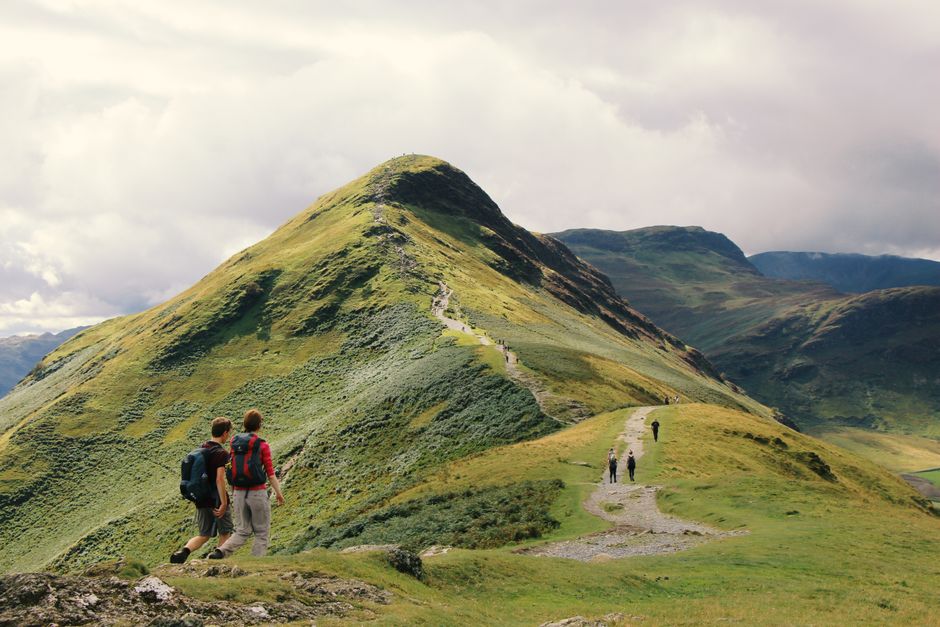
The greeting culture on Lake District footpaths is genuine and expected. When you pass another walker, a "hello," "morning," or simple nod is the normal thing to do. Not doing it feels odd. You don't need to stop for a conversation — a brief acknowledgement is sufficient.
The greeting applies more strongly on the higher fells where the paths are less busy. On a busy lowland path like the Windermere lakeshore walk, constant greetings would be impractical.
Right of way: Walkers going uphill have priority. If you're descending a narrow path and meeting someone coming up, step aside and let them through.
Pace: Don't walk too close behind a slower party without indicating you'd like to pass. A simple "excuse me, could I get past?" is all it takes.
On the Roads
The narrow lane culture of the Lake District has its own etiquette.
Passing places: When you meet an oncoming vehicle on a single-track road, the convention is that the person nearest a passing place reverses or pulls over. This is not about who has right of way — it's about who can move most easily. Use your judgment.
The wave: When someone gives way for you, acknowledge it. A raised hand, a nod, anything. The Lake District road is a social contract, and the wave is its currency.
Cyclists: Give cyclists space. On narrow roads this sometimes means waiting until it's safe to pass rather than squeezing past with centimetres to spare.
In Pubs and Restaurants
Order at the bar. Almost universal in Lake District pubs. Don't sit and wait for table service in a traditional pub — go to the bar.
Queueing: The British queue seriously. If the bar is busy, wait your turn. The bar staff know who was there first, and so does everyone else.
Last orders: When the bell rings or "last orders" is called, place your final drink order. Lingering after closing time is not appreciated.
Tipping: Not mandatory for drinks. For food service, leaving a tip (10-15%) is customary if the service was good. Rounding up is fine.
Muddy boots: Fine in most Lake District pubs. You are not in London. If in doubt, look at what everyone else is wearing.
A Note on British Friendliness
British social communication operates with more indirection than some cultures are used to. "That's interesting" can mean enthusiastic agreement or polite disagreement. "Not bad" typically means good. "Quite good" means very good. You'll get used to it.
What is not ambiguous: people in the Lake District are genuinely friendly to visitors. The phrase "love" used by a Cumbrian person of any age or gender addressing any other person is an affectionate colloquialism, not a romantic advance. "Cheers" means thank you in informal contexts.
Wildlife and Natural Features
Don't feed the wildlife. The Herdwick sheep around popular spots like Catbells are wild grazing animals, not petting zoo residents. Feeding them human food disrupts their diet and makes them increasingly bold around people.
Red squirrels are present in parts of the Lakes (particularly Whinlatter Forest and Thirlmere). They're under conservation pressure from grey squirrel competition and should be observed from a distance.
The ConciseTravel Lake District guide covers local customs and visitor etiquette by area, including the specific rules around camping on the open fells.