 ConciseTravel

Beyond the Scenery
The Lake District is famous for its landscape, and rightly so. But reducing it to hills and lakes means missing a layer of cultural heritage that's genuinely worth your time. Here are the cultural sites that earn their place on an itinerary.
Castlerigg Stone Circle
A stone circle on a hillside above Keswick, dating to around 3,000 BCE. Thirty-eight stones arranged in a ring roughly 30 metres across, with a rectangular setting inside. The setting — a natural bowl in the landscape with mountains visible on all sides — is what makes it extraordinary. Wherever you stand within the circle, the fells frame the horizon.
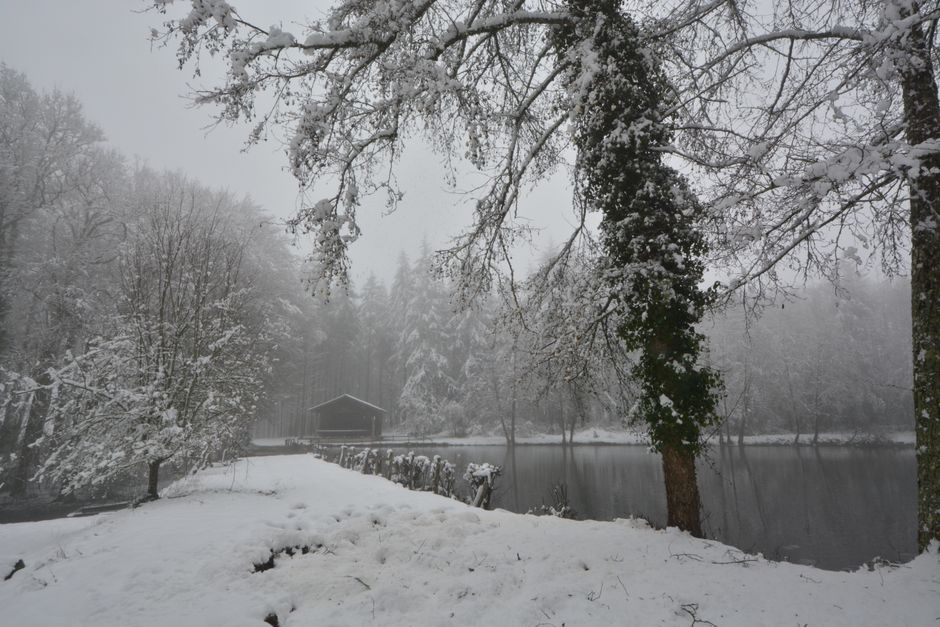
It's free, always accessible, and a 20-minute walk from Keswick town centre. In misty morning light it's one of the most atmospheric places in England.
The people who built it left no written record, so interpretation is speculative. Astronomical alignment theories exist but are unproven. What's not speculative is that this was a significant site for 5,000 years and that standing in it still feels weighted with something.
Go early to have it to yourself. By 10am in summer it has visitors.
Dove Cottage and the Wordsworth Museum
Wordsworth lived at Dove Cottage in Grasmere from 1799 to 1808 with his sister Dorothy, and later his wife Mary. It's small — much smaller than most visitors expect — and deliberately preserved in something close to its original state. Low ceilings, small rooms, a tiny kitchen garden.
The tour is guided and covers both the physical space and the life lived in it. Dorothy Wordsworth's journals, which she kept throughout this period, provide an unusually vivid account of domestic life in the Romantic era. The attached museum has original manuscripts, letters, and artefacts.
Practical notes: Advance booking recommended in summer. Combined tickets with Rydal Mount (Wordsworth's later home) are available.
Hill Top Farm: Beatrix Potter's House
Near Sawrey, a few kilometres from Hawkshead. Beatrix Potter bought Hill Top in 1905 and used it as a creative retreat, drawing the settings for many of her books directly from the farmhouse and its surroundings. She didn't live here full-time — she had a larger house nearby — but she used it as a working space.
The National Trust maintains it carefully, and visitors can walk through the rooms much as she left them. Several illustrations from the books are displayed alongside the actual locations that inspired them, which is a pleasing kind of documentary experience.
Practical notes: Very small capacity — timed entry is required. Book in advance. Access requires a car or a local bus from Hawkshead.
Honister Slate Mine
The last working slate mine in England, in Honister Pass between Buttermere and Borrowdale. Tours run into the mine and explain the extraction process and history of Lakeland slate, which has been quarried here since the 1600s.
The Via Ferrata — an Italian-style protected climbing route along the cliff face using fixed iron rungs and cables — is an option for those who want something more physical. No technical climbing experience required, though a head for heights is essential.
The mine shop sells slate products — coasters, placemats, house signs — made on site. These are among the more genuinely local souvenirs you can buy in the Lakes.
Muncaster Castle
Near Ravenglass, on the western edge of the Lake District. A lived-in castle (the family still occupies part of it) with a reputation as one of England's most haunted buildings. The grounds include a magnificent collection of rhododendrons, an owl centre, and views over Eskdale.
It's further from the central Lakes than most people venture, which keeps it quieter. Worth the drive if you have a day in the western Lakes anyway.
Levens Hall
Just outside the national park near Kendal. Famous for its topiary garden — hedges shaped into extraordinary geometric forms, some said to be over 300 years old. The hall itself is Elizabethan, well-preserved, and impressive. The garden is one of the finest examples of formal topiary in England.
Blackwell Arts and Crafts House
Near Bowness-on-Windermere. A Arts and Crafts movement house from 1900, designed by M.H. Baillie Scott, with original interiors largely intact — tiled fireplaces, carved woodwork, the White Drawing Room with its lakeside view. It also houses exhibitions of contemporary craft.
Less famous than it should be and almost always less crowded than the more obvious attractions.
The Ravenglass and Eskdale Railway
A narrow-gauge steam railway running from Ravenglass on the coast up the Eskdale valley for 11 km. Known locally as "La'al Ratty" (Little Ratty). A working heritage railway that's been running in various forms since 1875. Genuinely charming rather than merely touristy, especially combined with a walk in Eskdale.
The ConciseTravel Lake District guide covers the practical details — opening times, booking requirements, and how to combine these sites efficiently with everything else in the area.