ConciseTravel
The Lake District Is Full of Things Nobody Told You About
The Lake District is England's largest national park and one of its most visited places, which means it's also one of its most explained places. The basic facts — Wordsworth, Beatrix Potter, Windermere, lots of rain — are everywhere. The genuinely surprising things are not.
Here are the facts worth knowing.
1. There Is Only One Actual Lake
Despite being called the Lake District, only one body of water in the entire national park is officially called a "lake": Bassenthwaite Lake. Everything else is a "mere" (Windermere, Esthwaite Water), a "water" (Derwentwater, Coniston Water), or a "tarn."
Windermere — England's largest freshwater lake — is technically a "mere." The Lake District is, linguistically, The Mere and Water and Tarn District.
2. Farmers Had Their Own Number System for Sheep
Traditional Cumbrian sheep counting used a completely separate dialect from standard English, derived from a Celtic language related to Welsh. It goes: yan, tan, tethera, methera, pimp, sethera, lethera, hovera, dovera, dick (one through ten). Farmers used it to count sheep quickly using tally marks on their hands.
The system is still occasionally used, mostly as a regional curiosity rather than daily practice, but it's genuine and documented. "Yan, tan, tethera" has entered pub quiz culture.
3. Politicians Are Banned from a Competition
The annual World's Biggest Liar competition takes place in Santon Bridge, in the western Lakes, every November. Competitors have five minutes to tell the most convincing lie they can, judged by audience response. No props, no scripts — pure improvised falsehood.
Politicians and lawyers are reportedly barred from entering on the grounds that they have an unfair professional advantage. Whether the barring is official policy or tradition varies depending on who you ask. Either way, it's an excellent competition with an excellent name.
4. Beatrix Potter Was a Conservation Pioneer
The children's books are the famous part, but Beatrix Potter spent much of her adult life in the Lake District working as a serious sheep farmer and conservationist. She bred prize-winning Herdwick sheep, served as the first female president of the Herdwick Sheepbreeders Association, and campaigned actively to preserve traditional Lakeland farming practices.
When she died in 1943, she left 4,000 acres of land and 14 farms to the National Trust with specific instructions that they be maintained as traditional working farms in perpetuity. The National Park you walk through today exists, in part, because Beatrix Potter spent her royalties buying it.
5. England's Highest Mountain Is a Serious Undertaking
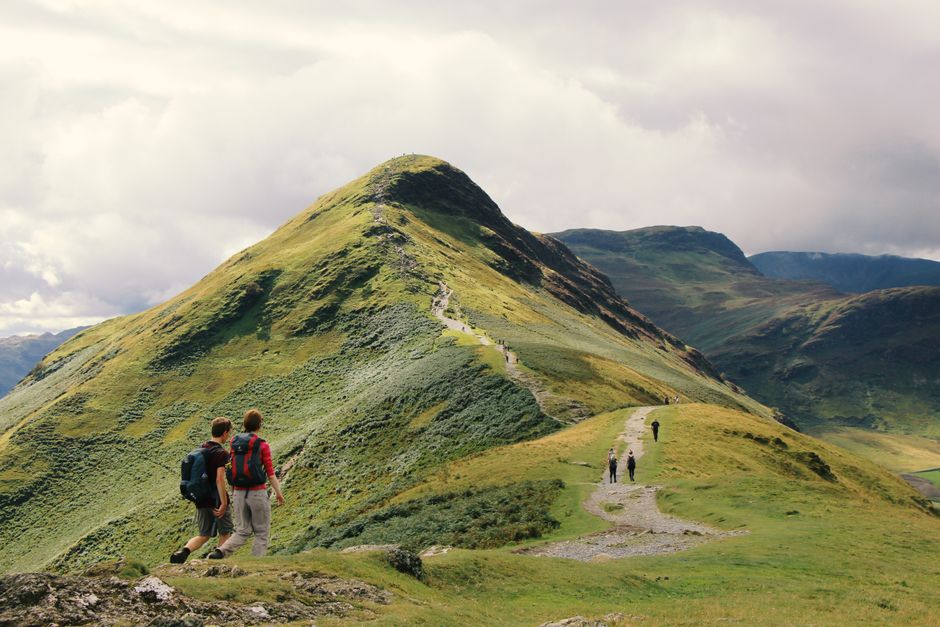
Scafell Pike at 978 metres doesn't sound dramatic by global standards. But it generates around 400 mountain rescue incidents per year across the Lakes, a significant portion involving the Pike. The combination of its popularity (it's on many people's bucket list), its genuinely serious weather, and the tendency of visitors to underestimate it creates a consistent problem.
On a clear summer day it's a hard but manageable walk in proper kit. In cloud with wind, it's a different proposition entirely. Mountain rescue teams describe the most common rescue scenario as: unprepared walkers, inadequate clothing, and deteriorating weather.
6. The Word "Mountaineering" Might Have Been Born Here
Samuel Taylor Coleridge — Wordsworth's friend and fellow Romantic — is credited with some of the earliest recreational rock climbing in the world, on the crags around Keswick in 1802. An ascent of Scafell by Coleridge is documented from that year. The word "mountaineering" is sometimes attributed to this era in the Lakes.
Whether or not the etymology is precisely accurate, the Lake District has a strong claim to being the birthplace of the British rock climbing tradition. The Wasdale Head Inn was for decades the base for early climbers working the Scafell crags.
7. Donald Campbell and the Bluebird Tragedy
Coniston Water was the site of multiple world water speed record attempts in the 20th century. Donald Campbell broke the record on Coniston in 1959. On January 4, 1967, attempting to break 300 mph, his jet-powered boat Bluebird K7 somersaulted at around 320 mph and disintegrated on the water surface. Campbell died instantly.
The wreck and his body remained in the lake until 2001, when they were recovered. He was buried in Coniston churchyard in 2001. The Bluebird has been restored and is displayed at Lakeland Motor Museum in Backbarrow.
8. Honister Slate Is Still Being Quarried
The Lake District's green-grey slate has been quarried for over 400 years and used in the walls and roofs of buildings across the region and beyond. Honister Slate Mine is the last working slate mine in England. The slate from Honister was used in the Houses of Parliament.
When you look at a traditional Lakeland dry stone wall — and you will, they're everywhere — you're looking at centuries of physical labour and a material that comes directly from the landscape it stands in.
9. The Victorian Railway Changed Everything
Wordsworth campaigned furiously against the extension of the railway to Windermere in the 1840s, arguing it would "destroy the character of the Lake District" by making it accessible to the masses. He lost. The railway reached Windermere in 1847 and the Lake District's transformation from an elite destination to a mass one was complete within a decade.
Wordsworth was both wrong and right. The railway democratised access to one of England's most beautiful places. It also began 175 years of infrastructure pressure that the national park is still managing today.
10. The Ospreys Came Back
Ospreys were absent from England for over 150 years before a pair began nesting near Bassenthwaite Lake in 2001. They've nested successfully there most years since. You can watch them from the osprey viewpoint at Dodd Wood near Mirehouse — the RSPB runs a viewing point with telescopes during the nesting season (April to August).
It's one of the more remarkable conservation success stories in English wildlife.
11. There Are 214 Wainwright Fells and People Collect Them All
Alfred Wainwright's seven-volume Pictorial Guide to the Lakeland Fells, published between 1955 and 1966, describes 214 fells with hand-drawn maps and notes written in a distinctive personal style. The guides became classics of English countryside literature and spawned an entire sub-culture of "Wainwright bagging" — completing all 214 summits.
Completing all 214 Wainwrights typically takes several years of dedicated walking. A few have done it in under a year. One (Steve Birkenshaw in 2014) ran all 214 in under 7 days.
12. The Lake District Has Mild Winters
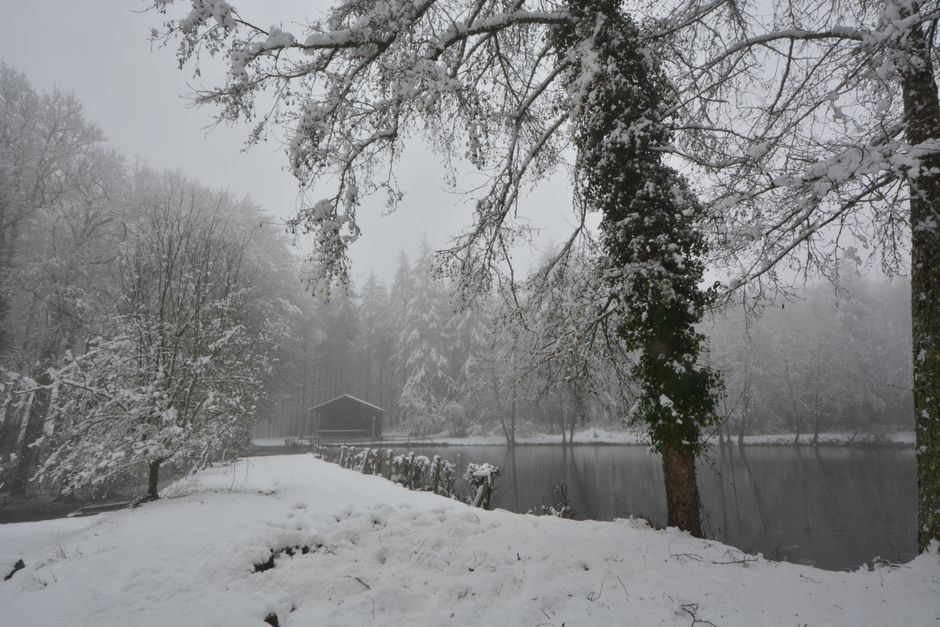
Given the weather reputation, this is surprising: the Lake District has some of the mildest winters in northern England, thanks to the Gulf Stream influence on the western coast. Temperatures below -5°C in the valleys are unusual. Snow in the valleys is relatively rare, though the high fells can have snow cover from November to April.
This makes winter walking significantly more accessible than the reputation suggests — with proper kit and fell-specific weather checking, walking in the Lake District in January can be cold, quiet, and extraordinary.
The ConciseTravel Lake District guide covers all of these angles in practical terms, helping you plan a trip that gets past the obvious and into the genuinely good stuff.