ConciseTravel
Prague's Old Town Square is one of the most photogenic public spaces in Europe. The Gothic towers, the baroque churches, the astronomical clock: it looks exactly like the city it's supposed to represent. It's worth seeing. It's worth about 30 minutes.
What it's not worth is the two or three hours most first-time visitors spend there, returning to it repeatedly as a navigation anchor, eating at the restaurants around its perimeter, and queuing for clock viewings that play out every hour on the hour without much variation.
Prague has genuinely better things to offer than its most photographed square.
What the Square Has Become
Old Town Square draws somewhere around 8 million visitors a year to a space that was not designed for volume. At peak times in spring and summer, it operates less like a public square and more like a theme park: staged, expensive, and optimized for the transaction rather than the experience.
The restaurants facing the square charge two to three times what you'd pay two streets away for comparable food. The mulled wine and trdelník stalls operate on the same logic. The horse-drawn carriages are a fixture that locals find baffling. The Astronomical Clock, to be honest, does very little on the hour: small figurines appear, a skeleton rings a bell, it's over in 60 seconds.
None of this is a revelation to anyone who's done five minutes of research. And yet the square remains the gravitational center of most itineraries.
The Charles Bridge Replication Problem
The same issue applies to Charles Bridge, which draws similar criticism. The bridge itself is a 14th-century engineering achievement with 30 baroque statues and one of the best skyline views of Prague Castle. That's worth seeing. But it's worth seeing once, briefly, and ideally before 8am or after 9pm when the tour groups clear out. Spending an hour on it at noon, wedged between groups and souvenir sellers, is not the experience the bridge justifies.
Prague's tourist center has the density problem of a city that became a major destination faster than its infrastructure could absorb. The historic core is genuinely beautiful and genuinely overwhelmed. The solution is simple: spend less time in the core.
What Prague Looks Like Away From It
Cross the river from the Old Town and the city opens up. Malá Strana, the Lesser Town below the castle, gets a fraction of the foot traffic of the Old Town despite being immediately adjacent to the main tourist circuit. Its streets are steeper, quieter, and architecturally just as interesting. The courtyards and lanes between the Nerudova and Vlašská are exactly what people come to Prague looking for, without the crowd.
Vinohrady and Žižkov, east of the New Town, are residential neighborhoods with excellent bar and cafe culture and almost no tourists during the day. The Žižkov Television Tower is genuinely strange and worth the detour. The neighborhood bars charge local prices because local people use them.
Holešovice, north of the center, has the post-industrial creative-neighborhood energy that Amsterdam's NDSM Wharf has and London's Shoreditch had before it became expensive. A morning there followed by a walk along the river back toward the center covers a side of Prague that most visitors never see.
The Castle Circuit
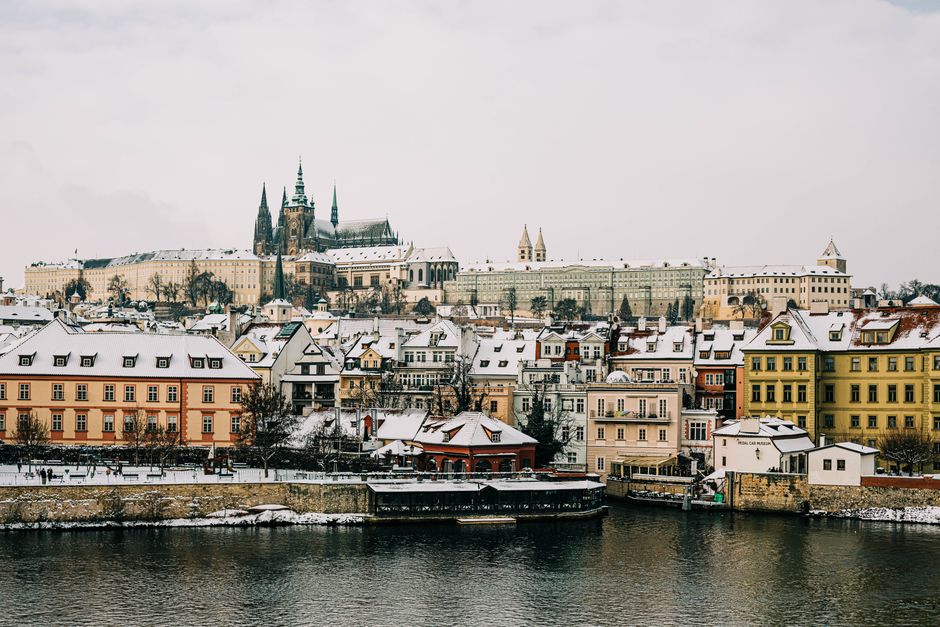
Prague Castle is unavoidable and rightly so. The complex is enormous and includes St. Vitus Cathedral, which is one of the more impressive Gothic buildings in central Europe. What to do with it: buy the circuit ticket, arrive at opening time, spend a morning. That's sufficient. The castle views back across the city to the Old Town are excellent and justify the hill.
What to avoid: spending your best morning hours in the Old Town square waiting for the astronomical clock, then arriving at the castle tired in the afternoon.
The Practical Reframe
Prague rewards travelers who treat it as a walking city and navigate by neighborhood rather than landmark. The major sights are concentrated, well-documented, and easy to cover quickly. The neighborhoods take longer and give you more.
Old Town Square for 30 minutes as orientation. Charles Bridge before breakfast. The castle in the morning. The rest of your time in Malá Strana, Vinohrady, or wherever you find yourself wandering.
That's the version of Prague worth having.
Our Prague city break guide covers the castle circuit, the best neighborhoods by day and night, and how to structure your time so you're not spending it in the most crowded square in Central Europe.