ConciseTravel
Prague has a reputation problem. The stag-party headline has stuck to it for two decades, which puts off some travellers and attracts others for entirely the wrong reasons. The reality: Prague is a UNESCO-listed, architecturally extraordinary city with a serious cultural scene, exceptional food and drink, and prices that still undercut most of Western Europe. It rewards people who come with clear eyes.
The Stag Party Zone Is One Small Area
The worst of the crowds and noise concentrates almost entirely along Wenceslas Square's lower end and a handful of streets in Old Town near the Astronomical Clock. Walk ten minutes in any other direction and you're in a different city: quieter, more local, genuinely lovely.
Prague has eight significant inner districts. Vinohrady, Žižkov, Holešovice, and Smíchov are all thriving, largely tourist-free neighbourhoods. Most first-time visitors never leave the 1st district and come back thinking that's all there is. It isn't.
The Astronomical Clock Is Frequently Disappointing
The Astronomical Clock in Old Town Square is one of the most visited sights in Europe. Crowds form 10 minutes before each hour, waiting for the mechanical figures to appear. The performance lasts about 45 seconds and moves very slowly.
It is worth seeing once. It is a beautiful clock and the square around it is genuinely spectacular. But temper expectations for the mechanism itself. The real show is the architecture framing it.
The Castle Complex Takes More Time Than Expected
Prague Castle is the largest ancient castle complex in the world. It is not a single building — it is an entire hilltop city of palaces, cathedrals, gardens, and galleries. Some visitors allocate two hours and leave having seen only the exterior.
Budget at least half a day if you want to do it properly. There are multiple ticket types covering different combinations of buildings. Know which parts you actually want to see before queuing.
Prices Vary Wildly by Location
A beer costs roughly three to four times more in a pub directly on Old Town Square versus one two streets back. Czech food at an authentic pub (hospoda) costs considerably less than an international restaurant near the main sights.
Neither is wrong. But knowing that proximity to the tourist grid costs a premium helps you make the choice deliberately.
Czech Crowns, Not Euros
The Czech Republic uses the Czech koruna (CZK), not the euro. ATMs and card payments work broadly, but exchange bureaus in tourist areas use rates that feel helpful and aren't. Withdraw from a bank ATM in the local currency and decline the bureau's conversion offer.
This matters more in Prague than in many cities because the price differences are large enough for the exchange rate to be genuinely consequential.
The Metro Is Excellent and Underused by Tourists
Prague's metro has three lines and covers the key areas of the city efficiently. It is clean, frequent, and cheap. Most first-time visitors end up walking everywhere because the centre looks small on a map — and the centre is walkable — but the Castle, Vinohrady, and areas north of the river involve more distance than they appear.
Trams are the other secret: a dense, reliable network covers nearly every corner of the city and gives you street-level views into neighbourhoods the metro doesn't reach.
Hill Geography Surprises People
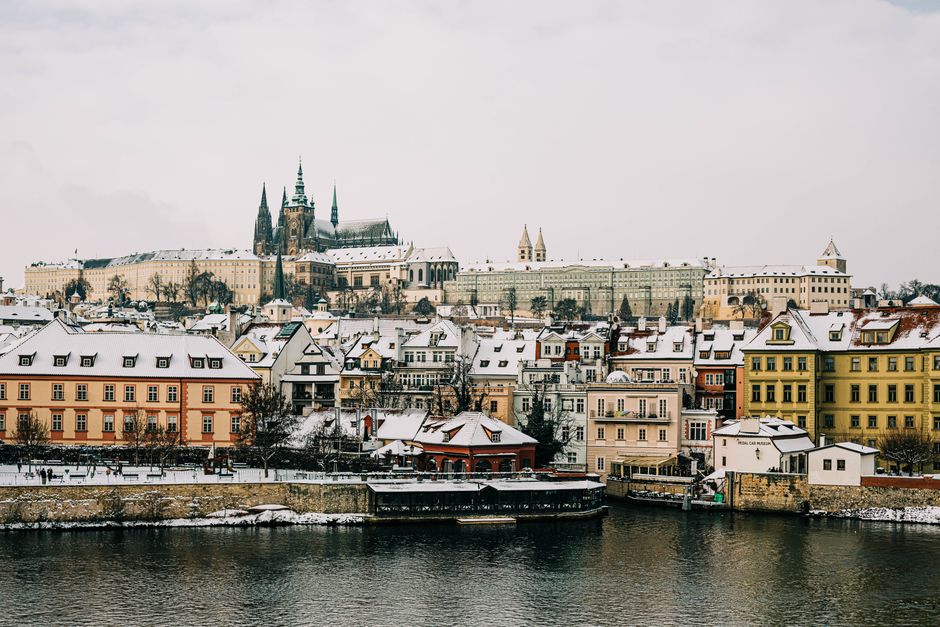
Prague is not flat. Hradčany (the Castle district) sits high above the river. Vinohrady rises steeply from the city centre. The Lesser Town below the castle involves a serious climb from the river to the castle gates. Comfortable walking shoes are not a suggestion.
The River Is a Feature, Not a Boundary
The Vltava River runs through the middle of Prague, and many visitors treat it as a dividing line — spending their time almost entirely on the Old Town side. The Lesser Town (Malá Strana) and Castle District on the left bank are among the most beautiful parts of the city. The Charles Bridge is the obvious crossing, but Malá Strana's baroque streets, gardens, and riverside cafes deserve proper time.
Beer Culture Is Specific
Czech lager culture has its own rules. Pilsner Urquell and Kozel are the benchmark Czech lagers, but local unpasteurised (nepasterizovaný) draft beer in a decent hospoda is often the best thing you'll drink in the city. Beer is typically served without being asked — in the Czech tradition, if your glass approaches empty, another appears. Say "ne, dekuji" (no, thank you) if you're done.
Summer Crowds Are Dense
Prague's Old Town in July and August is crowded in ways that can make sightseeing feel like queuing. May, September, and October give you good weather with substantially thinner crowds. January and February are cold but peaceful, and the city looks extraordinary in frost.