ConciseTravel
Prague has spent two decades on the European city break circuit, and that visibility comes with consequences. The Charles Bridge at 11am in July contains roughly 600 people and 400 selfie sticks. The good news: the city is still exceptional, and the timing question has a clear answer.
Spring (March to May)
Crowd Curves Starting to Rise
Prague's spring starts modestly. March sees temperatures between 4°C and 10°C and relatively light tourist traffic. The Easter markets in Old Town Square are genuinely lovely and draw weekend crowds in late March and April, but outside those specific weekends the city remains manageable.
April is a pivot month. The weather improves (10°C-16°C), the trees along the river bloom, and visitor numbers start climbing meaningfully. Easter weekend itself brings a noticeable surge -- prices tick up, the Old Town gets busy, and accommodation availability tightens.
May is warm (16°C-20°C) and increasingly popular. Still not summer-level pressure, but you'll want to book ahead. Central hotel rates in May typically run £100-£160 per night, with good options in Vinohrady or Zizkov available for less.
Summer (June to August)
Peak Season, Peak Everything
Summer transforms Prague into one of Europe's busiest city break destinations. Temperatures reach 24°C-28°C, the rooftop bars fill up, and the historic centre operates at maximum tourist density. The Charles Bridge, Prague Castle, and Old Town Square all become exercises in patience rather than exploration.
July and August see hotel prices peak at £150-£280 per night for central options -- high by Prague's usual standards. Stag and hen parties, which Prague has attracted in volume since the early 2000s, are most visible in summer evenings. This doesn't ruin the city, but it shapes certain areas after 9pm.
June is the strongest summer month for actually experiencing Prague well. Crowds are building but not yet at July peaks. Long evenings are ideal for the viewpoints -- Letna Park terrace, Visegrad, and Petrin Hill are all best in the evening light. Book the major sites but don't panic.
Autumn (September to November)
The Window That Consistently Delivers
September holds summer warmth (18°C-23°C) while shedding summer crowds. After the first week, the tourist volume drops noticeably and hotel rates fall 20-30% from August. The Vltava riverbanks, the castle district, and Mala Strana all reward walking in autumn in a way that summer's compressed energy doesn't.
October is excellent and somewhat undersung. Temperatures run between 10°C and 16°C -- bring layers but don't worry -- and the crowds thin to a level where spontaneous wandering works again. Weekends remain lively, particularly in October when Prague sees a bounce from leaf-peepers and the jazz festival (Prague Autumn, running through the month), but nothing like summer pressure.
November quietens sharply. Rain increases, the days shorten, and by mid-November the city is firmly in off-season mode. Prices drop to some of the year's lowest levels. For short breaks focused on the castle complex, the museums, and the cafe culture, it works well.
Winter (December to February)
Christmas Saves December
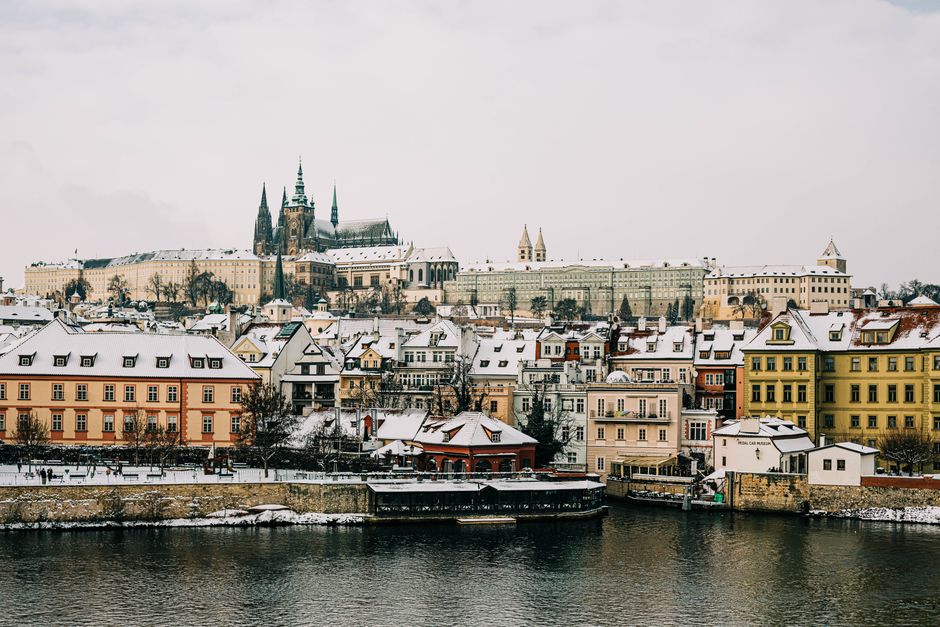
Prague's Christmas markets run from late November through late December and rank among the best in Central Europe. Old Town Square and Wenceslas Square both get markets that feel genuinely festive rather than corporate. The city looks exceptional under snow, which is possible from December onwards. Hotel rates spike around Christmas and New Year (£130-£220 per night) and then fall sharply in January.
January and February are the quietest months of the year. Temperatures drop to -2°C to 4°C and some days are genuinely cold, but the city is navigable on foot with reasonable clothing. The Charles Bridge at 7am in January with a light frost on the cobblestones is one of the best free views in Europe. Museum occupancy is low, prices are low, and the crowds are gone.
The honest downside: some smaller restaurants and bars thin their winter opening hours. Prague's outdoor cafe culture disappears. But for pure city exploration value, January and February are hard to beat on price.
Key Events to Know
- Easter Markets (late March to early April): Old Town Square. Lovely but crowded on weekends.
- Prague Spring Festival (May): Classical music festival. Niche but worth noting for accommodation demand.
- Prague Autumn Jazz Festival (October): Atmospheric and low-key. Minor effect on hotel rates.
- Christmas Markets (late November to 23 December): Significant visitor draw. Book accommodation early.
The Verdict
Best window: late September to mid-October. Comfortable temperatures, meaningful crowd reduction from summer, good hotel availability at fair prices, and the city at its most photogenic before winter closes in.
Runner-up: early March, if budget is a priority. Cold, yes, but manageable -- and Prague in quiet mode, before the spring surge, is genuinely worth it. Hotel rates are near their annual floor.
Our Prague city break guide covers the castle complex without the confusion, the best neighbourhoods by type of traveller, and how to structure two to four days to get the most out of a city that rewards a bit of knowledge.