 ConciseTravel

Brussels gets an unfair reputation as a grey city of EU offices. It actually has one of Europe's most beautiful squares, excellent food, a brilliant beer culture and a quirky side most visitors miss. Here's what we'd want to know before a first visit.
The Grand-Place is genuinely spectacular
The Grand-Place, ringed by ornate gilded guildhalls and the Gothic town hall, is one of the most beautiful squares in Europe. See it twice: once in daylight and once at night, when it's lit up.
It's a bilingual city
Brussels is officially bilingual, in French and Dutch, so street signs, stations and menus appear in both. Most people in the centre speak French day to day, and English is widely understood.
Manneken Pis is tiny
The famous statue of a little boy is much smaller than people expect. See it, but don't make a special trip. He's often dressed in costumes, which is part of the fun.
Eat waffles and frites properly
- Waffles: the Brussels waffle is light and rectangular, the Liège waffle is denser and sweeter. Locals often eat them plain or with just sugar. Piles of cream and toppings are mostly for tourists.
- Frites: Belgian fries are double-fried and served in a paper cone, with a choice of sauces from a friterie.
- Moules-frites: mussels and fries, a classic.
- Chocolate: Brussels has excellent chocolatiers. A Brussels chocolate and beer tasting tour (GetYourGuide) covers both of the city's great obsessions.
Beer is a serious culture
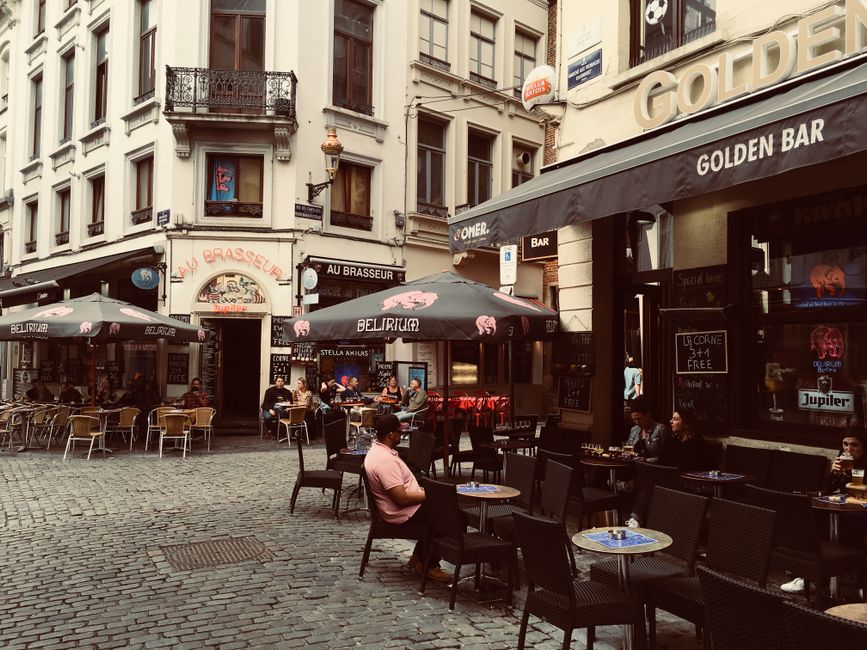
Belgium has an extraordinary beer tradition, from Trappist ales to lambic and gueuze, the sour beers brewed around Brussels. Many bars have long beer menus. Each beer usually comes in its own glass.
Pace yourself, as many Belgian beers are strong.
Look for the comic-strip murals
Brussels is the home of comic art, from Tintin to the Smurfs. Murals of comic characters are painted on buildings across the centre. Following the comic book route is a fun way to explore.
Avoid the restaurant touts
On the Rue des Bouchers near the Grand-Place, waiters stand outside and try to pull you in. Prices can be high and quality variable. Walk a few streets further for better food.
Easy day trips
Brussels is a great base for Belgium's other cities, all well connected by train:
- Bruges, about an hour away.
- Ghent, about 30 minutes.
- Antwerp, about 45 minutes.
How many days do you need?
- One day: enough for the Grand-Place, the old centre, waffles, frites and a beer café.
- Two days: time for a museum or two, such as the Magritte Museum or the Musical Instruments Museum, plus the Atomium or the European Quarter.
- Three or four days: add day trips to Bruges, Ghent or Antwerp, each under an hour by train.
For most first-timers, two nights in Brussels plus a day trip is the sweet spot. From the UK, the Eurostar makes it one of the easiest city breaks to reach without flying.
The short version
Brussels rewards curiosity: look past Manneken Pis, eat and drink properly, and use the station for easy day trips. Two nights plus a day out is the sweet spot for a first visit.