ConciseTravel
Vieux Lyon is the reason people visit Lyon. Not because it's the biggest attraction, but because it's the most complete medieval and Renaissance neighbourhood surviving in France. Walk here for 30 minutes and you're not seeing a restored facsimile — you're walking through an actual functioning old town where people live, work, eat, and argue about parking.
Layout and Navigation
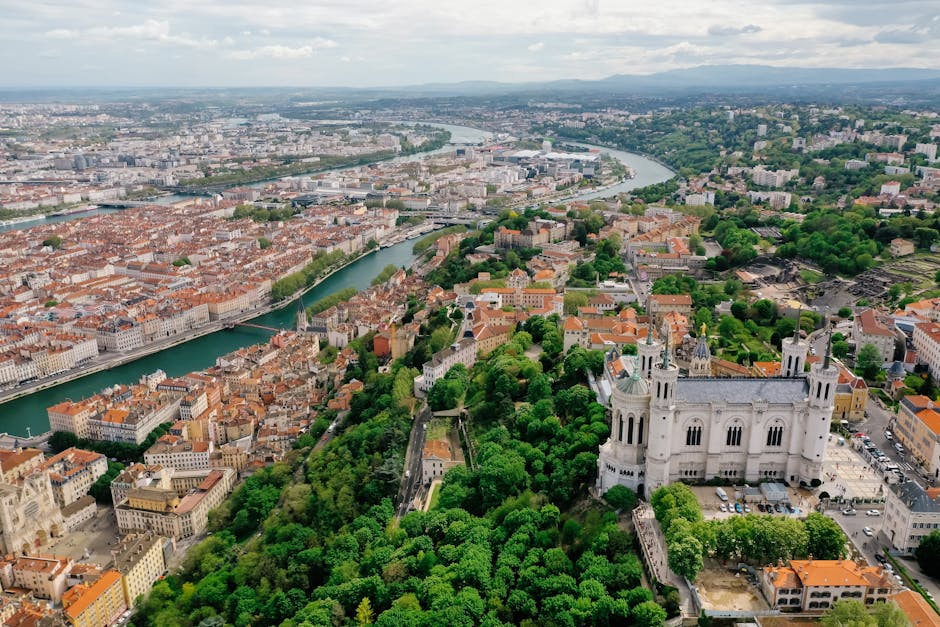
Vieux Lyon occupies the western bank of the Saône River. It's bounded by Rue Saint-Jean to the east (running along the river) and the hills rising toward Fourvière to the west. The neighbourhood is less than a kilometre across, but vertically it's complex — streets wind upward, buildings stack on top of each other, and the traboules (covered passages) cut through everything.
Main streets:
- Rue Saint-Jean: The spine of Vieux Lyon, running north-south along the river. This is the commercial street — galleries, shops, restaurants, tourists.
- Rue Juiverie: Parallel to Rue Saint-Jean, slightly less commercial, more residential feel. Excellent for exploring without crowds.
- Rue du Boeuf: Another parallel street, even quieter, excellent small galleries and hidden restaurants.
- Rue Mercière: The southern edge, less visited, more local.
The streets aren't organized in a grid. They're medieval paths that follow the terrain. You'll turn a corner onto a small square (place), then immediately into a narrow lane. This chaos is the point.
What You'll Actually See
Renaissance facades: The buildings here date from the 15th-17th centuries. They're tall, narrow, elaborately decorated with carved stonework, internal courtyards, and details you'll spend hours photographing. Architecture historians go genuinely nerdy about Lyon's Renaissance buildings. Even if you don't care about history, the visual beauty is obvious.
Small galleries and shops: Vieux Lyon doesn't have big-box stores. Instead, there are galleries (painting, sculpture, photography), vintage shops, and craft studios. Most are run by artists or collectors. Browsing without buying is welcome. Many offer genuine insight into contemporary Lyon culture.
Traboules: Covered passageways that cut through buildings (see the dedicated traboules guide). Vieux Lyon has the highest concentration. You'll stumble into them naturally if you're exploring.
Squares and courtyards: Small unexpected open spaces, often with cafés, sculptures, or benches. Place Bellecour (the opposite end of the city) is famous, but Vieux Lyon's smaller places are more atmospheric — Place Saint-Jean, Place Neuve Saint-Jean.
The river and bridges: Walking along the Saône quays is pleasant. The bridges (several connecting Vieux Lyon to the Presqu'île) are photogenic and offer views upward to Fourvière.
Best Time to Visit
Morning (7–10am): Quiet, shops are opening, light is soft and eastern. Fewer tourists. Streets feel like they actually belong to residents. This is the best photography time and the only time Vieux Lyon feels authentically lived-in.
Midday (11am–3pm): Tourist groups, tour buses, crowded. The light is harsh. Shops and restaurants are busy. Not ideal if you're seeking atmosphere, but acceptable if you're eating or shopping.
Late afternoon (4–6pm): As groups clear, locals start evening activities. The light becomes golden. Restaurants begin dinner prep. This is when Vieux Lyon shifts back to being a neighbourhood. Very good time to visit if you're planning dinner.
Avoid: Weekend afternoons in July-August (peak summer tourism).
Where to Eat
Vieux Lyon has some of Lyon's best restaurants and some of its biggest tourist traps. Here's how to navigate:
The bouchons: Traditional Lyonnaise restaurants, often family-run, casual atmosphere, exceptional food. These are legitimate — not fancy, not cheap, genuine. Many are clustered on Rue Mercière and Rue Saint-Jean. See the dedicated bouchon guide.
Upscale dining: If you want fine dining, Vieux Lyon has excellent options. Restaurants like 14 Février (modern French) and others offer proper culinary experiences without the stuffiness of formal fine dining.
Casual eating: Crêperies, pizza places, sandwich shops dot the streets. Reliable and adequate for lunch.
Tourist traps: Avoid restaurants with picture menus in multiple languages and large outdoor seating areas right on Rue Saint-Jean. These exist for volume, not quality.
Café culture: The best Vieux Lyon experience might be sitting at a café table on a square, coffee or wine in hand, watching people and buildings. This costs €5–8 and is worth more than many paid activities.
Walking Routes in Vieux Lyon
The 60-minute "hits" route: Start at Saint-Jean metro station (bottom). Walk north on Rue Saint-Jean, sampling galleries and architecture. Take a traboule west (like 58 Rue Saint-Jean to Rue du Boeuf), emerge, and return to Rue Saint-Jean via another traboule. Continue north to the Cathedral of Saint-Jean, then climb toward the funicular station. This hits the main attractions efficiently.
The "get lost and find yourself" route: Ignore your phone. Enter Rue Juiverie from the south and follow it north, taking left turns randomly. You'll emerge onto squares you didn't expect, find galleries, stumble into cafés. Time: 90 minutes, outcomes unpredictable but always good.
The "full afternoon" route: Enter from the south near Rue Mercière. Have lunch at a bouchon. Spend 30 minutes exploring traboules. Walk north along Rue Saint-Jean, stopping in galleries. Climb toward Fourvière (either stairs or funicular). Return via a different route. Total time: 4–5 hours.
Practical Considerations
Luggage: Vieux Lyon's streets are narrow and often cobbled. Dragging a suitcase here is miserable. If you're staying here, ask your hotel for luggage-holding assistance or plan to arrive with minimal baggage.
Navigation: Google Maps works but is sometimes confused by the narrow lanes. Better to just wander. Everything in Vieux Lyon is within shouting distance. You can't get truly lost.
Toilets: Public toilets are available but not abundant. Use them when you see them. Several cafés require you to be a customer to use facilities.
Shopping: Most shops close 12:30–2pm (lunch break) and close completely by 7–8pm. Sunday morning (until noon) is often open; Sunday afternoon is typically closed.
Church behaviour: The Cathedral of Saint-Jean is an active church, not a museum. Enter respectfully. If a service is happening, observe it or leave quietly.
Seasonal Variations
Spring: Perfect weather, moderate crowds, everything is open. The best time.
Summer: Warm, sunny, packed with tourists. Expect crowds, heat, and less authentic experience.
Autumn: Cool, clear, fewer tourists returning. Still excellent.
Winter: Cold, fewer tourists, some shops have reduced hours or close entirely. But the city feels genuinely medieval and quiet.
Photography in Vieux Lyon
The architecture is so photogenic that everyone walks around with a camera. But the best photos happen when you put the camera down for a while. Photograph the obvious stuff (cathedral, Renaissance facades), then spend 20 minutes just looking, remembering, experiencing. Your best photos will be ones you took without overthinking them.
The Honest Experience
Vieux Lyon is genuinely worth the time. It's not a museum piece — it's a real neighbourhood with real shops, restaurants, and residents. Tourists are here, yes, but the neighbourhoods maintains its integrity. Unlike some "restored medieval towns," Vieux Lyon feels authentic because it's been continuously inhabited for 500 years.
Plan a half-day minimum, preferably a full day. Eat here, shop here, wander here. This is the soul of Lyon.