ConciseTravel
Lyon has two intact Roman theatres sitting on a hillside overlooking the city. They're not as famous as the Colosseum or the amphitheatres in Arles, but they're genuinely impressive and significantly older. They date to the reign of Augustus (around 15 BCE), making them some of the oldest surviving Roman structures in France. They're also still in use — performances happen here in summer.
Historical Context
Lyon (ancient Lugdunum) was a major Roman city. It was the capital of Gaul, a hub of trade, and importantly, the place where the Rhône and Saône converged. The Romans understood geography and logistics. They built theatres here because the city had wealthy enough audiences to support performances.
Two theatres remain: the Grand Théâtre (the larger one, holding about 10,000 spectators) and the Odéon (smaller, holding about 2,000). Both are carved into the hillside, using the natural slope to support the seating. The engineering is straightforward but brilliant — no arches or vaults needed when you have a slope.
What's Actually There
The ruins themselves: The theatrical spaces are remarkably well-preserved. You can see the orchestra (the performance area), the seating tiers (most original stone, though some is restored), the supporting walls, and the stage building foundations. What's missing: the stage itself, the roof (if there ever was one), and the upper tiers.
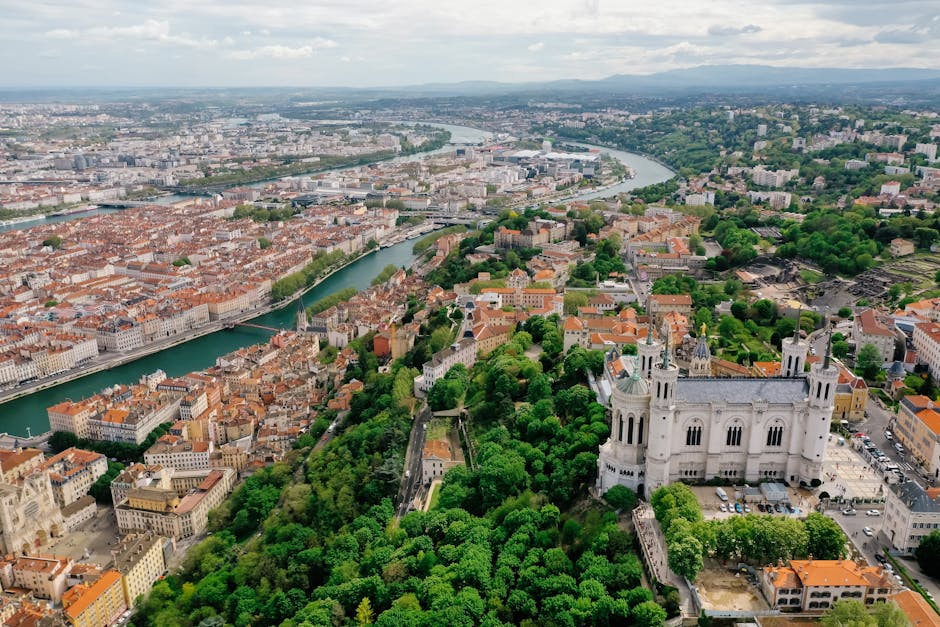
The setting: The theatres sit on the side of the Fourvière hill, with the city visible below. In summer, facing downhill toward the stage area while sitting where Roman audiences sat is a genuinely atmospheric experience.
Adjacent museum: A small museum on-site explains the theatres' history and displays artefacts found during excavations. It's modest but informative. Entry is included with theatre admission.
Visiting the Ruins (Without a Show)
Hours: Daily, 7am–dusk (hours vary seasonally). In winter, opening times are earlier, closing earlier.
Admission: €8.50 for adults. The site is open air, so you're paying for access and maintenance.
Time needed: 45 minutes to an hour. You can walk the tiers, examine the stonework, read the informational plaques, and take photographs.
What to do: Walk the seating tiers (they're accessible, though some steps are steep). Sit in the orchestra area and imagine performances. Compare the scale of the two theatres. Examine the stonework and the engineering. Read the English-language plaques.
Photography: Excellent. The light, the stone, the geometry — it all photographs well. Arrive in early morning or late afternoon for the best light.
Difficulty: Moderate. The tiers have many steps, and they're uneven (ancient Romans built to function, not for safety). Avoid if you have mobility issues or serious joint problems. Good footwear is important.
Summer Shows (Nuits de Fourvière)
Each summer, the theatres host the "Nuits de Fourvière" festival — an extended series of performances including theatre, music, dance, and occasionally comedy. These run from June through September.
What happens: Professional productions use the ancient theatres as performance spaces. Audiences sit in the historic seating (or in temporary modern chairs if the original seating is too uncomfortable). The experience is theatrical archaeology — you're watching modern performances in a 2,000-year-old space.
What to expect: The acoustics are good (the Romans understood sound projection). You're exposed to the elements (bring a jacket for cool evenings). The experience is genuinely memorable — sitting under stars, hearing a performance echoing off ancient stone.
Ticket prices: €15–60+ depending on the production. Book through the Nuits de Fourvière website or through Ticketmaster-equivalent services.
How to book: Check the Nuits de Fourvière schedule in spring. Productions are announced by April for the summer season. Book early for popular shows.
What to see: This varies yearly. Typically there's drama, contemporary music, occasionally ballet. The venue itself is the star attraction — any decent production in this space is worth experiencing.
Combining Theatres with Other Hillside Activities
The theatres sit near the Fourvière Basilica, the funicular, and the city's best viewpoints. A logical half-day route:
- Take the metro to Saint-Jean (Vieux Lyon).
- Use the funicular to ascend.
- Visit the theatres (30 minutes).
- Walk to Fourvière Basilica (10 minutes, slight uphill).
- Spend time at the basilica and its platform (45 minutes).
- Walk down through Croix-Rousse or return via funicular (20 minutes).
This route takes 2.5–3 hours and covers multiple significant sites.
Practical Details
Facilities: Toilets on-site. No café or food service, so bring water. The site is outdoors; shade is limited. Sunscreen is necessary in summer.
Accessibility: Stairs are the main challenge. Wheelchairs can access the lower museum area but not the seating tiers themselves.
Crowds: Fewer tourists than other Lyon attractions. You'll never feel crowded, even in summer. This is one of the advantages.
Weather: In rain, the stone becomes slippery. Avoid during wet conditions if you have balance or mobility concerns. The site itself is open to weather.
The Honest Assessment
The Roman Theatres are historically significant and visually impressive, but they're ruins — don't expect intact grand structures. What you'll see is enough: stone seating tiers, the footprint of ancient performance spaces, and the setting overlooking a city that's grown around these structures for two millennia.
If you're interested in Roman history or archaeology, this is worth an hour. If you're looking for major "must-see" attractions, the theatres are secondary to Fourvière Basilica (which is right above them) and Vieux Lyon. But if you're in the area and you have time, the experience of sitting where Romans sat is special.
The best version of this visit: attend a summer performance. Watching theatre under stars in a 2,000-year-old space is an experience you won't have everywhere.