 ConciseTravel
The Acropolis is why you're in Athens. It's the reason civilization exists in the Western tradition. Standing on top of the hill and seeing the Parthenon for the first time is a moment that sticks. So let's get this right.
What You're Actually Seeing
The Acropolis is the fortified hill. On top of it sits the Parthenon (the big temple), the Erechtheion (smaller, intricate temple), the Temple of Athena Nike, and the Propylaea (the entrance gateway). These buildings were built between 447 and 432 BC, during the reign of Pericles. They're 2,500 years old and somehow still standing.
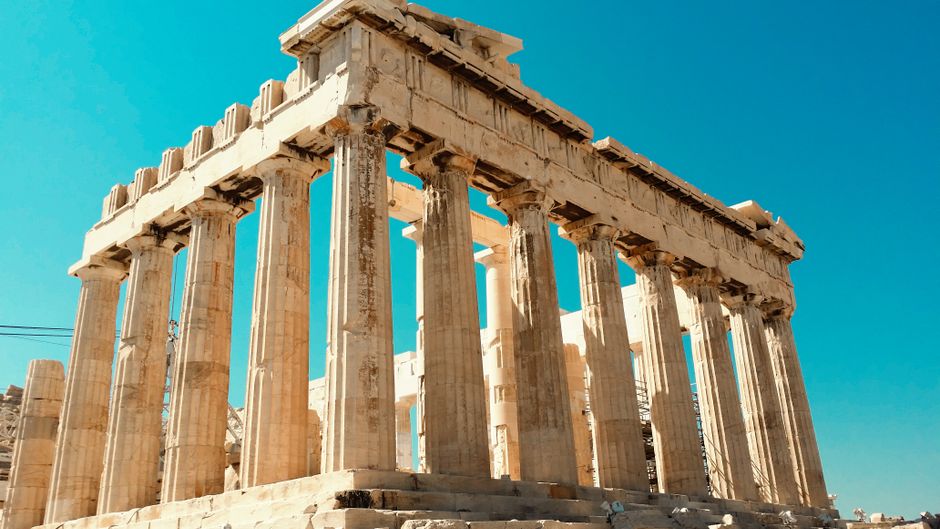
The Parthenon was a temple to Athena Parthenos (the virgin goddess). It's not a ruin in the traditional sense—it's a skeleton. The roof is gone. The interior statues are gone. What remains is the structure itself: a 70-meter marble temple with 46 columns and mathematical precision that still astonishes architects.
The Erechtheion is smaller but architecturally more complex. It has the famous Caryatids (female figures as columns) on its porch. The original Caryatids are in the Acropolis Museum; what you see on site are casts. The Temple of Athena Nike is tiny but perfectly proportioned.
Practical Logistics
Opening hours: 8 AM–8 PM in summer (May–October), 8 AM–5 PM in winter. Last entry is 30 minutes before closing.
Entry fee: €20 (or €30 combo ticket with Acropolis Museum). EU students and children get discounts.
Crowds: Peak hours are 10 AM–3 PM from June–August. Arrive at 8 AM when it opens, or after 5 PM. Both strategies work. Early morning is cooler and less crowded; late afternoon has better light for photos.
Parking: Don't drive. Metro to Akropoli station (south side of the hill) or Monastiraki (north side). From either station, follow signs to the Acropolis entrance.
The Route: How to Navigate
The main entrance is on the west side (Propylaea). You'll climb a marble pathway uphill—it's steep, unshaded, and relentless in summer. Expect 10 minutes to the top and heavy legs. Wear good shoes and bring water.
Once at the top, most people go straight to the Parthenon. That's correct. The Parthenon is the centerpiece. Walk around its perimeter (it takes 20 minutes). Look at the columns from different angles. Note the mathematical curve (entasis) designed to make the structure look perfectly straight to the human eye. Ancient architects understood optical illusions.
The Erechtheion is to the north. Spend 15 minutes there. The Caryatids are the famous feature—the female figures are iconic and will feel familiar (they're in every art history class).
The Temple of Athena Nike is small and easy to miss. It's to the right of the Propylaea. Walk past it, admire the proportions, move on.
What You'll Feel
Standing at the Acropolis, you're standing where Socrates walked, where Aristotle's students debated, where the classical world was born. The marble glows in afternoon light. The city sprawls below you. For a moment, you understand why Western civilization spent the next 2,500 years trying to copy these buildings.
It's not a feeling that lasts—tourists yelling about selfie angles will snap you back to 2026—but it's there. The Acropolis does that.
Practical Tips
- Bring water. There's no shade on top, and it's exposed. Sunscreen too.
- Go early or late. 8 AM opening or 5 PM onward. The light is better, the crowds are gone, and you'll feel less rushed.
- Wear good shoes. The marble is ancient, worn smooth, and slippery. Even in dry conditions, your footing will feel uncertain. Don't wear flip-flops.
- Skip the official tour. Guides add nothing that a good 30-minute walk-around won't give you. Save the money.
- Hit the Acropolis Museum on a different day. The museum requires 2–3 hours. You'll be exhausted after the Acropolis climb. Do them separately.
- Sunset timing: The Acropolis glows gold at sunset (7–8 PM in summer). If you're visiting late afternoon, stay for it. It's worth the wait.
Our Take
The Acropolis is non-negotiable. You came to Athens to see this. Spend 1.5–2 hours at the top. Go early to avoid crowds. Watch the light change. Feel the history. The Parthenon is one of humanity's greatest achievements, and you're standing next to it.