ConciseTravel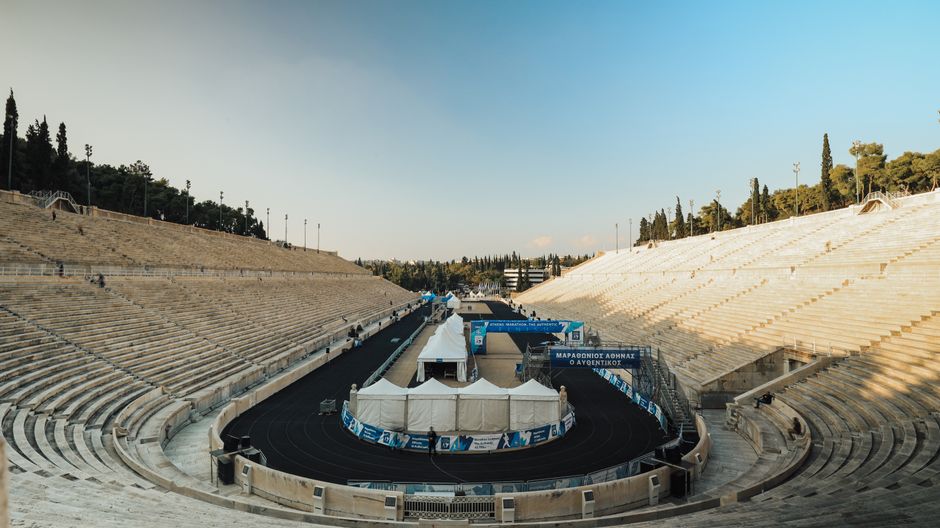
The Panathenaic Stadium is a pilgrimage site for runners and history nerds alike. It's where athletes competed in 329 BC, where the modern Olympic Games were revived in 1896, and where you can literally run the same track that has hosted champions for 2,300 years.
The History
The original stadium was built in 329 BC as a venue for the Panathenaea festival (an ancient athletic competition honoring Athena). It was built from stone by the architect Lysikrates. For nearly 2,000 years, it hosted athletic events, then fell into disrepair.
In 1896, when Greece hosted the first modern Olympic Games, the stadium was reconstructed using the original foundations. The restoration was marble—white Pentelic marble from Mount Pentelikon, the same marble used for the Parthenon. It cost a fortune and was completed just in time for the 1896 Olympics.
The 1896 Olympics were held here. Athletes from 14 nations competed. It was a modest affair compared to modern Olympics, but it was the spark that reignited the Olympic tradition.
In 2004, Athens hosted the Olympics again, and the stadium hosted athletic events (though most sports moved to modern venues outside the city).
What You'll See
The stadium is a marvel of ancient engineering and 19th-century restoration. It's a perfect oval, carved into a hillside, with a capacity of about 50,000. The stands are white marble and gleam in the sun. The track is real—athletes train here regularly.
The lower seats: Ancient marble, worn smooth by 2,300 years of use.
The upper stands: Reconstructed in 1896, also marble. The restoration quality is exceptional; you can't tell what's ancient and what's 19th-century reconstruction.
The track: A modern tartan running track (not the original stone, obviously). But you're running on the same ground where ancient athletes ran.
The marathon start point: A stone plaque marks the spot where the 1896 marathon began. The route went to Marathon (40 km away) and back.
Running the Track
Yes, you can run the track. Most days, the stadium is open to the public, and runners regularly train here. The experience is surreal—you're literally running where Olympic champions ran 130 years ago.
The track is 400 meters (standard Olympic length). Run a full lap and you've done what every Olympic sprinter has done. It's a pilgrimage for runners.
The atmosphere is quiet and reverential. There's usually a handful of local runners, but it's never crowded.
Practical Visit
Location: Northeast of the Acropolis, accessible via Irini stop (one metro stop northeast from Syntagma on Line 2/Red Line).
Hours: 9 AM–3 PM (sometimes extended to 5 PM, check ahead). Closed Mondays.
Entry: €5 for adults, €3 for students.
Duration: 45 minutes to 2 hours (depending on if you run).
What to bring: If you're running, bring trainers and a bottle of water. The stadium has no shade, and marble reflects heat intensely.
A Note on Timing
Visit in the morning (9 AM–11 AM) or late afternoon (after 4 PM) to avoid the heat. Midday is blazing—the white marble reflects sun like a solar panel.
The stadium is visited by school groups in the morning (it's an important historical site for Greek students). If you want quiet, go early or late.
Our Take
The Panathenaic Stadium is a must-visit if you:
- Are a runner (it's spiritual).
- Care about Olympic history.
- Want to see how ancient infrastructure can be preserved and restored.
- Have 1+ hours to spare from your Athens itinerary.
If you're short on time and have no particular interest in athletics or ancient sports, you can skip it. But if you're even mildly interested, go. It's profound in a way that pure tourist sites aren't.
Master Athens in Minutes
Don't waste hours planning. Get our condensed, digital cheat sheet with everything you actually need.
Shop Guide on Etsy →