ConciseTravel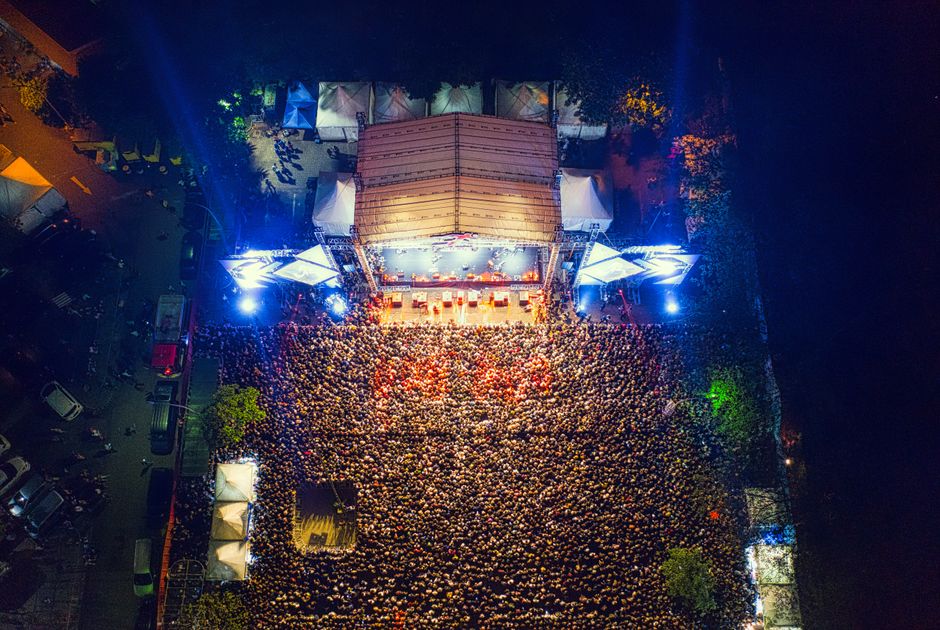
A City That Takes Music Seriously
Liverpool's reputation for music is entirely justified, but that reputation sometimes gets flattened into "Beatles city" in a way that undersells what is actually going on. The Fab Four are part of the story, not the whole of it. The city that produced the Beatles also produced Gerry and the Pacemakers, The La's, Echo and the Bunnymen, OMD, Atomic Kitten, Cilla Black, and more recently, artists across genres from electronic to hip-hop.
More importantly, Liverpool has a current live music scene that is active and varied. This is a city where people go to see live music on a Tuesday without it being a special occasion.
The Cavern Club: Starting Point
The Cavern on Mathew Street runs live music seven days a week. During the day it is largely free, with musicians performing on the original stage. In the evenings there is usually a small cover charge (around £5 to £7) for tribute acts and bands doing Beatles material and broader 60s rock and roll.
Tribute acts are not always taken seriously as a form, but the best Cavern Club evenings work: the physicality of the space, the low brick ceiling, a pint in your hand, and a band delivering Merseybeat with conviction is a combination that earns its fun. Go in with appropriate expectations and it delivers.
The Jacaranda
The Jacaranda on Slater Street has a particular claim on Liverpool music history. John Lennon and Stuart Sutcliffe frequented it during their art school days in the late 1950s and The Beatles (under various earlier names) performed in its basement before they had anything like a proper following.
Today the Jacaranda has been substantially renovated but retains its music venue character. Downstairs: a bar with vinyl-playing booths and a record player at the centre of the room. Upstairs: a live music space hosting indie, alternative, and emerging artists on most weekends. Not exclusively Beatles-related, which is part of the appeal.
Phase One (Seel Street)
Phase One combines a record shop, a bar, and a live music venue in a way that makes complete sense once you are in the space. You can flip through vinyl in the shop section, move to the bar, and end up watching a gig in the back room without quite knowing how you got from one to the other.
It operates towards the indie and alternative end of things and hosts both established and emerging acts. Good for a night with no specific agenda: browse records, get a drink, see what is happening.
The Royal Liverpool Philharmonic
Not what most people mean by "live music" when visiting Liverpool, but the Royal Liverpool Philharmonic at the Philharmonic Hall on Hope Street is one of the UK's major orchestras and their home venue is an art deco jewel.
They programme well beyond classical: film scores with live orchestra, cross-genre collaborations, and pop and jazz concerts alongside the traditional classical programme. Tickets are reasonably priced compared to equivalent London venues. If a performance aligns with your visit, it is worth considering.
The Philharmonic Hall is also worth seeing as a building regardless: the art deco interior is one of the more beautiful concert hall spaces in the country.
International Beatles Week
Late August each year, Liverpool hosts International Beatles Week: a week-long festival that draws tribute acts and Beatles enthusiasts from around the world. The Cavern Club, Mathew Street, and various other venues across the city host performances continuously across the week.
At its best it is a genuinely celebratory event with a mix of professional tribute acts, historical talks, memorabilia fairs, and a city-wide atmosphere of enthusiasm. At its most crowded it is an exercise in patience on Mathew Street.
Hotels fill up quickly and prices rise. If Beatles music is your specific reason for being in Liverpool, this is the definitive time to come. If you want to visit without the crowds, avoid late August.
Broader Festival Programme
Several major music events take place in Liverpool annually:
Africa Oye (June, Sefton Park): The UK's largest free African music festival. A full weekend of African and Afrodiasporic music across multiple stages in Sefton Park, with food stalls and a genuinely diverse crowd. Completely free to attend. One of the underrated events in the UK festival calendar.
Liverpool International Music Festival, LIMF (Summer, Sefton Park): A broader pop and dance-oriented festival, also often partly free. Major acts alongside developing artists.
LightNight (October): A one-night arts festival where music and performance take over galleries, streets, and unconventional venues across the city. More eclectic than the summer festivals and worth catching if the date aligns.
The Everyday Live Music Economy
Beyond the events and the named venues, Liverpool has a steady background hum of live music that you encounter in pubs, cafes, and on the street. The buskers on Church Street and Bold Street are often excellent. The pub with a guitarist on a Wednesday night is a regular feature rather than a novelty.
This is the part that is hardest to plan for and most pleasant to encounter: the incidental live music of a city that treats it as normal. Walk around on a Saturday evening and you will likely hear three or four good musicians without trying.
The ConciseTravel Liverpool guide has a more detailed breakdown of the live music venues, including smaller and more locally-focused spots that do not appear in the main visitor guides.