ConciseTravel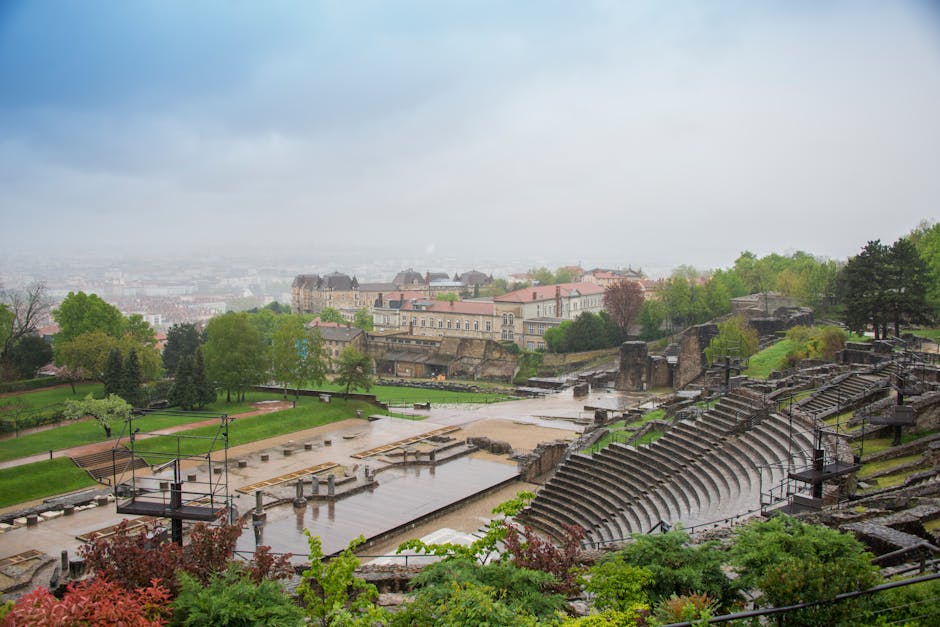
Lyon does not rely on paid attractions to make an impression. The Roman ruins on Fourvière hill are free, the Croix-Rousse neighbourhood runs on its own distinct energy, the rivers are walked rather than toured, and the traboules — the hidden passageways through buildings — are one of Europe's most unusual free experiences. Here is what earns its place on the list.
Théâtre Gallo-Romain de Fourvière
Two Roman theatres sit on the Fourvière hillside — the Grand Théâtre, dating from 15 BCE and expanded under Hadrian, and the smaller Odéon beside it. Both are free to enter and walk around. They are among the best-preserved Roman theatres in France and would be major attractions in almost any other city. In Lyon they quietly get on with it. Open daily; free entry.
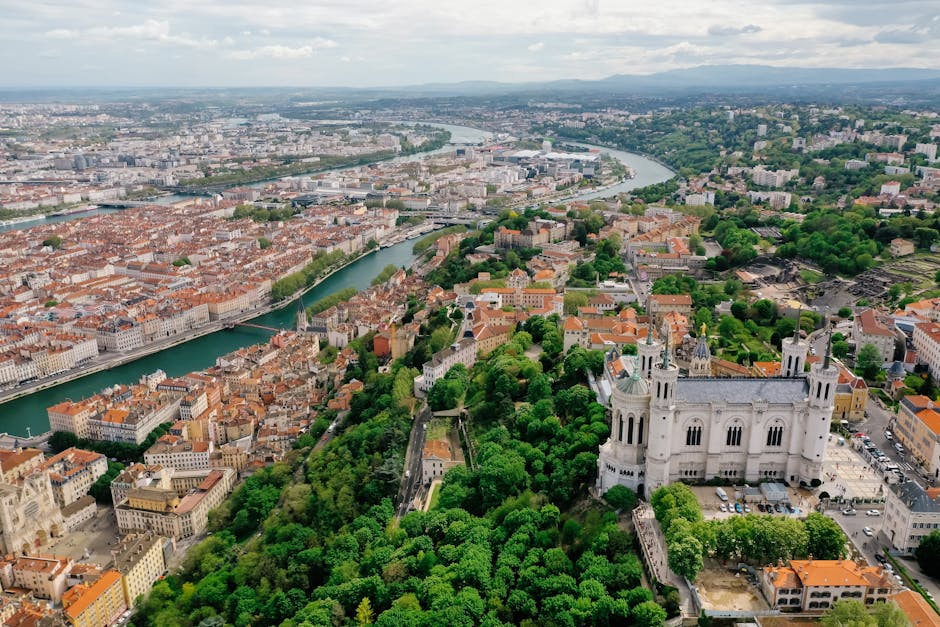
Fourvière Hill and Basilica
The Basilica of Notre-Dame de Fourvière is free to enter and dominates the Lyon skyline. The interior is extravagantly decorated by 19th-century standards — mosaics, gold, and elaborate stonework. The terrace outside the basilica gives the definitive view over Lyon: the Presqu'île, the two rivers, and the Alps on a clear day. The hill is served by a funicular from Vieux Lyon (small fare), but you can walk up for free via the Montée Nicolas de Long.
Vieux Lyon (Old Lyon)
The Renaissance quarter at the foot of Fourvière Hill is a UNESCO World Heritage Site and free to walk entirely. The streets of Saint-Jean, Saint-Paul, and Saint-Georges hold 15th and 16th-century houses, courtyards, and the traboules that made this neighbourhood famous. No entry fee; the streets are the attraction.
The Traboules
The traboules are covered passageways that cut through buildings, connecting one street to another via internal courtyards and staircases. Many are open to the public during the day. The densest concentration is in Vieux Lyon and in the Croix-Rousse district. A free traboule map is available from the Lyon tourist office, but wandering and finding them yourself is more rewarding.
Croix-Rousse
The Croix-Rousse was the engine of Lyon's silk-weaving industry in the 19th century. The Plateau — the flat area at the top — has its own village atmosphere, a daily outdoor market (one of the best in France), and a community of artisans and independent shops. The Montée de la Grande Côte, the long pedestrian staircase connecting Croix-Rousse to the Presqu'île, is one of the best walking routes in the city. Free throughout.
Parc de la Tête d'Or
One of the largest urban parks in France, the Tête d'Or stretches across 117 hectares in the 6th arrondissement. The free attractions within it include the municipal zoo, the botanical gardens, the rose garden, and the lake. Entry to the park and all of these is free. Take the T1 or T4 tram to reach it.
The Presqu'île
The peninsula between the Rhône and the Saône is Lyon's civic centre. Place Bellecour — one of the largest squares in France — is free to walk. The grand 19th-century streets running north toward Place des Terreaux and the Hôtel de Ville are free. The square itself is the geographic heart of the city and costs nothing.
Place des Terreaux and the Hôtel de Ville
The Hôtel de Ville facade on Place des Terreaux is among the most impressive civic buildings in France. The Fontaine Bartholdi in the square — by the sculptor who made the Statue of Liberty — is free to stand in front of. The Museum of Fine Arts is on the same square; the permanent collection is free on the first Sunday of each month, and worth planning a visit around.
The Saône and Rhône Riverbanks
Both rivers have been given over to pedestrians and cyclists with well-maintained riverside paths. The Berges du Rhône on the east bank runs for several kilometres and has become the city's favourite linear park. The Quais de Saône on the west bank connect Vieux Lyon to Croix-Rousse along the water. Both are free and excellent for an evening walk.
Musée des Beaux-Arts (First Sunday)
The permanent collection at the Museum of Fine Arts — Greco-Roman antiquities, medieval sculpture, French and Flemish painting, Impressionists, and a strong modern section — is free on the first Sunday of each month. If your visit falls on any other day, it charges a modest entry fee. Worth timing your stay around if possible.
Confluence District
At the southern tip of the Presqu'île, where the Saône meets the Rhône, Lyon's newest district has been built on former industrial land. The architecture is deliberately experimental — the Musée des Confluences has a distinctive crystalline form, and the surrounding streets hold contemporary buildings in a range of styles. The waterfront promenade at the very tip of the Presqu'île, where both rivers join, is free and has an unusual perspective on the city.
Croix-Rousse Market
The outdoor market on the Boulevard de la Croix-Rousse runs Tuesday to Sunday mornings. It is one of the best food markets in a city that takes food seriously. Walk it, watch the vendors, and buy almost nothing — or buy a great deal. Free to walk regardless.