ConciseTravel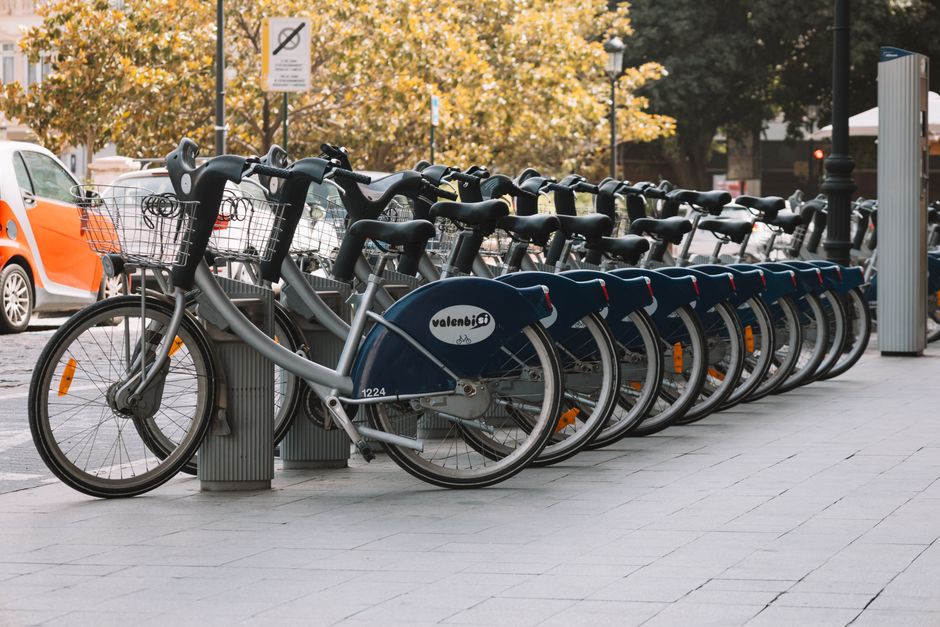
You're walking back from the Alcázar, hot and slightly footsore, and a local glides past you on a city bike looking completely relaxed. This is Seville. The most cycle-friendly large city in Spain. And you're doing it wrong.
Seville has over 180km of dedicated bike lanes, terrain so flat it barely registers as terrain, and a river path that runs car-free from the historic centre southwards for 30km. If you visit without getting on a bike at least once, you've left one of the city's best features untouched.
Sevici: Seville's Bike Share
Sevici is the city's municipal bike share, operated by JCDecaux. Over 260 stations citywide, around 2,500 bikes. Dense coverage across the historic centre, Triana, Alameda, and Nervión.
How to Get On One
- Download the Sevici app (iOS/Android) or use the docking station terminals
- Buy a weekly subscription (around €13.33) or a daily access pass (around €1.35/day, plus usage charges)
- Pay by card at the terminal or in-app
- You get a PIN to unlock bikes at any station
The critical thing to know: the first 30 minutes of each trip are included. Return the bike to any station, wait a moment, take it out again. For sightseeing, that's enough — Seville's key areas are all within 15-20 minutes of each other by bike.
The app shows real-time station availability. If your destination station is full, it redirects you to the nearest alternative. Check before your last kilometre.
Helmets aren't legally required on bike lanes in Seville. Bring your own if you want one — Sevici doesn't supply them.
The Guadalquivir River Path: Do This One
The river path is the best thing to do on a bike in Seville. Full stop.
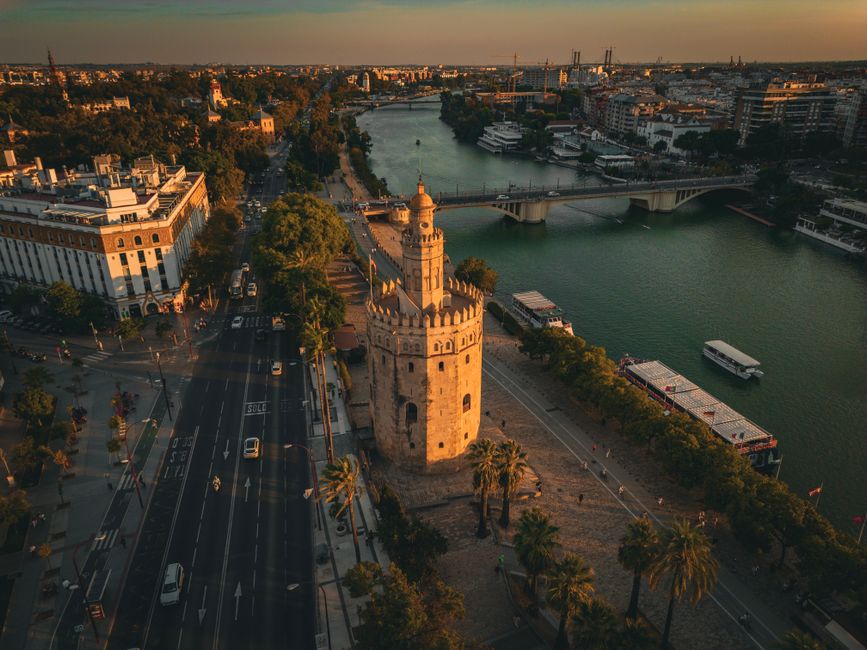
A dedicated, car-free route runs along both banks of the Guadalquivir, past the Torre del Oro, through Triana's waterfront, south to Parque de María Luisa and the Plaza de España. It's wide, mostly flat, and used by locals and visitors alike.
The core section through the city is about 8-10km and takes 40-50 minutes at a relaxed pace. You don't need to do the whole 30km.
Best time: early morning before 9am or evening after 7pm in summer. Midday on the river path in July means 38°C with no shade. It's grim. Don't.
Routes Worth Doing
Old Town → Triana via Puente de Triana: 15 minutes Cross the Isabel II bridge with the river on both sides, the Torre del Oro behind you, Triana's colourful waterfront ahead. One of Seville's best short bike journeys.
Old Town → Parque de María Luisa: 20 minutes South along the river, then east into the park. The park has internal cycling paths, and connects directly to Plaza de España. Worth a lap before the tour groups arrive.
Alameda de Hércules loop: 30 minutes North from the historic centre to the Alameda, through the Macarena neighbourhood, back along the inner ring lanes. This is the Seville the tourists don't see.
Where Not to Cycle
Barrio Santa Cruz: Cobblestones, tight corners, tourists everywhere. Lock up at the edge and walk in.
Avenida de la Constitución: Tram tracks run through the middle. Mixing bikes with trams on a busy boulevard is a bad idea. Use the parallel side streets.
During Feria de Abril: Road closures, massive pedestrian crowds. Leave the bike and walk.
If Sevici Isn't Your Thing
Electric scooters are available in Seville via Bolt and a few other operators. Faster for longer distances, more expensive per trip than Sevici.
Getting on a bike here is one of those things that sounds optional until you've done it — then you wonder why you waited. For the best cycling routes, where to chain up near key sights, and neighbourhood connections on two wheels, the Seville ConciseTravel guide has it mapped out.