ConciseTravel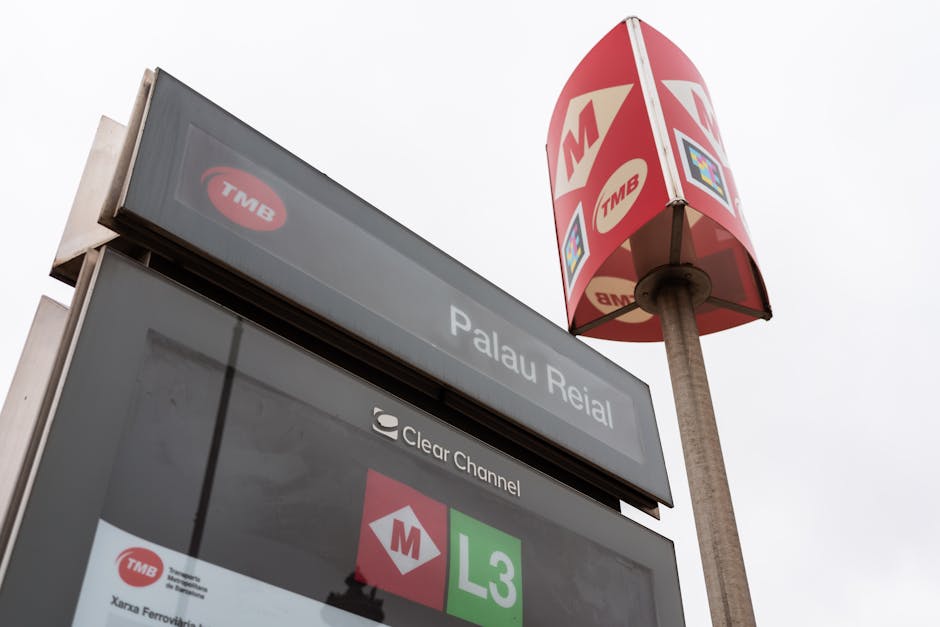
The Barcelona Walking Map Hack: When to Walk vs. Metro (Energy & Safety)
The Tourist Time Sink Nobody Warns You About
You've got 4 hours in Barcelona. You've planned: Sagrada Família (10am), Lunch (1pm), Gothic Quarter (3pm), Montjuïc (5pm). Seems efficient, right?
Then you realize you're spending 40% of your time on logistics. Metro to Sagrada. Back to Passeig de Gràcia. Metro to Gothic Quarter (wait, which exit?). Metro to Montjuïc (which line?).
By hour 3, you're metro-fatigued. Your feet hurt from standing in crowded cars. You've taken 6 trains. You're hot, confused, and your day feels like transit with some sightseeing in between.
Here's what locals know: Barcelona's city centre is small enough that a 15-minute walk is often faster than a metro ride. Plus, you see stuff. You discover cafes. You actually feel the city instead of staring at a tunnel wall.
The Distance Reality: Your Walking Instincts Are Off
Barcelona's geography is deceptive. It looks close on a map, but your mental model of "distance" is probably skewed.
Let's be concrete:
- Plaça de Catalunya to Passeig de Gràcia: 1.2 km. 15 minutes walking, or 3 minutes metro (including wait time). Walking wins. You pass shops, people, the energy of the city.
- Passeig de Gràcia to Casa Batlló: 400 meters. 5 minutes walking, or 2 minutes metro plus finding the exit. Walking wins easily. Why are you even considering the metro?
- Gothic Quarter to Plaça Reial: 300 meters. It's literally a 4-minute wander. Don't take the metro. Seriously.
But:
- Gothic Quarter to Park Güell: 4 km. 50 minutes walking uphill, or 10 minutes metro + bus. Metro wins. Save your legs.
- Plaça de Catalunya to Montjuïc: 2.5 km. Could walk, but it's uphill and exposed. Metro or cable car wins.
The heuristic: If it's under 1.5 km and within the city core (Eixample, Gothic Quarter, El Born, Raval), walk it. Beyond that, think about the metro.
The Energy Equation: Metro vs. Walking
This isn't just time. It's how you feel when you arrive.
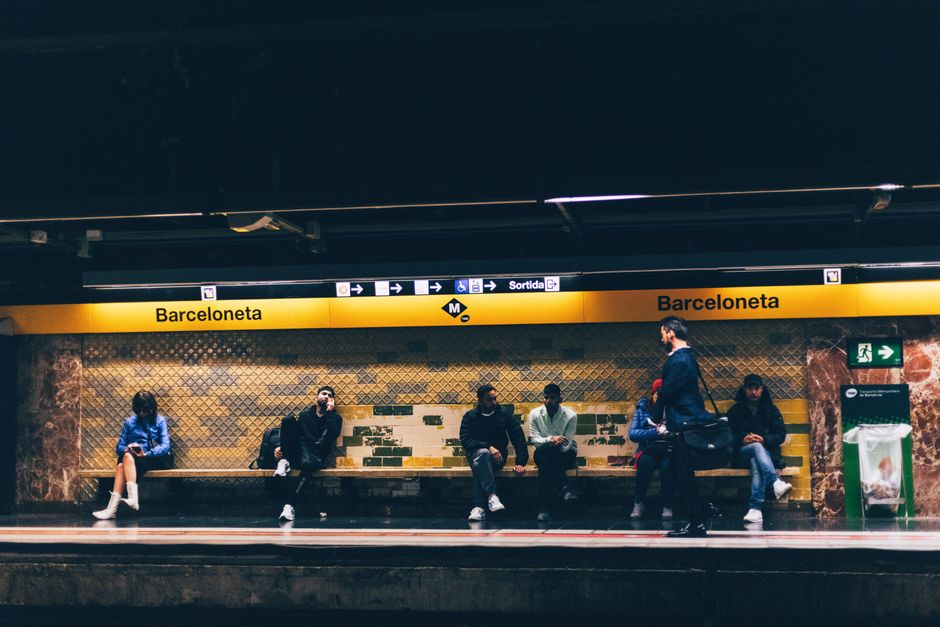
Metro: You're standing in a crowded train, holding onto a pole, trying not to breathe on someone, watching numbers count down. You arrive at your destination, but you're mentally exhausted and maybe stressed if you weren't sure about the exits.
Walking: You're moving at your own pace, you can stop if something catches your eye, you see the city transforming block by block. You arrive at your destination with a sense of the geography in your head.
For a tourist, arrival-via-walking is better than arrival-via-metro, even if it takes 5 minutes longer.
Exception: If it's 35°C (95°F) and you're walking uphill, take the metro. Heat changes the equation.
The Safety Sub-System: Pickpockets vs. Street Awareness
Walking disperses them.
On a crowded metro car at 11am, thieves know you're distracted, standing still, and surrounded by other targets. Easy hunting ground.
On a street, you're moving, you're aware, and pickpockets prefer the anonymity of a crowd.
This isn't paranoia. It's just: if you're walking, you're less of a target than if you're crammed on Line 3 during peak hours.
Also: when you walk, you get a feel for neighborhoods. You know which streets feel safe, which feel sketchy, which feel lively. You're not dependent on the metro system to move; you can adapt in real time. ("Actually, let's skip this bar and go back to that cafe we saw three blocks ago.")
The Layering Hack: How to Build a Coherent Day
Here's how locals actually move around. They don't think "I'll take the metro here, walk there." They think in blocks.
Morning (9am–1pm)
Start: Hotel in Eixample
First move: Walk to Passeig de Gràcia, stroll it (see all the Gaudí buildings), then walk to Casa Batlló and Casa Milà (both on the same street, 500m apart). You're on foot the whole time, moving slowly, seeing everything.
Total time: 2.5 hours. Distance: 2 km walking. Cost: €0.
Compare that to: Metro to Gaudí stop, exit, walk to Casa Batlló, take metro to Casa Milà... You've moved faster in terms of distance but slower in terms of getting to the sights because of transitions and waits.
Midday (1–3pm)
Lunch: You've worked your way from Casa Milà toward Plaça de Catalunya. Natural. Just keep walking. Grab a menú del día in a side street. Done.
Afternoon (3–6pm)
Move to Gothic Quarter: It's 1 km from Plaça de Catalunya. Walk. 15 minutes. Arrive refreshed.
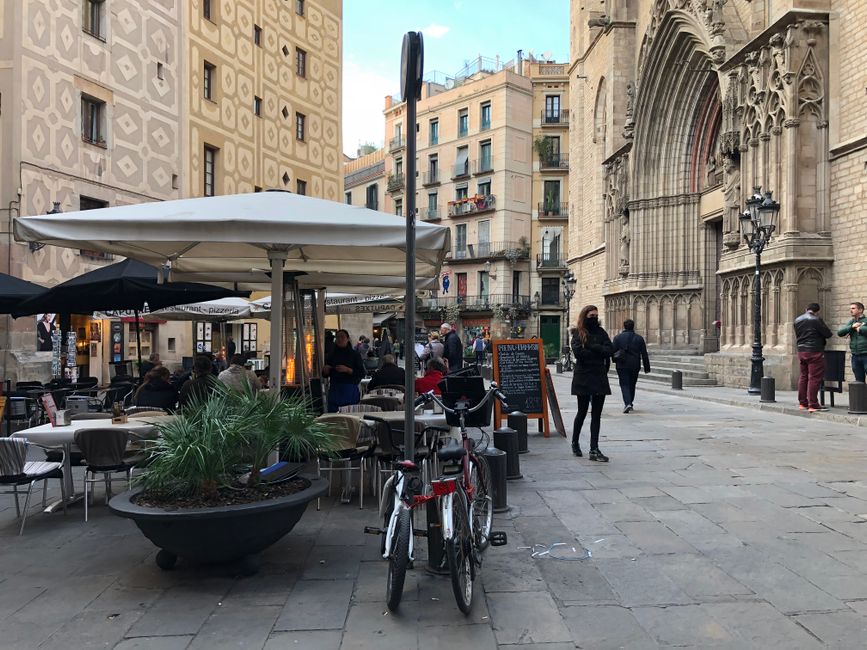
Explore: Gothic Quarter is a maze, but that's the point. Walk it. Get lost. Find unexpected plazas and churches. No metro needed, it's entirely on foot, and that's how you experience it.
Evening (6pm+)
Montjuïc or Beach? Now you're far enough (2+ km) that metro or cable car makes sense. But your whole day up until now has been coherent, you've seen the city transform, you know where you are, and you're not metro-fatigued.
The Weather Wildcard
Barcelona's climate is mild, but in summer it's also hot.
- April–May, September–October: Walking weather. Do it.
- June–August: 28–32°C. Still walkable before 11am and after 5pm. Midday? Metro or find shade in a museum.
- December–February: 10°C, often rainy. Walking is fine, bring a jacket.
Heat changes the walking-vs-metro calculus. Don't fight it.
The Map Trick: Route Planning for Walking
Here's what locals do (and tourists rarely do):
Before you leave your accommodation, open Google Maps. Zoom to "walking" mode. Plan your next 3–4 stops.
Look at the blue walking route. Does it go through interesting neighborhoods or through sketchy-looking streets? Does it follow major avenues or slip through side streets? Are there metro stops if you change your mind?
This 2-minute exercise saves you 30 minutes of confusion.
You'll see: "Oh, I can walk from Gothic Quarter to El Born through some beautiful old streets, or I can take the metro. Walking looks more interesting."
Then you walk. You're not lost; you've planned it. But you're flexible; if your feet hurt, you've got the metro nearby.
The Real Skill: Knowing When to Stop
The hardest part of walking Barcelona is knowing when to stop and sit down.
Tourists power through. "I'll get another museum in before dinner." You don't need another museum. Your brain is full. Your feet hurt. You're not seeing things anymore; you're just checking boxes.
Locals do this: Walk for 45 minutes. Sit in a cafe for 20 minutes. Drink something. Watch the street. Then walk again if they feel like it, or stay put.
You'll see more and feel better in a day of walking-with-breaks than a day of walking-with-rushing.
Bringing It Together
The decision isn't metro vs. Walking. It's: What do I need right now?
- Under 1.5 km, clear path, interested in the sights? Walk.
- Over 2 km, not interested in the route, tired, or it's hot? Metro.
- Exactly in between? Depends on your energy and the time. Could go either way.
For specific routes, timing for each attraction, and how to thread together a day that feels paced rather than rushed, check out our Barcelona guide's Transportation and Attractions sections, they've got the precise walking routes and metro alternatives mapped out so you can execute this framework.
Master Barcelona in Minutes
Don't waste hours planning. Get our condensed, digital cheat sheet with everything you actually need.
Shop Guide on Etsy →