 ConciseTravel
Berlin has two sites that most visitors put on the Berlin Wall list. They are not equivalent. One will change how you understand the city. The other will give you a colourful backdrop for a photograph and leave you roughly as informed as you arrived.
Both are worth knowing about. Only one deserves time.
The East Side Gallery: What It Is and What It Isn't
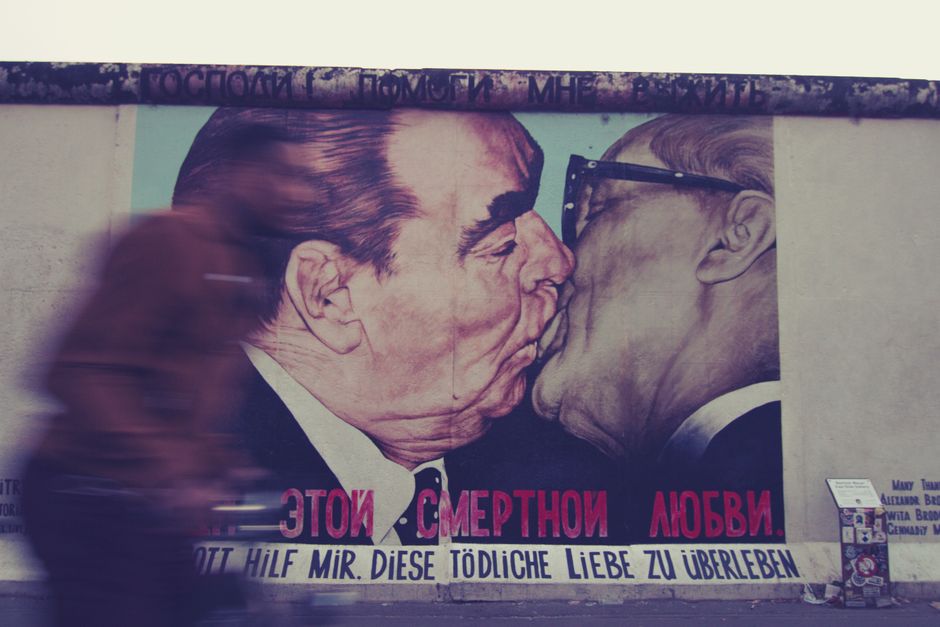
The East Side Gallery is 1.3 kilometres of surviving Wall section along the Spree in Friedrichshain, painted by artists from around the world in 1990 just after the Wall fell. The murals are famous, the Fraternal Kiss between Brezhnev and Honecker is the most photographed image in Berlin, and the scale of the thing, a kilometre of painted concrete running along a riverside walkway, has genuine visual impact.
Here's what it isn't: a memorial. It's public art on a historical structure. The experience involves walking a narrow path between the Wall and the riverbank, threading through crowds, and looking at murals that have been restored multiple times and in some cases no longer resemble their original versions. You learn almost nothing about the Wall's history from being there. There are plaques, but they're not the point. The point is the photographs.
That's fine. The East Side Gallery is worth 45 minutes and produces good photographs. But tourists who visit it and consider the Wall ticked off their Berlin list have missed the actual story.
The Berlin Wall Memorial on Bernauer Strasse
The Berlin Wall Memorial is a different category of place. Spread along Bernauer Strasse in the former death strip between East and West Berlin, it preserves an 80-metre section of the original fortification system in its complete form: the inner wall, the death strip, the outer wall, the watchtower, the signal fence, the anti-vehicle trenches. This is what the Wall actually was, not a painted surface but a militarised killing zone that ran through the middle of a city.
The outdoor sections are always accessible and free. The Documentation Centre, which runs along the memorial, has a permanent exhibition covering the history of the Wall from construction in 1961 through to the fall in 1989 with the kind of specificity that puts individual stories and political decisions into real context.The Chapel of Reconciliation, rebuilt on the footprint of a church demolished to clear the death strip, sits at the northern end.
Bernauer Strasse was one of the most dramatic streets in divided Berlin. Residents whose ground-floor windows faced the border were bricked in overnight in August 1961. People jumped from upper floors to the West. There were escape tunnels dug from cellars. The memorial addresses all of this with research and care.
Plan two to three hours here. It takes that long to understand what you're looking at.
Why the Gap Matters
The difference between these two sites reflects a broader pattern in how historical tourism works. The East Side Gallery is highly visible, accessible, photogenic, and easy to include in a walking itinerary. It has entered the visual shorthand for "Berlin" in a way that requires no context to participate in.
The Bernauer Strasse memorial asks more of you. It's a 20-minute tram ride from the centre, the subject matter is genuinely difficult, and the experience doesn't resolve neatly into a shareable image. It is also, by a significant margin, the more important thing to see.
Berlin's history is dense and layered and the city doesn't hide it. The Topography of Terror, built on the former Gestapo and SS headquarters, is another free outdoor and indoor memorial that most visitors who "do Berlin in three days" don't reach. The DDR Museum near Alexanderplatz is lighter in tone but covers daily life in East Germany with real specificity.
How to Do Both Without Wasting a Day
Visit the Bernauer Strasse memorial in the morning when the Documentation Centre opens. Spend two to three hours. Take the U8 from the centre to Bernauer Strasse, it's a direct line. In the afternoon, the East Side Gallery is a short tram or U-Bahn ride away and runs alongside the river back toward the centre. You get the photographs and you've earned them.
That's the right order. Context first, then the postcard.
Our Berlin city break guide covers the history, the neighbourhoods, the memorials, and how to structure a few days in a city that rewards serious attention.
Master Berlin in Minutes
Don't waste hours planning. Get our condensed, digital cheat sheet with everything you actually need.
Shop Guide on Etsy →