 ConciseTravel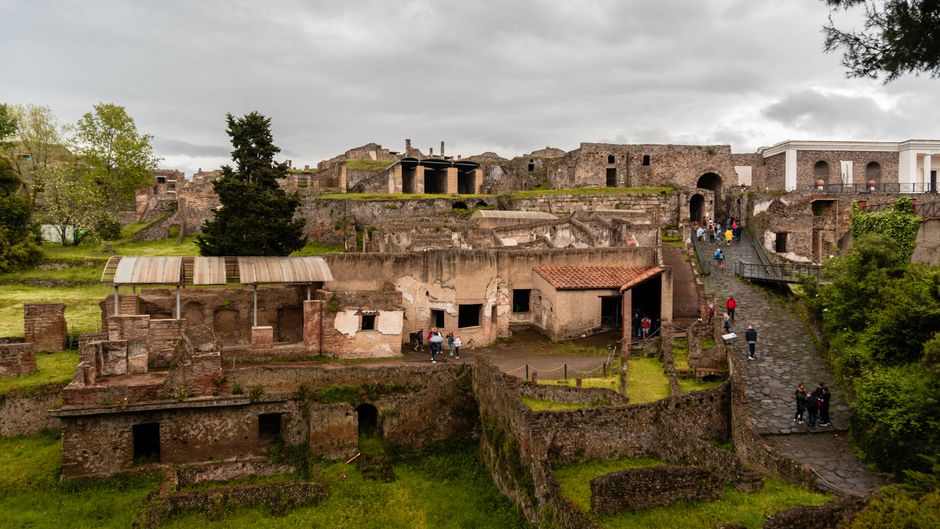
Pompeii is genuinely extraordinary. A city frozen in 79 AD when Vesuvius erupted. You walk streets Romans walked, stand in houses they lived in, and occasionally see bodies preserved in their final moments.
It's also genuinely massive and gets absolutely rammed with tourists. Most visitors spend 3 hours, see a fraction, and leave confused and frustrated.
Spend time here properly, and it transforms from "tourist tick" to genuinely moving experience.
Getting There – Circumvesuviana is Your Route
Catch the Circumvesuviana train from Napoli Porta Nolana (45 minutes, €3-5). Exit at "Pompeii Scavi-Villa dei Misteri." Walk uphill 5-10 minutes to the main entrance.
Alternatively, skip the train walk and book a Viator tour with hotel pickup (€50-120). You're paying more but avoid navigation logistics.
Timing Strategy – Critical for Experience
Arrive early. Genuinely, arrive at 8am if the site opens at 8:30am. You'll have 90 minutes before the main tour groups arrive. The site feels genuinely magical when it's quiet.
Avoid midday. 10am-2pm is absolute chaos. Thousands of tourists, crushing crowds, zero ability to contemplate anything.
Stay late. Most tourists leave by 4-5pm. If you stay until closing (around 7pm in summer), you'll have genuine quiet in the final hours. The light is also genuinely beautiful.
Site Layout and Planning
Pompeii is massive – roughly 66 acres. You cannot see everything properly in 3 hours. Choose an intentional route rather than wandering.
Download the free site map beforehand. The printed maps are adequate but having it on your phone means you can plan route without stopping constantly.
Key areas to prioritize:
- Forum and surrounding temples (entry area) – Start here. It gives context for Roman public life.
- House of the Faun – Massive private house showing wealth. The Alexander Mosaic was found here (now in Naples Museum).
- House of the Vetti – Best-preserved private home. You see actual daily life – kitchens, gardens, bedrooms.
- Thermal baths – Multiple complexes showing how Romans bathed and socialized.
- Lupanar (ancient brothel) – Surprisingly tasteful, historically interesting.
- Amphitheatre – Genuinely impressive structure showing entertainment capacity.
Don't feel obligated to see everything. 2-3 major houses plus the Forum is a solid half-day. Better to spend time understanding one space than rushing through dozens.
The Reality of Bodies and Dark Stuff
Pompeii has bodies – people preserved when the eruption literally baked them in place. The bodies are presented respectfully in glass cases or plaster casts.
Some people find it disturbing. Some find it profoundly moving – you're literally seeing the final moments of real people. Decide your comfort level and skip exhibits if needed. No judgment.
The casts of children and families are emotionally intense. The sense of witnessing genuine tragedy in 79 AD is powerful.
Practical Essentials
Water is critical. The site has almost no shade. Sun exposure is brutal. Buy 2-3 bottles and drink constantly. Dehydration ruins ancient Rome appreciation.
Sunscreen and hat are mandatory. I've seen tourists with genuinely severe sunburn. The reflection off stone makes it worse.
Comfortable shoes are essential. The terrain is rough, uneven cobblestones. Bad feet kill the experience.
Skip the internal museum. Most significant finds are in the Naples Archaeological Museum. The on-site museum is optional.
Expect crowds at entrances. Tour groups arrive on schedules. You might find you're walking alone then suddenly immersed in 50 people. It passes.
Guided Tours – Worth Considering
Official guides at the site cost roughly €120-150 for 2-3 hours with a group (usually 5-15 people). Viator offers pre-booked tours from Naples (€60-120) that sometimes include transport.
Guides genuinely transform the experience. They explain context, identify details you'd miss, and answer questions. The price isn't trivial but it's worth it if you want proper understanding rather than surface-level touring.
If you're skipping a guide, download the "Pompeii Reborn" app beforehand – it overlays reconstructions of buildings on your phone camera. Genuinely helps visualize how places actually looked.
What Pompeii Actually Reveals
Walking Pompeii is genuinely different from reading about it. You see: Romans made practical choices (kitchens are small, bathrooms are communal). Class differences were genuinely stark. Daily life had real beauty (mosaics, careful decoration, gardens).
The eruption killed roughly 16,000 people (though estimates vary). You're walking through tragedy preserved. That emotional reality hits harder than any book.
Realistic Time Allocation
Rushed visit (2-3 hours): Forum, one major house, basic overview. You'll have seen the most famous bits.
Proper visit (4-5 hours): Forum, 3-4 houses, baths, amphitheatre, some reflection time. You'll genuinely understand the site.
Deep dive (full day): Everything plus quieter sections, multiple houses, time to actually sit and absorb. The site transforms if you're not constantly moving.
After Pompeii – Your Evening
You'll be exhausted and slightly sunburned. Return to Naples on the Circumvesuviana. If you timed it right, you're back by 5-6pm.
Eat a proper dinner (you've earned it). Seafood in Santa Lucia is genuinely restorative. Your feet will be sore and your mind will be genuinely blown.
The experience stays with you. Pompeii is worth the effort.


