ConciseTravel
Currency
Slovenia uses the euro. Cash is accepted everywhere, though card payment is standard in hotels, restaurants, and larger shops. Markets and smaller kiosks may be cash-only. There are no exchange rate complications for visitors arriving from the eurozone; for others, the airport exchange desk charges a premium — use an ATM in the city centre instead.
ATMs are common throughout the old town and city centre. Revolut, Wise, and no-fee debit cards work normally.
Language
Slovenian is the official language. English is widely spoken by anyone under 50 in tourist-facing roles, and comprehensively spoken by anyone under 30. German is useful in parts of the country (historical proximity to Austria) but unnecessary in Ljubljana. You will encounter no language barrier as an English speaker.
A few words in Slovenian are worth having: hvala (thank you), prosim (please / you're welcome), dober dan (good day). They are used and appreciated.
Getting Around the City
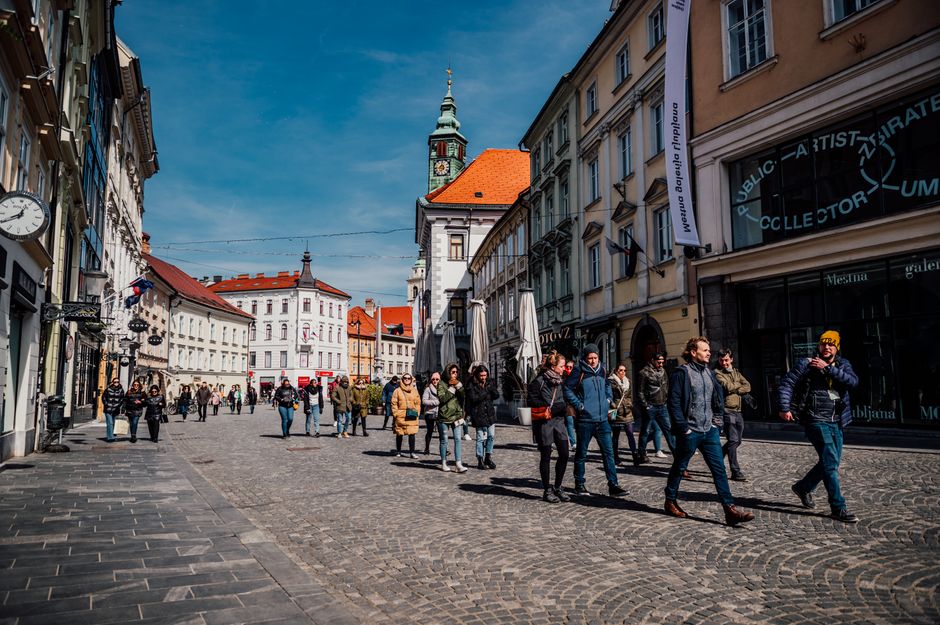
Ljubljana is walkable. The old town, castle, Tivoli Park, Metelkova, and the central market are all within 30 minutes of each other on foot. BicikeLJ (free first hour, 38 stations) covers the same ground faster.
Buses cover the wider city — the LPP network runs on the Urbana card (loaded at kiosks or the LPP app, €1.30 per ride). For day visitors staying in the centre, buses are unnecessary.
Taxis and Bolt are available; Bolt typically costs less and has no negotiation required. A ride from the train station to the old town is under €5.
Safety
Ljubljana is one of the safest capital cities in Europe. Violent crime is rare. Pickpocketing exists at the level of any tourist-facing city — keep usual awareness in crowded markets and on public transport. The Metelkova area is safe to visit at night; the city does not have neighbourhoods that require avoidance.
When to Visit
May and June: the best combination of good weather, manageable crowds, and full market operation. The Open Kitchen (Odprta Kuhna) runs from late March. Temperatures 18–24°C.
September: the next best option — summer crowds have thinned, weather remains warm, and outdoor café season is still running. The grape harvest is happening in Primorska.
July and August: peak season, hottest temperatures (up to 35°C), most expensive accommodation, and the most visitors. The city is pleasant but noticeably busier. The outdoor cinema season (Kino Šiška, Kino Bežigrad) runs through summer.
November to February: cold (down to -5°C), some outdoor attractions limited, but the city functions year-round and prices are lowest. Christmas market in December around Kongresni trg.
Getting In
By train: Ljubljana train station is central — a 15-minute walk from the old town. Direct trains from Vienna (6 hours), Zagreb (2.5 hours), Budapest (9 hours), Venice (via Trieste, 4 hours). The train is the recommended arrival method from Vienna or Zagreb.
By plane: Jože Pučnik Airport (BRU / LJUBLIANA) is 25 km north of the city. GoOpti shared transfers, regular bus services, and taxis connect to the city centre (see the airport transfer post for current options and prices).
Tipping
Not mandatory but standard in restaurants: 10% for good service, rounding up the bill for a coffee or drink. The Slovenian service culture is direct rather than effusive; don't interpret lack of performance as bad service.
Our Take
Ljubljana rewards a minimum of two full days — enough for the old town, castle, Tivoli, one evening on the riverside, and one day trip. Three days allows both Bled and Postojna. The city is well-organised, English-friendly, safe, and priced fairly. It is a capital that functions well at tourist scale without being overwhelmed by it.
Master Ljubljana in Minutes
Don't waste hours planning. Get our condensed, digital cheat sheet with everything you actually need.
Shop Guide on Etsy →