ConciseTravel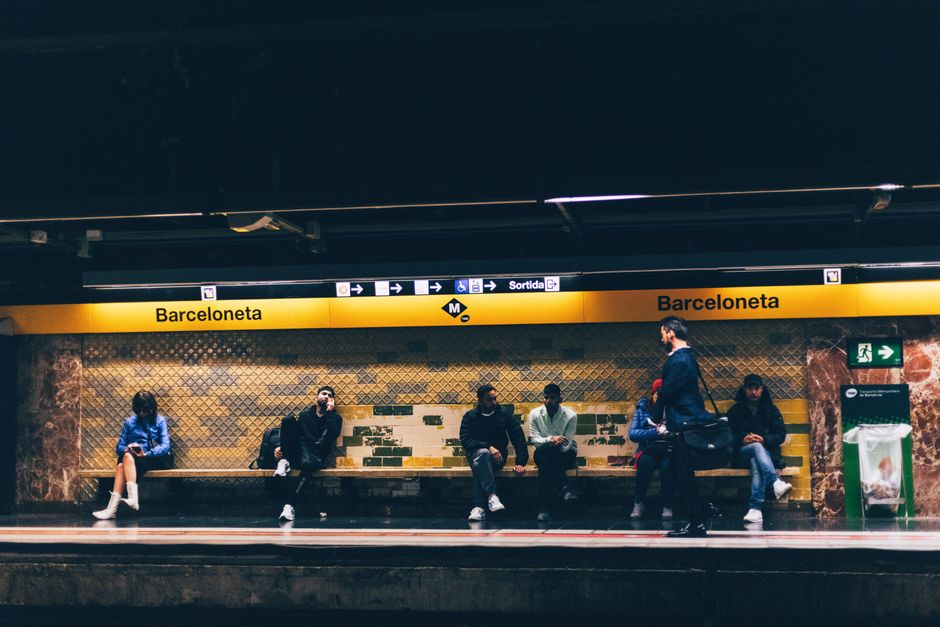
You're standing on Line 3 at 11am, wedged between a tour group speaking Mandarin and a street performer's backpack, watching your phone's battery drain as you refresh Google Maps for the third time. The train lurches. Someone's elbow finds your ribs. You're trying to figure out which direction is which on a metro map that looks like someone threw spaghetti at a wall and called it design.
Here's the thing: the Barcelona metro is genuinely excellent. Clean, fast, frequent, cheap. But tourists mess it up constantly, and that costs them time, sanity, and sometimes euros.
Let's fix that.
The Metro Isn't Complicated, But You're Thinking About It Wrong
The Barcelona metro has 8 lines, color-coded. Simple. But here's what most tourists don't know: not all lines are created equal.
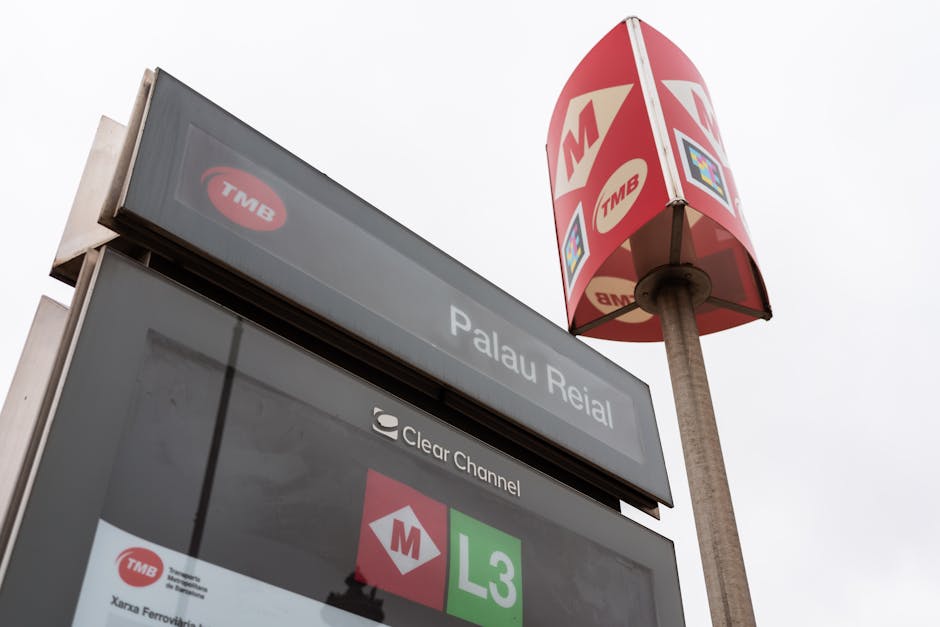
Line 3 (green) is the tourist highway. It connects Las Ramblas, Plaça de Catalunya, and Park Güell. Every tour group, backpacker, and casual visitor is on this line during peak hours. It's crowded, sweaty, and pickpockets love it. If you're trying to enjoy your morning, L3 at 10am is a trap.
Lines 1, 2, 4, and 5 serve locals. They're busy, but in a functional way. Mostly people with actual destinations, not cameras.
The key insight: Time your travel to avoid 8–10am (rush hour) and 1–3pm (post-lunch crush). After 5pm, the metro is weirdly pleasant. Early morning (before 8am) is peaceful, if you're flexible.
The Ticket Equation: Why Hola BCN! Beats Individual Rides
Most tourists buy single tickets (€2.40 each). Let's do the math:
- Single ticket: €2.40 × 10 trips = €24
- T-casual pass (10 journeys): €11.35
- Hola BCN! 3-day unlimited: ~€20
If you're staying 3+ days, Hola BCN! is a no-brainer. Unlimited rides, no thinking, no fumbling at machines. Just tap and go.
Bought individual tickets? That's fine once. But if you're planning multiple trips per day (and you are), you've already lost money.
Pro tip: Buy your pass at the airport or any metro station ticket office. Most machines accept cards now, but lines can be chaotic during peak hours. Get it sorted when you arrive.
The Meta-Skill: Reading the Lines (And Why L3 Is a Trap)
Here's what separates locals from tourists:
Locals transfer. They don't ride one line end-to-end. If they're in the Gothic Quarter heading to Park Güell, they don't take L3 directly (packed). Instead, they might take L4 to L3's less-crowded mid-point, transfer, and arrive with their sanity intact.
Locals know the pedestrian route. From Plaça Reial to Passeig de Gràcia? That's 15 minutes walking. Faster than the metro, no crowds, and you see stuff.
Locals check the metro map before they leave their hotel. Not on the platform. Before. They know: Which line? Where's the transfer? Which exit? This takes 20 seconds and saves you from standing confused at a metro station.
Pickpockets Love Crowded Trains (And You Can Avoid Them)
This is the real threat on Barcelona's metro. Not the system, the theft.
Crowded Line 3 during peak hours = prime pickpocket real estate. Distracted tourists, packed cars, easy access to bags and phones.
Here's the actual defense:
- Wear your backpack on your front in packed trains
- Put your phone in a front pocket with your hand on it
- If a train is visibly overcrowded, wait for the next one
- Avoid L3 between 9am–1pm if you can
Sound paranoid? It's not. It's just reading the room. Locals do this naturally; tourists learn it the hard way.
Night Buses: When the Metro Sleeps
The metro runs until midnight (Sun–Thurs), 2am Friday, and 24 hours on Saturday. But what if you're out late on a Wednesday night?
Night buses (marked N followed by a number) take over. They're free with your travel pass, slower than the metro, but they work. Check the TMB website (tmb.cat) for your route before heading out.
Honestly, if it's past 1am and you're solo, a taxi (€8–12) is safer and faster than waiting for a night bus. Worth the expense.
The Practical Ritual: What Locals Actually Do
Here's how it works in real life:
- Plan your route before you leave. Google Maps or Citymapper (app) works great; just tell it you're using public transport.
- Tap in, know your exit. Read the station name as you board. When the doors open, glance at the next station sign. You won't miss your stop.
- Download the metro map. Seriously. Offline. It's 1MB. No signal? Still know where you are.
- Transfers are normal. Barcelona's metro isn't designed as one-line journeys. If you transfer once or twice, you're doing it right.
- Off-peak = peace. If you can move your Sagrada Família trip to 4pm instead of 10am, do it. The metro experience is completely different.
When to Walk Instead
Gothic Quarter to Plaça de Catalunya? 10 minutes. Plaça de Catalunya to Passeig de Gràcia? 15 minutes. Passeig de Gràcia to Park Güell? Too far; metro.
The metro is amazing for long hauls (airport, Montjuïc, outlying neighborhoods). But inside the city core, walking often beats waiting. Plus, you stumble on cafes, street art, and neighborhoods the tourists miss.
The Barcelona Metro: Better Than You Think
The system works. Your job is to work with it, not against it.
Skip L3 at 10am. Buy a Hola BCN! pass. Plan your route. Tap in with confidence.
You're not lost. You're just navigating like someone who actually lives here. For the complete logistics on metro routes, timing, and how to layer them into your daily itinerary, check out our Barcelona guide's Transportation section — it has the actual routes, station names, and timings you'll need to execute this plan.
Master Barcelona in Minutes
Don't waste hours planning. Get our condensed, digital cheat sheet with everything you actually need.
Shop Guide on Etsy →