ConciseTravel
Getting Around Bruges on Foot vs. Bike: Which is Better for First-Timers?
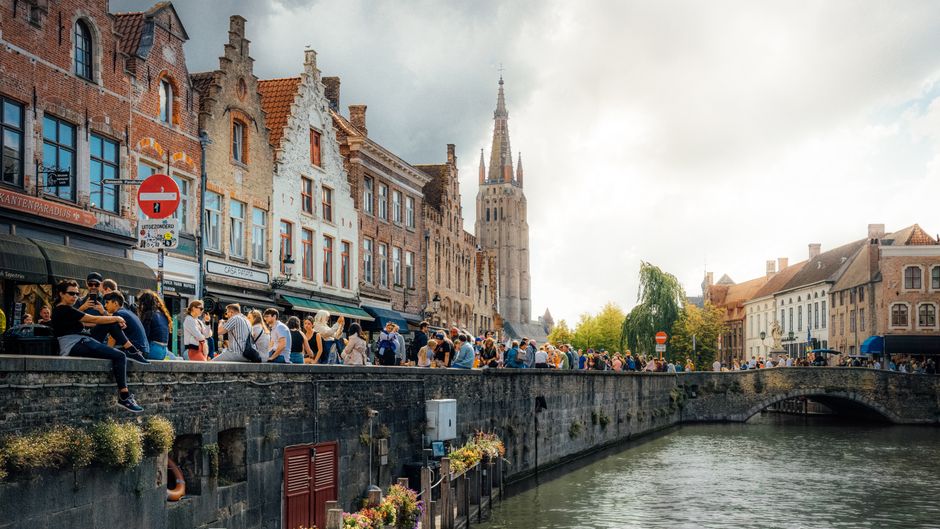
Bruges is tiny. The entire medieval city fits inside a 1.5 km radius. You could theoretically walk across it in 20 minutes if you didn't stop to gawk at half-timbered buildings and swans.
But tiny doesn't mean you won't get lost. And the way you move through the city—on foot or by bike—completely changes how it feels. We'll walk you through both so you can decide.
Bruges by Foot: The Honest Truth
Walking Bruges works. Most tourists do it, and most tourists enjoy it.
The medieval streets are designed for wandering. You'll stumble into quiet squares, smell fresh waffles from cafes you didn't know existed, and stop whenever something catches your eye. Walking forces the kind of pace that reveals the city's character.
Pros of Walking
- You absorb the details. Every corner has something—carved stonework, narrow alleyways, flower boxes on windowsills. You notice it because you're moving slowly.
- Zero cost. No rental fee, no lock-breaking anxiety, no helmet hair.
- No navigation needed. Bruges is a grid-like medieval core. Get lost, turn a corner, and you're somewhere charming. The Market Square (Markt) is your north star—you can see the belfry from most places.
- You stop when you want. Want to sit in a courtyard for 30 minutes? Do it. Want to pop into a random museum? The entry is right there.
- Weather flexibility. A drizzle doesn't ruin a walk. A downpour does, but Bruges has covered passages and cafes everywhere.
Cons of Walking
- Cobblestones and heels don't mix. The city is paved in cobblestones, and they're unforgiving. Wear flat shoes or trainers. Dress shoes will wreck your feet.
- It takes time. If you want to cover ground and see multiple neighborhoods in a few hours, walking is slow. The Markt to the Begijnhof is doable in 15 minutes, but you'll stop for photos.
- Rain and cold matter. Summer is lovely. November to March, you're dealing with grey skies, cold wind off the canals, and the occasional downpour.
- You'll double-back. One-way streets and canal edges mean you'll sometimes walk around something instead of through it.
Bruges by Bike: Speed and Practicality
Biking Bruges is how locals move. The city is flat (genuinely flat—no hills), and there are bike paths everywhere. Rental shops swarm the train station.
Pros of Biking
- You cover way more ground. The Begijnhof, the windmills at the eastern ramparts, Damme (a village just outside Bruges), and back in three hours. Walking the same route takes double the time.
- It's the local way. You'll blend in better. Bruges feels like a cycling city because, well, it is one.
- Rental is cheap. €5–10/day for a basic single-speed bike. Some hostels include rentals.
- Parking is everywhere. Racks line every street. No theft anxiety if you lock it.
- You move faster past tourist traps. Sick of the Market Square crowds? Bike out in 10 minutes.
Cons of Biking
- Cobblestones are rough on bikes. They're fine for short rides, but your back will know about them on a 2-hour ride. Get a bike with suspension if you can.
- You miss details while pedaling. That carved window you would have noticed on foot? You'll miss it while watching for potholes and pedestrians.
- Rain changes the calculus. Wet cobblestones are slippery. Heavy rain makes it unpleasant.
- Steep learning curve if you're rusty. If you haven't cycled in years, the first 20 minutes of navigating Bruges traffic is janky. The cobblestones feel weird. You'll white-knuckle it.
- It requires navigation. Bruges has one-way streets and confusing bike routes. You'll need to check a map a few times.
So Which Should You Choose?
Walk if:
- It's your first time and you want to soak up atmosphere.
- You're traveling solo or with someone who loves wandering.
- The weather is decent (spring, summer, early autumn).
- You're not trying to cover the entire region in one day.
- You care about photography and stopping to admire things.
Bike if:
- You want to see Bruges plus day trips (Damme, the windmills, countryside villages).
- You've got limited time and want efficiency.
- You're comfortable on a bike and don't mind cobblestones.
- You want to move like a local instead of a tourist.
- The weather is dry.
The Hybrid Approach (Our Pick)
Here's what we actually do: Walk the medieval core on day one. Bike on day two.
Day one is the Market Square, the belfry, the canals, the museums, the quiet squares. You're absorbing the vibe. Day two, rent a bike and pedal out to the windmills, loop around the ramparts, maybe cycle to Damme for lunch. You get both experiences without forcing yourself into a one-size-fits-all decision.
If you're only in Bruges for 24 hours, walk. The medieval core is the point. If you've got 48+ hours, consider a bike for day two or three.
Practical Tips for Either Option
Walking:
- Wear comfortable, flat shoes. Trainers are ideal; heels are a mistake.
- Start at the Market Square and work outward.
- Download a map on your phone. WiFi is everywhere, but offline maps give you peace.
Biking:
- Rent from the station (cheaper, less hassle than anywhere else).
- Ask for a bike with lights if you'll ride after dusk.
- Lock your bike to a rack, not to a railing or tree (they get fined or cut down).
- Be cautious on cobblestones. Slow down, especially in rain.
Both ways work. The question isn't which is objectively better—it's which suits your travel style. And honestly, you'll probably end up doing both anyway. Pick one for each day, and let the city reveal itself at whatever pace feels right. Our full Bruges guide covers neighborhoods, attractions, and dining—perfect for planning your days whether you're on foot or pedaling.