 ConciseTravel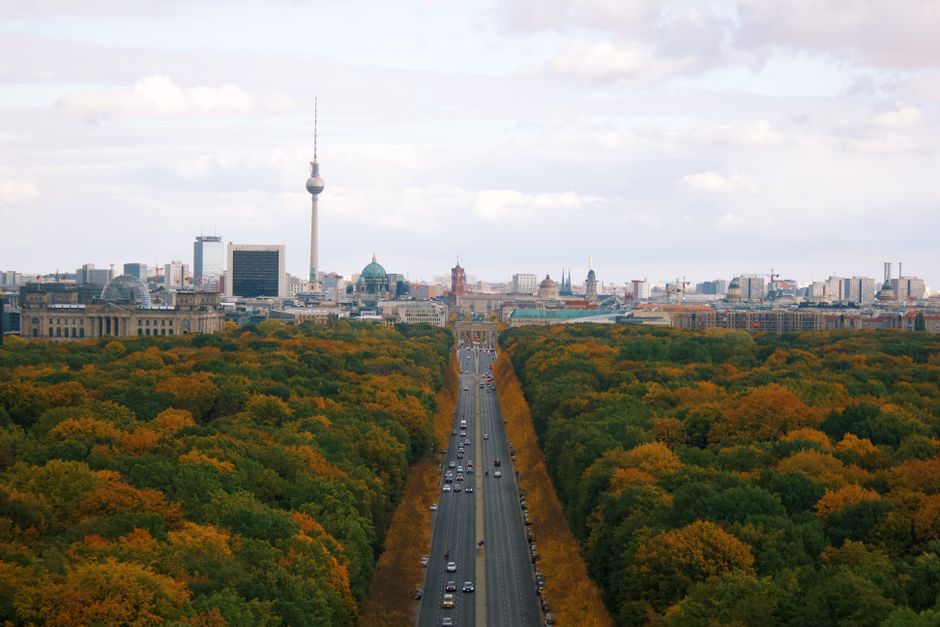
Berlin has more free cultural infrastructure than almost any city in Europe. Many of the best museums, memorials, and outdoor spaces cost nothing. Here is what we recommend.
The East Side Gallery
The longest surviving stretch of the Berlin Wall — 1.3 kilometres along the Mühlenstrasse in Friedrichshain — doubles as the world's longest open-air gallery. Over 100 murals painted directly onto the Wall's east face in 1990, many restored since. Free to walk any time. The most famous image is Dmitri Vrubel's Fraternal Kiss (Brezhnev and Honecker). Allow an hour to walk the full stretch.
The Memorial to the Murdered Jews of Europe
The Holocaust Memorial near the Brandenburg Gate covers 4.7 acres with 2,711 concrete stelae of varying heights. Free to walk through at any time. The experience of moving between the blocks — which rise well above head height as the ground drops — is deliberately disorienting. The underground information centre charges no entry fee.
Brandenburg Gate
Berlin's most iconic landmark is free to walk through and around any hour of the day. The Pariser Platz square in front of it, and the Tiergarten behind it, are both worth the time. The gate opens the view west along the Strasse des 17. Juni to the Victory Column.
Tiergarten
Berlin's central park is enormous (210 hectares) and free. The Tiergarten runs from the Brandenburg Gate west to Charlottenburg. Walking from the Brandenburger Tor to the Siegessäule (Victory Column) takes about 20 minutes. The column itself charges entry to climb, but the view from the base looking back toward the city is free and substantial.
Topography of Terror
The outdoor and indoor exhibition at the Topography of Terror — built on the site of the former Gestapo and SS headquarters — is free to enter. It is one of the most thorough and sober accounts of National Socialist terror infrastructure available anywhere, and it is on the open-air site itself, so the experience begins before you enter the building. Open daily.
Mauerpark on Sunday
Mauerpark in Prenzlauer Berg hosts a large flea market every Sunday morning and early afternoon. Free to browse. The market sprawls along the former death strip and into the park, selling vintage clothing, vinyl, furniture, and food. The famous open-air karaoke in the amphitheatre happens on Sunday afternoons and draws large crowds regardless of the talent level.
Bergmannstrasse and Graefekiez (Kreuzberg)
The streets around Bergmannstrasse in Kreuzberg and the Graefekiez neighbourhood to the south are some of the most pleasant urban walking in Berlin. Free to explore. Independent shops, street art, community gardens, the old Tempelhof cemetery (free to enter), and a generally un-touristy atmosphere. Take the U-Bahn to Gneisenaustrasse.
Tempelhofer Feld
The former Tempelhof Airport is now an enormous public park — one of the largest urban open spaces in the world. The runways are used by cyclists, skaters, kite surfers, and dog walkers. The terminal building is on the southern edge (tours are paid). Entry to the Feld itself is free, open daily. The sense of scale is unlike anything else in central Berlin.
Museum Island — exterior and riverfront
Museum Island holds five world-class museums; most charge entry. But the island itself, the Lustgarten park in front of the Altes Museum, the exterior of the Berliner Dom (Cathedral), and the riverfront walk along the Spree are all free. The renovation of the Humboldtforum (Palace) on the opposite bank has created good public plazas that are worth seeing.
The Neue Nationalgalerie (free entry on specific occasions)
Mies van der Rohe's glass-and-steel masterpiece in the Kulturforum charges entry for exhibitions, but the ground floor and exterior can be appreciated for free. Check the museum's schedule — they occasionally hold free open evenings. The building itself is one of the finest pieces of modernist architecture in Europe and worth a look regardless.
Checkpoint Charlie (exterior)
The former allied checkpoint between East and West Berlin is now a tourist trap by any objective measure, but the site itself and the outdoor exhibition boards telling the story of the crossing point are free to read and visit. The indoor museum (Mauermuseum) charges entry and is optional. The boards outside give a solid overview of what happened here.
Prenzlauer Berg neighbourhood walk
The streets of Prenzlauer Berg — particularly around Kollwitzplatz, Helmholtzplatz, and Kastanienallee — are worth an afternoon on foot. The neighbourhood has some of the best-preserved Wilhelmine architecture in Berlin (this area was not as heavily bombed as others), good street art, and a lived-in, neighbourhood feeling. Free to explore.
Gendarmenmarkt
The square widely considered Berlin's most beautiful — flanked by the Konzerthaus, the Deutscher Dom, and the Französischer Dom — is free to walk through and sit in. The two domed cathedrals give the square its distinctive symmetry. The square is especially worth visiting in winter when the Christmas market sets up (market stalls are browsable for free).


