ConciseTravel
Budapest's ruin bars are a phenomenon. They exist in abandoned, semi-derelict buildings—courtyards, warehouses, overgrown gardens—that have been colonized by bars, artists, and young people. They're chaotic, they're original, and they're completely authentic to Budapest's underground culture.
The ruin bar scene is concentrated in the Jewish Quarter (District VII), specifically around Kazinczy and Dob utca. It's become a legitimate tourist attraction, which creates a paradox: the spaces that defined authentic, undiscovered Budapest are now on everyone's itinerary.
That said, they're still worth experiencing. Here's the honest breakdown.
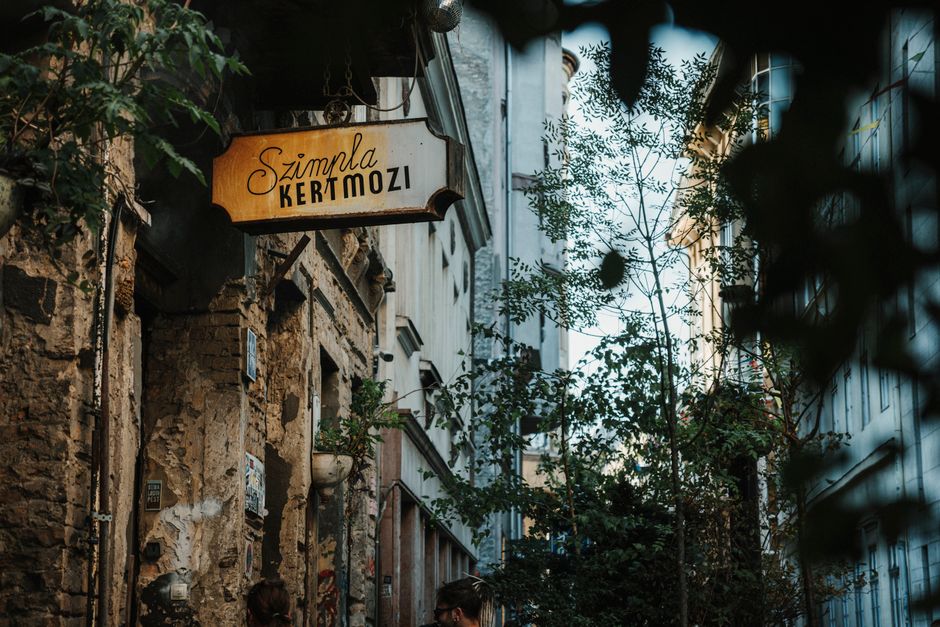
Szimpla Kert: The Original (And Most Touristy)
Szimpla Kert opened in 2002 as the first ruin bar. It's a multi-level courtyard space filled with salvaged furniture, string lights, mismatched everything, and about 200-300 people on a Friday night.
The vibe: Party atmosphere. Young crowd (mostly tourists, some locals). Music ranges from indie rock to electronic. People drinking, dancing, socializing. It's fun, it's chaotic, it's exactly what tourists imagine Budapest's underground should be.
The actual experience: Crowded, loud, you'll spend time waiting in line for drinks, you'll bump into people, it's hectic. But there's also genuine atmosphere—the mismatched furniture and found-object aesthetic is genuinely charming, even if it's now intentional rather than accidental.
Cost: Drinks 600-900 HUF (€2-3) for local beers, 1,200-1,800 HUF (€4-6) for mixed drinks. Cheap by European standards.
Best time: Thursday-Saturday, after 10pm. Weekday evenings are quieter (more manageable). Friday-Saturday nights are absolutely rammed (and more fun if you like crowds).
The admission "trap": There's technically no cover charge, but many tourists end up feeling like they're expected to buy drinks. You're not. Sit with a cheap beer and you're good.
Pro tip: Arrive early (9-10pm) if you want space to sit. After 11pm, standing room only.
Verdict: Go at least once. It's the original, it's the most famous, and despite being touristy, it's still genuinely fun. The first-time experience is legitimate even if the authenticity is compromised by popularity.
Fogás: The Slightly Less Touristy Alternative
Fogás is a few blocks from Szimpla, in a similar but smaller converted industrial space. It's got the same aesthetic (salvaged furniture, string lights, chaotic) but a different crowd.
The vibe: Younger, more local crowd. Still busy but less "tourism factory" than Szimpla. Music is more varied. People are actually mingling, not just photo-posing.
Cost: Similar to Szimpla (€2-3 for beer, €4-6 for mixed drinks).
Best time: Thursday-Saturday, 10pm onwards.
Verdict: If you want the ruin bar experience with slightly better atmosphere (fewer selfies, more actual social interaction), Fogás is worth considering instead of or in addition to Szimpla.
Instant: The Rooftop Garden
Instant is a larger ruin bar with an actual rooftop garden (unusual for ruin bars). It's got multiple rooms, a courtyard, and outdoor space with views over the Jewish Quarter.
The vibe: Less aggressively chaotic than Szimpla. More room to spread out. The rooftop garden is genuinely nice—you can escape the crowd, get air, see the neighborhood.
Cost: Similar pricing (€2-3 beer, €4-6 cocktails).
Best time: Anytime Friday-Saturday. The rooftop is particularly nice in summer.
Verdict: Better venue than Szimpla if you want to actually sit and talk, but less iconic. Worth going if you're in the neighborhood.
AKT Kert: The Bohemian Gem
AKT Kert is one of the earlier ruin bars, smaller than Szimpla, with a more bohemian/artistic vibe. It's got live music, art installations, a genuinely creative atmosphere.
The vibe: Artists, young people, genuinely underground feeling. Less "party," more "hang out and experience art."
Cost: Similar (€2-3 beer).
Best time: Weekends, especially if there's live music (check ahead).
Verdict: This is closer to what the ruin bars were originally about—creative spaces, not just bars.
The Ruin Bar Paradox
Ruin bars were originally alternative spaces—artist collectives, party venues, genuinely underground. They attracted locals because they were cheap and cool. Now they're on every travel guide's top 10 list.
The spaces haven't changed, but the crowd has. It's hard to maintain authenticity when you're on purpose-built tours ("Ruin Bar Crawl: Visit 3 Bars in One Night!").
Should you still go? Yes. They're still fun, they're still distinctive, and you'll still have a good time. Just understand that what you're experiencing is now a kind of "authentic as presented to tourists," not raw authenticity.
Ruin Bar Crawl Tours
Tour companies offer "Ruin Bar Crawls" (visit 3-4 bars in one night, usually €20-40 including a drink). They're popular and they're honestly... decent. You meet people, you see multiple bars, the guide knows good places.
Pros: You'll meet other travellers, you'll see bars you might not find alone, you'll have a structured night out.
Cons: It's a tour group experience, not spontaneous discovery. The guide chooses bars (often places that pay kickback), not necessarily the best ones.
Verdict: Skip the tour if you want to experience ruin bars as they are. Just go yourself, wander Kazinczy utca, pick a bar that looks good.
How to Actually Experience Them
Go solo or with friends, not on a tour. Walk Kazinczy utca (the heart of the scene). Pick a bar that looks interesting. Have a drink, talk to people, move to the next one if you want.
Go Thursday-Saturday night after 10pm. This is when they're full but not yet completely rammed.
Expect chaos. Bathroom situations can be questionable. The floors are sticky. People are drunk. It's a bar, in a ruin, filled with strangers. Manage expectations accordingly.
Bring cash. Most ruin bars take cards, but cash is easier.
Set a time limit. One or two bars is the right amount. Doing a whole crawl means you're just collecting venue checkmarks, not actually experiencing anything.
Safety Notes
The Jewish Quarter is safe. Ruin bars are safe. Standard city precautions apply: watch your drink, don't leave valuables unattended, be aware of surroundings. No specific safety issues beyond normal nightlife caution.
What Ruin Bars Are Actually About
They're about:
- Affordable nightlife (drinks are cheap compared to Western Europe)
- Creative, non-corporate spaces
- Meeting people
- Experiencing alternative Budapest culture
- Having fun without overthinking it
They're not about:
- Authenticity (they're now tourist attractions)
- Serious drinking (though people do drink)
- Finding "real" locals (you'll find mostly tourists and young Budapesters who go because tourists go)
- Photography opportunities (though they're photogenic)
Kazinczy Utca: The Street That Defines It
Kazinczy utca is essentially the ruin bar main street. It's lined with bars, restaurants, galleries. You can walk it, peek into venues, pick wherever looks good.
It's touristy now, especially on weekends. But it's still the heart of the scene.
The Verdict
Go to at least one ruin bar, preferably Szimpla (the original) and one other that appeals to you. Arrive after 10pm on Thursday-Saturday. Have a drink, soak in the atmosphere, understand why this scene existed and why it's now so popular.
Don't overthink the "is it authentic anymore" question. It's fun, it's distinctive, it's Budapest. That's enough.