 ConciseTravel

Budapest does Christmas better than its reputation suggests. It has two big markets a short walk apart, both with proper food rather than just mulled wine, and one of them carries on into the new year. The question is not whether to go but which market to prioritise and when.
The two markets worth your time
Vörösmarty Square: the original
This is the city's long-running Christmas market, set on the square at the top of Váci utca. It usually opens in mid-November and runs until around New Year, which makes it one of the longest-running markets in Europe.
It is strongest on crafts. Expect leather goods, hand-painted ceramics, wooden toys and embroidery, mixed in with food stalls. It gets busy, but the square is large enough that it rarely feels claustrophobic before early evening.
St Stephen's Basilica: the atmospheric one
The market in front of the basilica is smaller and arguably prettier. The cathedral facade becomes a screen for a projected light show after dark, there is usually a small ice rink around the Christmas tree, and the stalls lean more heavily towards food.
If you only have one evening, this is the one we would choose for atmosphere.
When to go
- Best week: late November to the first week of December. Both markets are open, prices have not peaked and weekday crowds are manageable.
- Best time of day: arrive around 3.30pm. You get daylight for browsing, then the lights come on and the basilica show starts.
- Avoid: Saturday evenings in December, when the basilica square can be very tight.
- After Christmas: Vörösmarty Square typically trades up to New Year, which makes Budapest a good fit for a combined Christmas market and New Year's Eve trip.
What to eat
Skip the generic sausage and go for the Hungarian specialities:
- Lángos: deep-fried flatbread, traditionally topped with sour cream and cheese.
- Kürtőskalács (chimney cake): spit-roasted sweet dough rolled in cinnamon sugar or walnuts.
- Stuffed cabbage (töltött káposzta): the classic Christmas dish, often sold by the bowl.
- Forralt bor: Hungarian mulled wine, usually red, sometimes white.
Market food is not cheap by Budapest standards, so think of it as an atmospheric light dinner rather than a bargain.
Linking the two markets
The markets are around 10 to 15 minutes apart on foot. The walk via Deák Ferenc tér takes you past the decorated shopfronts of the inner city, so treat it as part of the experience rather than a transfer. If you would rather have someone else handle the route and the history, a Budapest Christmas market walking tour (GetYourGuide) covers both in one go.
Make it a winter weekend
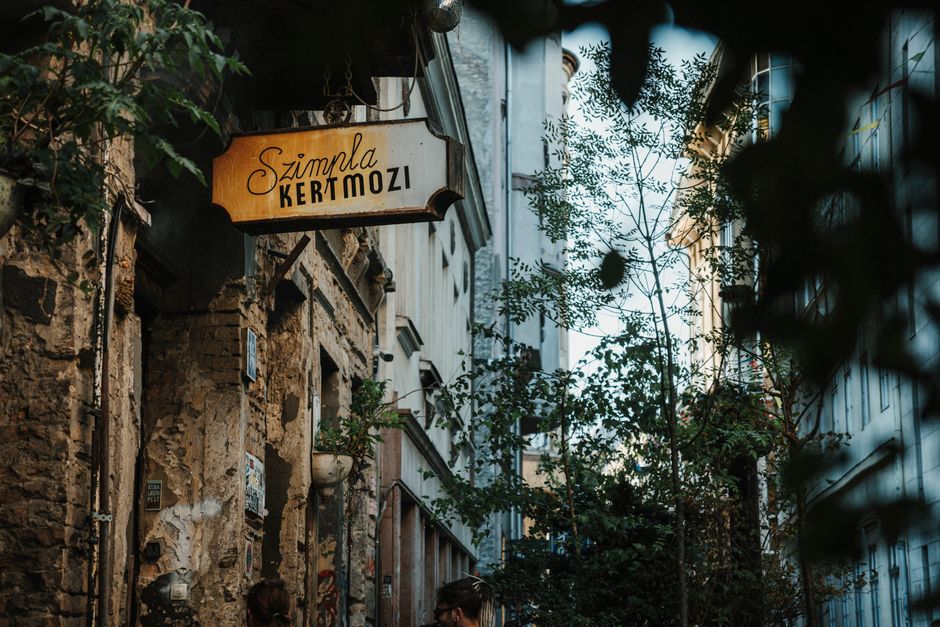
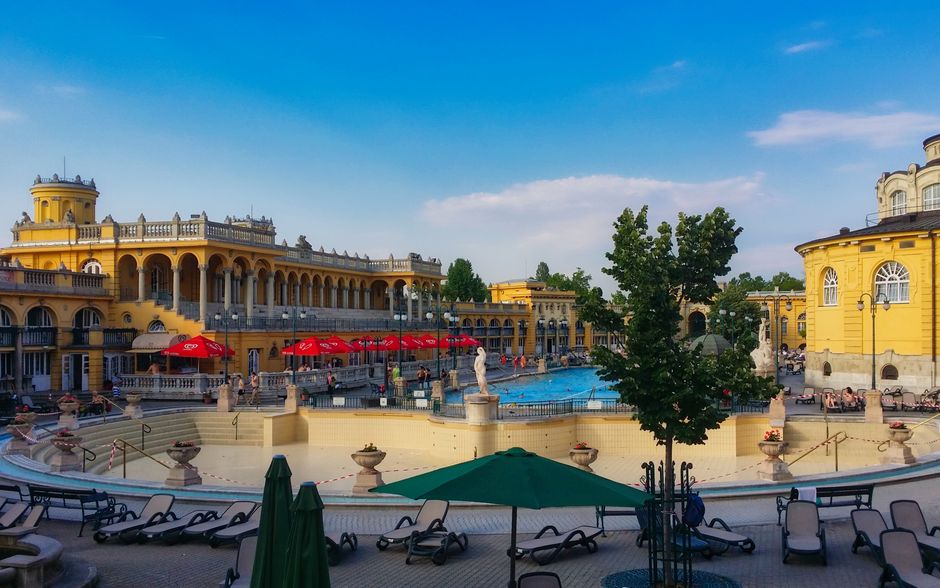
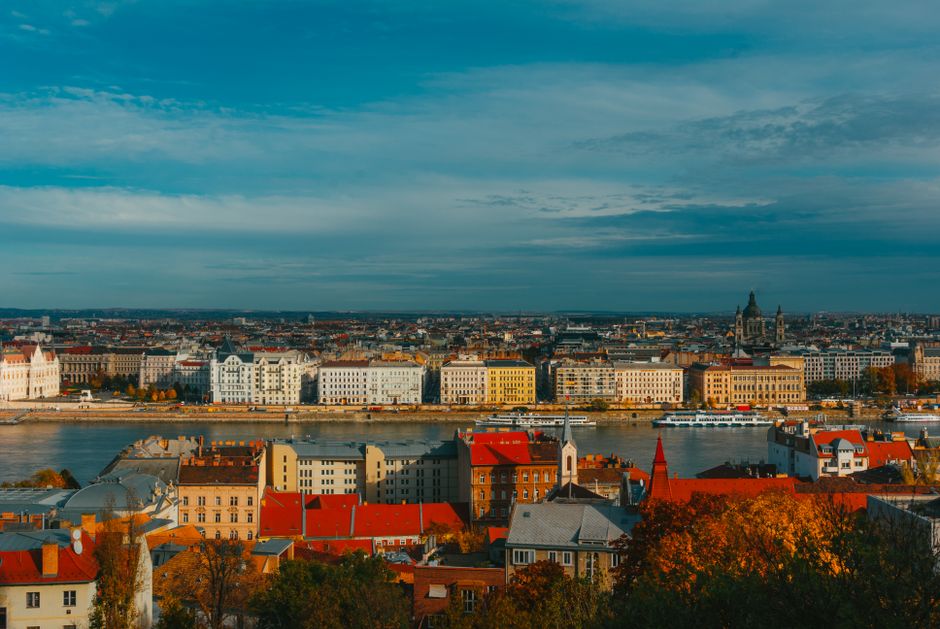
Christmas markets fill an evening, not a whole trip. Budapest in December pairs them perfectly with its thermal baths, as an outdoor pool in cold air is the best antidote to a long day on your feet. Add a ruin bar and an evening river view from the Buda side, and you have a weekend that feels very different from a typical market break.