ConciseTravel
The Barcelona Street Art Explorer: How to Spot (and Photograph) Murals Like a Pro
Why Barcelona's Walls Matter More Than Its Museums
You're walking through the Raval neighborhood. It's not the Gothic Quarter, it's grittier, less touristy, more rough around the edges. Then you round a corner and see a five-story mural. A woman's face, rendered in impossible detail, political and beautiful and alive.
This is Barcelona's street art. It's not a souvenir you buy. It's not a famous landmark you check off. It's art that lives on walls because artists believe something matters enough to paint it there.
And here's the thing: most tourists never see it. They're too busy herding toward Sagrada Família and Park Güell to notice the 50+ murals in the neighborhoods they walk through.
That's a loss. Street art is where Barcelona's real artistic energy is, right now, in this moment.
The History: Why Barcelona Became a Street Art Capital
Barcelona's street art didn't come from tourists. It came from activism, political expression, and artists who refused to be confined to galleries.
The political context: Spain's dictatorship ended in 1975, but Barcelona's independence movement didn't. Artists used walls as a voice, literally spraying their politics onto buildings when they couldn't speak in other ways.
The cultural context: Barcelona's art school (ESCAC) is one of the best in Europe. Young artists practice on walls. Galleries are closed to them initially, so walls become their gallery.
The current moment: Street art is now semi-legitimate in Barcelona. The city recognizes it as cultural heritage. Some neighborhoods allow it. Some murals are commissioned. But the best stuff still exists in a legal gray area, done with permission from the building owner, but without municipal approval.
This tension is what makes it interesting. It's not sanitized. It's real.
The Neighborhoods: Where to Actually Look
Street art in Barcelona isn't spread evenly. It's concentrated in specific neighborhoods with specific vibes.
Raval
The center of Barcelona's street art scene. Walls here are covered. Not every mural is good (some is), but the density is extraordinary.
What to expect: Large-scale murals (2–5 stories), political themes, diverse artists, constantly changing. New pieces appear weekly.
Where to go: Walk the main streets (Carrer de la Rambla del Raval, Carrer de Sant Antoni Abat) and every side street off these. That's where the best murals are.
Timing: Any time. It's safe during the day. Early morning (7–9am) is quietest; evening (5–8pm) is lively but more crowded.
Pro tip: There's no official street art tour in Raval, but there are independent guides (search "Barcelona street art tour Raval"). Worth it if you want context. Otherwise, wander with your phone and ask locals.
El Raval & Sant Antoni Border
Specifically around Sant Antoni Market and the side streets. More gentrified than Raval proper, but with great murals on the edges.
What to find: Mixed style, some political, some purely aesthetic, some by established street artists. Less density than Raval, but quality pieces.
Best time: Morning (before the market gets busy) or evening.
Poble Sec
An underrated street art neighborhood. South of the city center, less touristy, with a strong artistic community.
What to expect: Large murals, often with social/political themes. Fewer tourists = more authentic art.
How to get there: Metro L2 to Paral·lel, then walk. It's worth the trip.
The Ethical Question: Is Street Art "Legal"?
Short answer: It's complicated.
Some murals are commissioned. The artist negotiated with the building owner, got permission, executed the piece, everyone's happy.
Some murals are tolerated. The building owner could remove them but doesn't. It's a gray zone.
Some murals are straight-up illegal. Sprayed without permission, exist for a few weeks, get painted over.
As a tourist, you don't need to worry about this. You're not painting anything. You're just looking and photographing.
But it's worth understanding that what you're seeing isn't city-approved public art (like most of what you'd see in London or Berlin). It's more raw, more real, more risky, which is why it matters.
How to Photograph Street Art Like You Know What You're Doing
Most tourist photos of street art look the same: a straight-on shot of a mural, person standing in front of it making a face, dead eyes.
Let's fix that.
Rule 1: Get a Different Angle
Don't stand directly in front of the mural and shoot straight on. That's the boring shot everyone takes.
Instead:
- Shoot from an angle. 45 degrees. This adds depth and makes the mural feel 3D.
- Include the context. What's around the mural? Is it on a crumbling building? Adjacent to a cute cafe? That is the story.
- Get perspective. Stand further back and include the whole wall, the street, the neighborhood. A mural is only interesting in context.
Rule 2: Light Matters
Harsh midday sun is terrible for mural photography. It flattens colors and creates harsh shadows.
- Early morning (7–10am): Soft light, good colors, you'll see details. This is ideal.
- Golden hour (5–7pm): Warm light, longer shadows, atmospheric. Good for mural + environment shots.
- Avoid: 12–3pm. The sun is directly overhead, colors look washed out, shadows are harsh.
Rule 3: Tell a Story
A good mural photo tells you something about the mural and Barcelona.
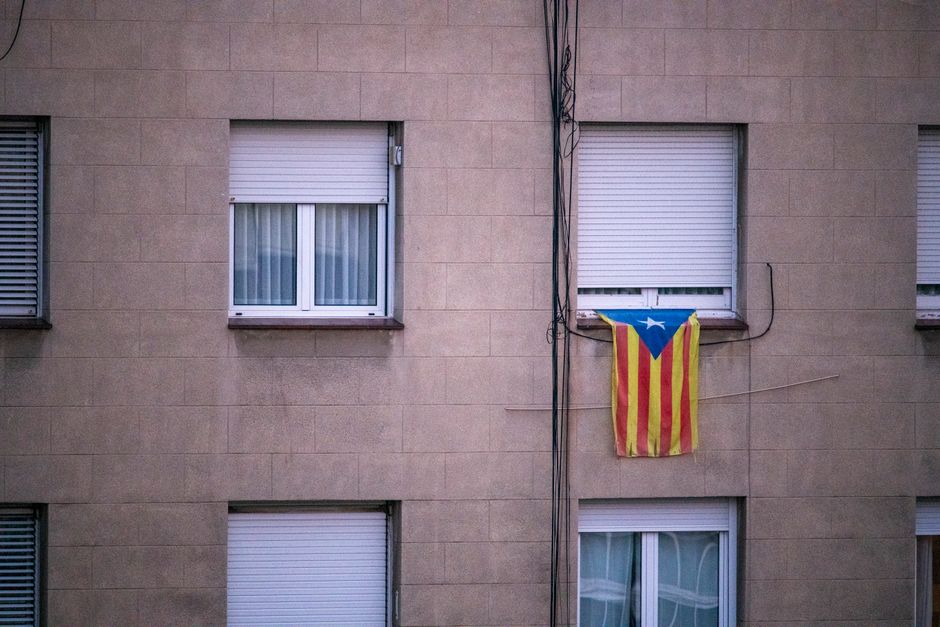
- A political mural with Catalan flag context? That matters.
- A beautiful portrait mural next to a deteriorating building? That contrast is the story.
- A street with 5 murals visible? Capture the density.
Don't just photograph the mural. Photograph the situation the mural exists in.
The Artists: Who's Actually Doing This?
Barcelona's street art has some recognizable names:
- BLU (Italian artist): Political murals, often critical of capitalism and authority. Large scale, impactful. Look for his work in Raval.
- Spok (Spanish artist): Murals with surreal, dreamlike quality. Often colorful.
- Escif (Spanish artist): Surreal, philosophical. Smaller scale, intricate detail.
- Local crews: There are Barcelona-specific collectives and crews doing work constantly. You'll see tags and pieces that you won't recognize, and that's part of the culture.
Tourist hint: You don't need to know the artist to appreciate the art. Just look. Feel something. Photograph it if it moves you.
The Street Art Tourist Trap (And How to Avoid It)
There are "street art tours" that take you to the same 5 murals that every other tour goes to. You pay €20. You take the same photo everyone else takes. You move on.
Skip this.
Instead:
- Get lost in Raval intentionally. Walk side streets. Talk to locals. Ask where new pieces are.
- Go to Mercat de Sant Antoni and wander the surrounding blocks. You'll find undiscovered stuff.
- Download the "Walls Barcelona" app (if it's still active). It's a crowdsourced map of murals with photos and artist info.
- Check street art Instagram accounts focused on Barcelona. They post newly discovered pieces and locations.
The Philosophy: Why Street Art Matters More Than You Think
Here's the real reason to care about Barcelona's street art:
It's not curated. It's alive.
You can visit the Picasso Museum and see Picasso's genius locked in a building, protected, historical, dead in the sense that it's finished and untouching.
You can walk down a street in Raval and see a mural that an artist sprayed last week, angry about something, saying something now, not historical yet, still alive.
One is art. The other is voice.
That's why street art matters. It's a city talking back to you, not a city performing for you.
Bringing It Together
Barcelona's street art is everywhere, but you have to look. And you have to look in the neighborhoods where it lives, not where it's been cleaned up for tourists.
For navigation to the best street art neighborhoods, safety tips for exploring Raval and Sant Antoni, and context on what Barcelona's murals are actually saying (the political and cultural references), check out our Barcelona guide's Attractions and Insider Tips sections, they've got the neighborhood maps and history that make the art make sense.
Master Barcelona in Minutes
Don't waste hours planning. Get our condensed, digital cheat sheet with everything you actually need.
Shop Guide on Etsy →