 ConciseTravel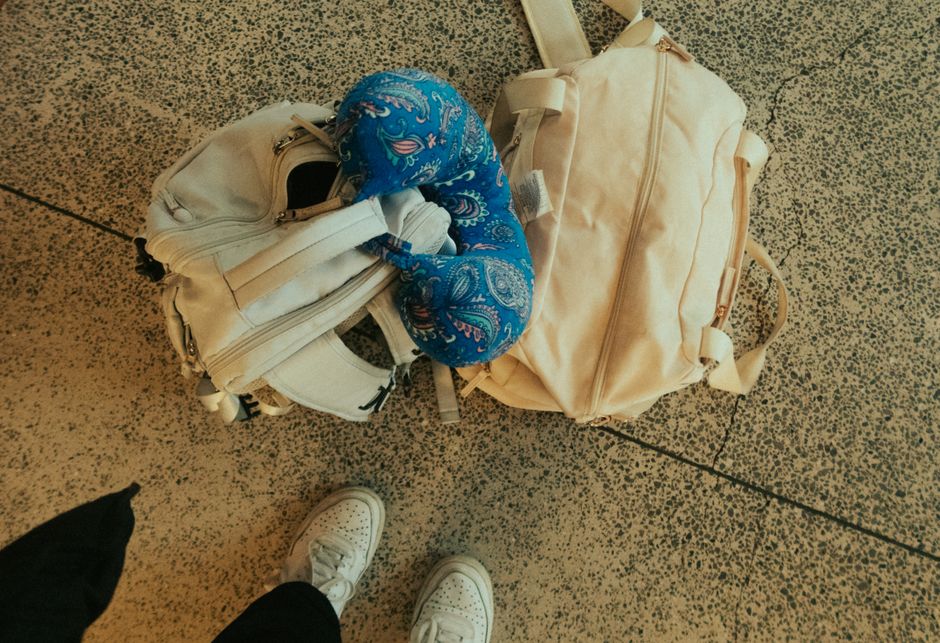
The travel pillow market is worth hundreds of millions of pounds and produces a remarkable amount of mediocre foam. For a 2-hour city break flight, most of what's on offer is not worth the bag space. But comfort on short flights still matters, and getting it right is simpler than the product aisle suggests.
The Honest Assessment of Standard Travel Pillows
The U-shaped neck pillow is the default option. It prevents your head from flopping sideways. It does not help you sleep upright; no pillow really does on a short-haul seat. If your main problem is neck strain on a flight where you're not actually trying to sleep, a basic U-pillow from Cabeau or Travelrest does what it promises at around £20-30.
The inflatable travel pillow occupies less bag space and is usable in a pinch but less comfortable than memory foam equivalents. Fine for very occasional use.
The Trtl Pillow is a scarf-and-support hybrid that wraps around the neck rather than sitting behind it. It packs flat and is genuinely more effective at supporting a dropped head than standard U-pillows, though it looks slightly unusual. Around £30-40. Worth considering if neck discomfort on flights is a specific problem for you.
For Short City Break Flights: The Real Calculus
A London to Amsterdam flight is 1h15m. London to Barcelona is 2h15m. London to Prague is 2h10m. These are not nap-worthy durations for most people.
On flights under 2h30m, comfort optimisation is less about sleep and more about avoiding the specific discomforts of economy seating:
- Neck strain (solved by a pillow only if you're actually sleeping)
- Lower back discomfort (lumbar support cushions help; many people use a folded jacket)
- Cold cabin temperature (a layer in your bag is more useful than any pillow)
- Dry eyes and ears (eye drops and earphones beat any pillow innovation)
The practical kit for a comfortable short city break flight: a pair of noise-cancelling earphones or good earplugs, an eye mask if you sleep well in motion, and a layer to wear or use as a blanket. That's it. These are also useful in the destination city, unlike a U-pillow.
When a Travel Pillow Is Worth Packing
Overnight trains. A travel pillow earns its keep on overnight sleeper trains where you're genuinely trying to sleep for several hours. The Cabeau Evolution S3 has a back panel that clips to the seat to prevent forward head drop, which is the main problem in an upright seat. This is a meaningful feature.
Long-haul connections before a city break. If your European city break follows a transatlantic or long-haul leg, the pillow is relevant to the first part of the journey.
Known sensitivity. If you regularly wake from short naps on planes or trains with a sore neck, a good travel pillow solves a real problem that others don't have.
What Not to Pack
Full-size pillowcase and a compressible pillow: Fine for long-haul, excessive for a 2-hour city break flight. Bag space is more usefully spent elsewhere.
Premium inflatable pillows above £40: The inflation and deflation ritual and the marginal comfort gain over cheaper alternatives doesn't justify the price for short-haul use.
Multiple pillows "just in case": One or zero is the right number for a city break.
The Earphones Argument
If you're going to spend £30 on travel comfort for a city break flight, noise-cancelling earphones do more work than a pillow. Cabin noise is a significant source of flight fatigue. Basic noise-cancelling earbuds from Anker (Soundcore Liberty series, around £30-50) or Sony make a short flight materially more comfortable. You'll also use them for navigation and music in the destination city. A U-pillow stays in the bag.