ConciseTravel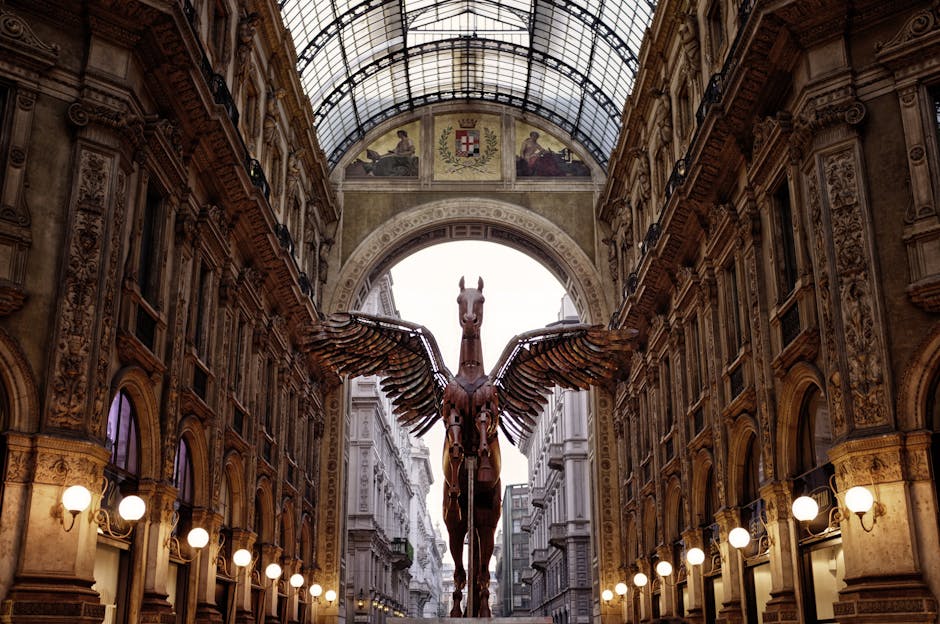
The Galleria Vittorio Emanuele II opened in 1877. It's a glass-roofed shopping arcade designed to be the world's most elegant marketplace. Today, tourists spin on their heels in the mosaic floor tiles for luck, and locals hustle through on their way to work.
Here's what's actually worth knowing about Milan's most overcrowded building.
The Architecture: Why It Matters
The Galleria is a cruciform arcade, four corridors meeting at a central octagon. The glass roof is vaulted. Natural light floods the interior. In 1877, this was revolutionary architecture: a climate-controlled shopping street where Milanese could browse luxury goods regardless of weather.
The design by Guiseppe Mengoni was ambitious. It cost a fortune. It took 5 years to build (1865–1877). And when Mengoni finished the project, he jumped from the roof. The pressure was immense.
In today's terms: It's like a luxury mall, but designed by someone obsessed with beauty and light rather than maximizing square footage for rent. Every surface is intentional: mosaics, wrought iron railings, painted ceilings.
The Layout and What's Inside
The Galleria has four arms:
- North (Duomo side): Leads directly to the Cathedral. Busiest.
- South: Leads to Scala (the opera house). Less crowded.
- West and East: Connecting corridors.
Current tenants: Luxury brands (Prada, Louis Vuitton, Gucci), Zara, Apple, cafes, restaurants.
The reality: It's a high-end shopping arcade. If you're here to shop luxury, prices are standard international rates. If you're here to experience the architecture, arrive early (8:30am) before the tour groups.
The Heel-Spinning Ritual: Fact vs. Fiction
The superstition: Spin on your heel in the mosaic floor beneath the octagon (specifically, on the Taurus mosaic, the bull zodiac symbol) and you'll have good luck (or money, or a successful love life, depending on which tradition you believe).
The reality: Thousands of tourists do this daily. The marble is worn smooth from heel-spinning. Locals find it silly.
Should you do it? Sure, if you want the photo. It takes 10 seconds. Just don't expect magic.
The real story: The mosaic floor shows zodiac symbols. The bull (Taurus) is worn most heavily because it's central and because the superstition is widespread. It's a feedback loop: people spin there because everyone else spins there.
What's Actually Worth Seeing
- The octagonal rotunda: Stand in the center and look up. The glass vault is a masterpiece of 19th-century engineering. Light filters through in layers. It's genuinely beautiful.
- The mosaics: Walk slowly and examine the floor designs. They're intricate, colorful, and tell stories. Most tourists rush past them.
- The storefronts: Even if you're not shopping, the window displays are curated. Fashion brands use the Galleria as a visual statement of their brand.
- The cafes: Sit down with coffee at one of the Galleria's cafes (Camparino is the historic one) and people-watch. An hour of observation beats an hour of shopping.
Shopping in the Galleria
Honest assessment: You can buy everything in the Galleria in Milan's neighborhoods for less money and less crowd stress.
But if you're window-shopping or specifically hunting luxury brands, the Galleria is efficient. Everything is under one (gorgeous) roof.
Price note: Luxury items are priced the same as elsewhere in Milan. There's no discount for being in this historic location; if anything, rents are higher, so prices might reflect that.
Best reason to shop here: If you're already walking between Duomo and Scala, and you need something specific.
The Opera House (Scala)
The south corridor of the Galleria exits at La Scala, Milan's opera house.If you have time, walk through the Galleria and exit at Scala just to see the opera house facade. It's one of Milan's defining buildings.
Pro Tips for Experiencing the Galleria Properly
- Go early (before 9am). Crowds arrive 10am onwards. Early light is also better.
- Skip the heel-spinning unless you genuinely want the photo. The ritual is about tourists confirming a ritual, not experiencing something authentic.
- Sit at a cafe for 30 minutes. Order a coffee (€5) and watch people. That's the real Galleria experience, observing how Milanese move through this space.
- Read the mosaics. Look down. Count how many zodiac symbols you can identify. Engage with the craft.
- Don't shop unless you were already shopping. The Galleria as a shopping destination is overrated. As a building, it's exceptional.
Historical Context
The Galleria was built to celebrate Italian unification (1861). It's named after King Victor Emmanuel II. The idea was to create a monument to progress: a modern, glass-roofed shopping street that showed Italy's advancement.
It succeeded. But in 2026, it's more history than function. It's a 19th-century building adapted for 21st-century retail. The friction is visible but interesting.
Time Budget
- Quick pass-through: 15 minutes.
- Proper exploration: 45 minutes to 1 hour.
- With cafe break: 1.5–2 hours.
The Bigger Picture
The Galleria is Milan's connection between two monuments: Duomo and Scala. Walking from cathedral to opera house via this 19th-century arcade is a journey through Milan's cultural identity.
For full context on how these landmarks fit into a Milan itinerary, our guide covers the broader neighborhood and travel logistics.
Summary
The Galleria Vittorio Emanuele II is worth 30 minutes of your time, not because of shopping, but because it's a building designed with genuine care. Watch the light change through the glass vault. Examine the mosaics. Sit down. Then move on to something else.
The heel-spinning is optional.
Master Milan in Minutes
Don't waste hours planning. Get our condensed, digital cheat sheet with everything you actually need.
Shop Guide on Etsy →