 ConciseTravel
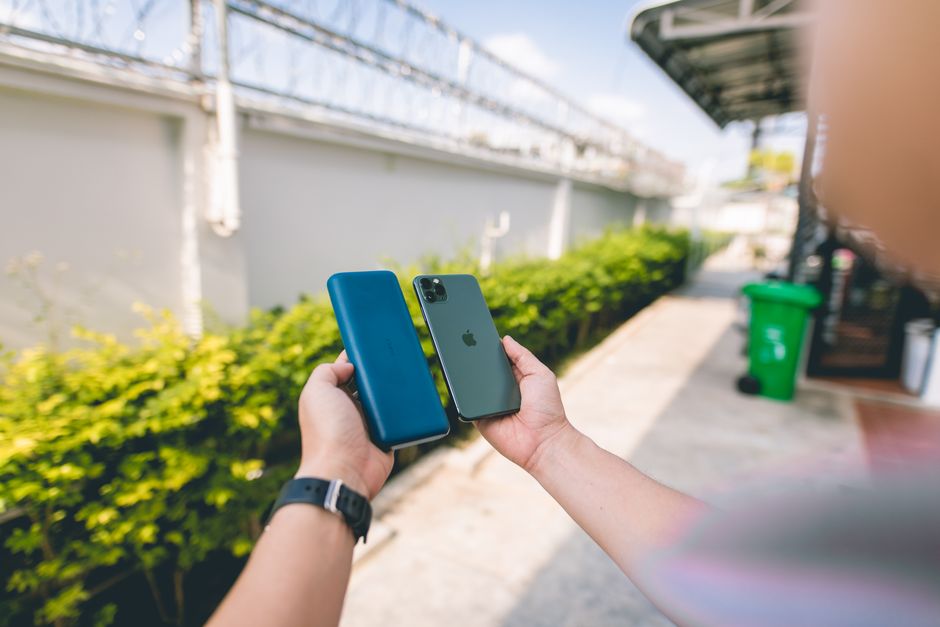
A dead phone in an unfamiliar city is not a minor inconvenience. It kills navigation, boarding passes, restaurant bookings, and the ability to find your way back to the hotel. A good portable charger costs less than dinner and earns its weight on day one.
Here's what to bring and what to skip.
Capacity: What You Actually Need
Power banks are rated in mAh. A typical smartphone battery sits between 3,500 and 5,000 mAh. Here's how to think about capacity for a city break:
5,000 mAh: One full phone charge. Fine for a day trip or a flight, not enough for a full day of heavy navigation and photography.
10,000 mAh: Two full charges. The sweet spot for a 3-5 night city break. Fits in a jacket pocket, goes through airport security without comment, and keeps you covered across a full day with medium to heavy use.
20,000 mAh: Four or more charges. Useful if you're also charging a tablet or sharing with a travel companion. Bulkier, heavier, and some airlines are fussy about large lithium batteries in checked luggage. Keep it in your carry-on.
The 10,000 mAh option handles almost every city break scenario without the bulk.
What to Look For in a Travel Power Bank
USB-C Power Delivery (PD): Fast charging for modern phones. Without it, you're waiting twice as long. Anker, Baseus, and Zendure make reliable units with PD at sensible prices.
Pass-through charging: Lets you charge the bank and your phone simultaneously from one wall socket. Useful in hotel rooms with limited plug sockets.
Weight: A 10,000 mAh bank from a decent brand should weigh around 180-220g. Anything significantly heavier for the same capacity is dead weight.
Two output ports: So you can charge your phone and earphones or a travel companion's phone at the same time.
The Anker 523 (10,000 mAh, USB-C PD) and the Anker PowerCore Slim 10000 are both reliable, reasonably priced, and slim enough for a coat pocket. The Baseus 10,000 mAh range offers comparable specs at slightly lower prices.
Airline Rules
Portable chargers must go in carry-on luggage, never checked bags. This applies across all European airlines including Ryanair, easyJet, British Airways, and Wizz Air. Lithium batteries in checked holds are a fire risk, and airlines enforce this.
Most power banks up to 20,000 mAh (100Wh) are permitted in carry-on without pre-approval. Banks above 100Wh require airline approval before flying. A 10,000 mAh bank sits well under this limit.
If you're unsure, the mAh rating is on the label. Divide by 1,000 to get approximate Wh. A 10,000 mAh bank at 3.7V is roughly 37Wh, well inside the allowed range.
Other Charging Kit Worth Packing
Universal plug adapter: A single adapter with USB-A and USB-C ports covers most European sockets and reduces the number of separate wall chargers you need.
Short USB-C cable: 30cm cables are more practical in bags than 1m cables. Pack two if you're relying on a power bank for navigation all day.
MagSafe or wireless charging pad: Only worth it if you use wireless charging routinely. Wired charging via a PD cable is faster and more reliable from a power bank.
The Common Mistake
Packing a power bank and forgetting to charge it before you leave. Spend five minutes the night before departure checking it's full. It takes under a second to forget and most of the day to regret.