ConciseTravel
Milan has two art museums: the Pinacoteca di Brera and the Pinacoteca Ambrosiana. Everyone knows Brera. Most go to the Duomo instead. That's a mistake.
The Brera is where you see Italian art from the 13th to 20th centuries. The collection is authoritative. The building is beautiful. And it's far less crowded than any tourist site in Milan.
The Collection: What You're Actually Seeing
The Pinacoteca di Brera occupies the Palazzo Brera, a 17th-century palace in the Brera neighborhood. The collection is strong in:
Italian Renaissance: Paintings by Piero della Francesca, Mantegna, Bellini, Carpaccio. These are not reproductions. They're originals. The colors, the brushwork, the use of light, you can only fully grasp this in person.
Venetian Painters: The Brera has an exceptional collection of Venetian works (Veronese, Tintoretto, Canaletto). Venice's approach to light and color is on full display.
Caravaggio: One of the Brera's masterpieces is Caravaggio's "Supper at Emmaus" (1606). Dark background, sharp light, emotional intensity. It's one of Caravaggio's finest works.
Modern Italian: The museum extends to the 20th century, so you see the transition from Renaissance tradition to Modernism. Futurism is represented. De Chirico's surrealism. Morandi's still lifes.
Leonardo drawings: The museum holds Leonardo sketches and studies. Not paintings, but essential for understanding his process.
Layout and Navigation
Three floors:
- Ground and first floor: Medieval to Renaissance works. This is the core.
- Second floor: 18th and 19th century.
- Top floor: Modern (20th century onward).
Strategy: Start on the first floor. Spend 60–90 minutes there. Then, if you're not exhausted, move up. Most visitors don't have time for all three. The first floor is the essential experience.
Key Paintings to Hunt Down
- Piero della Francesca - "The Ideal City" (c. 1480) A geometric, haunting urban landscape. Rational perspective perfected. It's mesmerizing.
- Caravaggio - "Supper at Emmaus" (1606) A moment of recognition frozen in light and shadow. The surprise, the drama, Caravaggio was a master of human emotion.
- Mantegna - "Dead Christ" (c. 1475) Foreshortened perspective. Christ's feet point toward you. Anatomically precise and emotionally overwhelming.
- Bellini - works Giovanni Bellini was Venice's defining painter. Soft light, rich color, contemplative.
- Monet - "Rouen Cathedral" (1892) One of the few non-Italian masterpieces. Impressionism. Light studies on stone. Essential.
Practical Information
Hours: Tues–Sun 8:30am–7:30pm. Closed Mondays.
Cost: €12 (€15 with special exhibitions). Free for EU residents under 18 and some retirees.
Advance booking: Not required, but book online if you want to skip the queue (minimal added cost).
Audio guide: €5. Helpful, especially for Renaissance painting interpretation.
Duration: 90 minutes minimum. 2–3 hours if you're taking your time. You can finish in 45 minutes if you're rushing, but that misses the point.
Nearest metro: Lanza or Montenapoleone (Line 1), both 5–10 minutes' walk.
Why This Matters More Than You'd Think
Art museums can feel like obligation. You go, you check boxes, you move on.
But this collection represents 600 years of how Italian culture processed reality through visual means. You're not just looking at paintings; you're looking at how humans understood perspective, light, emotion, and composition across centuries.
Caravaggio's dramatic lighting influenced Western art for 400 years. Piero della Francesca's geometrical precision is the foundation of Renaissance perspective. Seeing these works in person, their scale, their color, their brushwork, changes how you see paintings in reproduction forever.
What You Won't Find Here (And Why It Doesn't Matter)
Leonardo paintings: The Last Supper is in the refectory (separate visit). No other major Leonardo paintings are here. But his sketches are invaluable.
Michelangelo: Milan doesn't have major Michelangelo works. Michelangelo was primarily a Roman and Florence artist. Milan's art tradition is different.
Ancient art: This is a painting museum focused on the medieval and modern period. If you want ancient Roman or Greek sculpture, you'll need the Museo Civico or a Rome trip.
Pro Tips
- Go on a weekday morning (10am). Tuesdays-Thursdays are quietest.
- Don't try to see everything. Choose one floor, spend time there, understand that floor deeply. That's better than rushing through all three.
- Spend extra time on Caravaggio, Piero della Francesca, and Bellini. These three painters define the collection. The others are context.
- Use the audio guide for Caravaggio at least. His work is emotionally complex. Context helps.
- Sit down when you're tired. The museum provides benches. Using them is smart, not lazy.
Combining Visits
The Pinacoteca di Brera is located in the Brera neighborhood. If you're staying there (which is wise; the neighborhood is beautiful), you can visit the museum easily.
Suggested itinerary:
- Morning: Pinacoteca di Brera (90 minutes).
- Mid-day: Lunch in Brera neighborhood (the cafes here are excellent).
- Afternoon: Walk Brera streets, vintage shops, galleries.
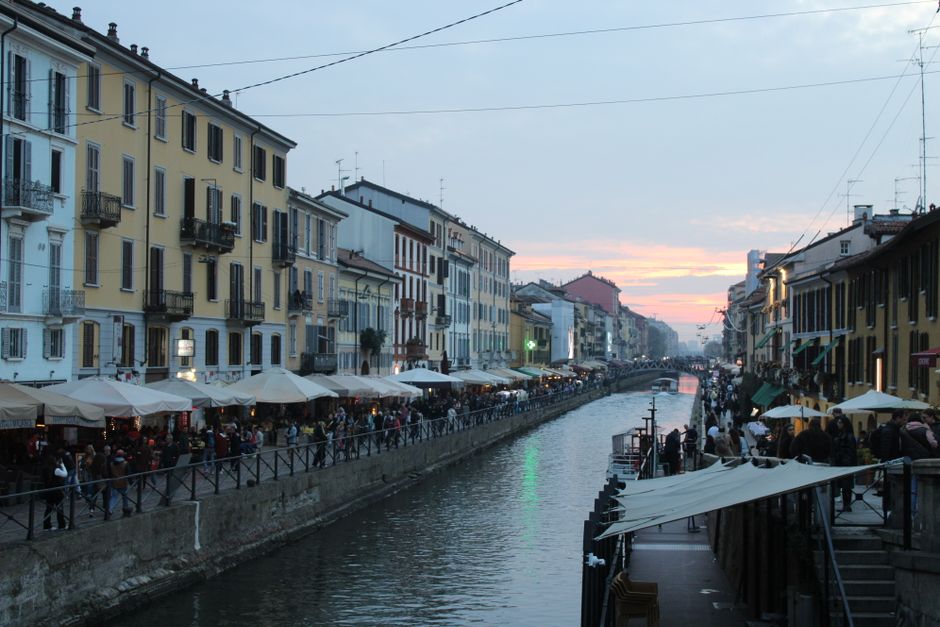
- Evening: Aperitivo at a canal-side bar in nearby Navigli.
This fills a day without tourist rush.
The Bigger Picture
The Pinacoteca di Brera is where you understand Milan's artistic heritage. It's not as famous as Uffizi (Florence) or Vatican Museums (Rome), but it's more focused and less overwhelming.
For full context on how this museum fits into a Milan cultural itinerary and which neighborhoods offer the best art experiences, our Milan guide covers that.
Summary
Visit the Pinacoteca di Brera instead of, or in addition to, the Duomo. 90 minutes with these paintings will do more to reshape how you see visual art than a week of museum-hopping.
The collection is authoritative, the museum is beautiful, and you'll encounter real Italian art without the crowds.
Master Milan in Minutes
Don't waste hours planning. Get our condensed, digital cheat sheet with everything you actually need.
Shop Guide on Etsy →