 ConciseTravel

Ostuni is the town on the postcards: a hill of whitewashed houses rising out of olive groves, with a cathedral at the top and the Adriatic glinting a few kilometres away. In person it lives up to the photos, but it is a different kind of trip from a big-city break. Here is what a first visit is really like.
It is small, and that is the point
The old town, the centro storico, is compact enough to cross on foot in 15 minutes. You will cross it many more times than that, because the fun is in getting slightly lost. Lanes fold back on themselves, staircases appear between houses, and every few minutes a gap opens onto the plain below.
Don't come expecting a long list of sights. Come for the atmosphere, the evening light on white walls and the long Puglian meals.
Expect steps, lots of them
The old town is built on a hill, and the lanes are steep, stepped and often polished smooth. Comfortable shoes with grip are essential. If you have limited mobility or are travelling with a pushchair, stay in the newer town at the bottom of the hill and visit the old town in short bursts.
The best moments come at the edges of the day
In summer, day-trippers fill the main lanes from late morning. Early morning, before the shops open, the town belongs to residents sweeping their doorsteps. Then the evening passeggiata brings everyone back out as the white walls turn gold and pink.
If you can, stay overnight rather than visiting on a day trip. The town after the coaches leave is the version worth seeing.
The cathedral and the views
The 15th-century cathedral at the top of the old town is the natural focal point, with a beautiful rose window. From the walls around the edge of the old town you look out over thousands of olive trees to the sea, which is the view most people remember.
It works best as a base
Ostuni sits in the middle of some of Puglia's best scenery. Within easy reach you have:
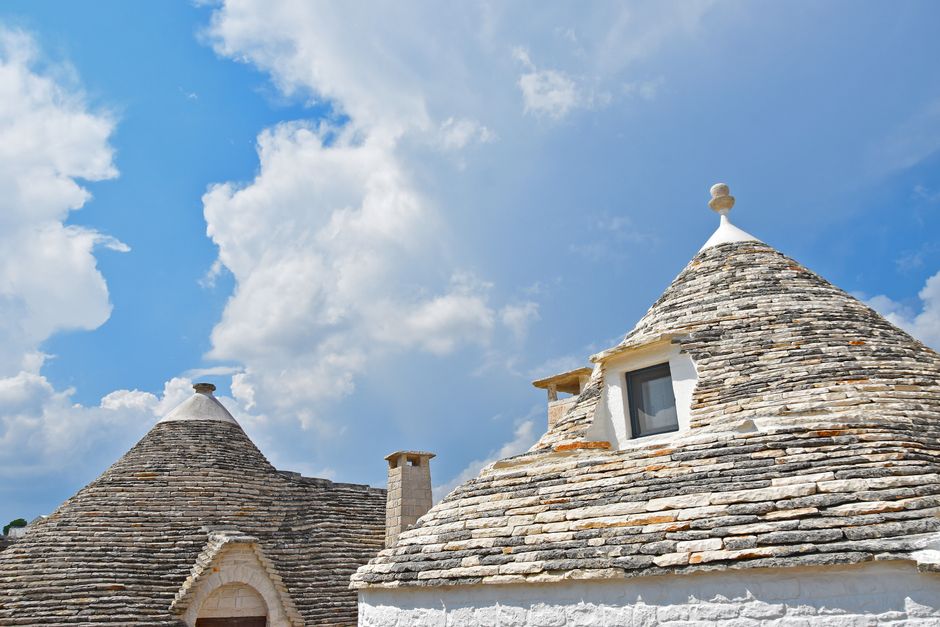
- the trulli of Alberobello and the Itria Valley
- the coast and its beaches, some 15 minutes' drive away
- whitewashed hill towns like Locorotondo and Cisternino
That makes it a good base for three or four nights rather than a one-night stop. Accommodation ranges from rooms inside the old town to masserie (fortified farmhouses) in the countryside, which are worth searching for on Booking.com if you have a car.
Getting around
A car makes the most of the area, but it is not essential for the town itself. Ostuni has a railway station on the coastal line between Bari and Lecce, a short bus or taxi ride below the town. Inside the old town everything is on foot.
When to go
Late spring and early autumn are ideal: warm enough for the beach, quiet enough to enjoy the lanes. July and August are hot and busy. Winter is very quiet, and some restaurants close, but it has a peaceful charm of its own.