 ConciseTravel

Michelangelo in Bruges: Visiting the Church of Our Lady and Its Surprising Masterpiece
It's a marble Madonna and Child. It's been here for 500 years. It's exquisite. And most tourists have no idea it exists.
The Church of Our Lady (Onze-Lieve-Vrouwekerk) is that church. Here's what you need to know and why it's worth the detour.
The Sculpture: Why It's Here
The Madonna and Child was created by Michelangelo around 1504. Marble, about 1.3 meters tall, depicting Mary with the Christ child. It's tender, intimate, and recognizably Michelangelo in its proportions and mastery of the human form.
It was commissioned by a Bruges merchant family. During the Renaissance, wealthy merchant cities like Bruges (yes, it was a major trading hub then) could afford masterworks. A rich cloth merchant named Jean Mouscron paid for it.
After centuries in Bruges, it's now in the church's side chapel, behind glass, well-maintained, and visited by maybe 1% of Bruges' tourists.
Why is it significant? Michelangelo rarely sold his work outside Italy. He was in demand across Europe, but he mostly refused commissions from non-Italian patrons. This sculpture is an exception—a testament to Bruges' medieval wealth and importance.
The Church: More Than Just the Michelangelo
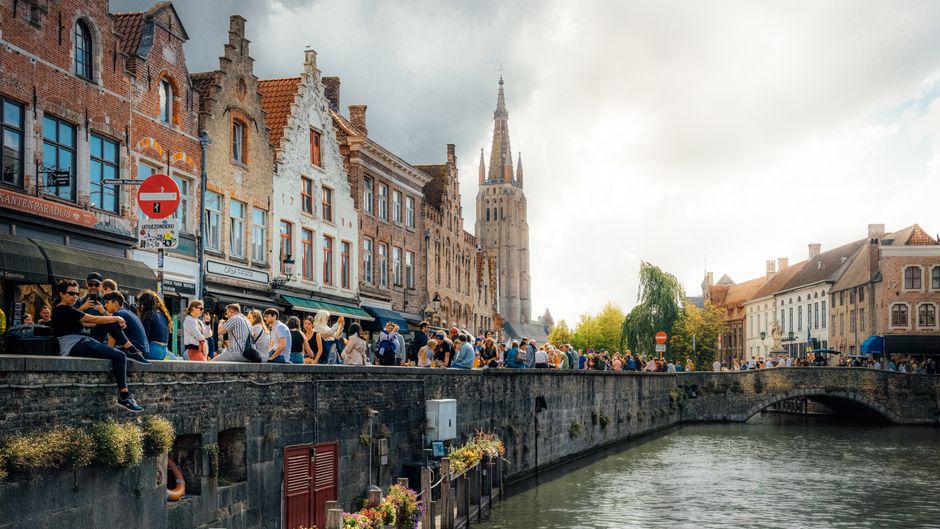
The Church of Our Lady is a sprawling brick Gothic structure, one of the oldest churches in Bruges, dating to the 13th century. It's massive and worth visiting on its own.
What You'll See
The main nave: Brick Gothic with soaring columns and vaulted ceilings. It's simple compared to ornate cathedrals elsewhere, but that simplicity is its charm. Light moves through stained glass. The space feels ancient and lived-in.
Multiple side chapels: Filled with art, tombs, and religious artifacts. Some are incredibly detailed. Others are spare. The variety is part of the experience.
The Michelangelo chapel: A side chapel (usually the south transept) holds the marble Madonna. It's cordoned off, lit, and presented respectfully. You can get close, but you're viewing through Plexiglas.
Other artworks: The church houses paintings and sculptures from various periods—Medieval, Renaissance, Baroque. If you like art history, you could spend 90 minutes here. If you just want the Michelangelo, 20 minutes is enough.
Why You Should Visit (Beyond Michelangelo)
Even without the world-famous sculpture, the Church of Our Lady is worth seeing because:
- It's genuinely beautiful. Brick Gothic is a Flanders specialty, and this church is a masterclass in it.
- It's not crowded. Unlike the Belfry or Rozenhoedkaai, you might be alone here. The silence is remarkable.
- It tells you about medieval Bruges. The church's size and art collection speak to how wealthy and important Bruges was. Understanding this context makes the entire city make more sense.
- The light is incredible. Especially late afternoon, when sun hits the stained glass and colors move across the floor.
Visiting Logistics
Entry: €3–5 donation.
Hours: 10am–5pm (roughly; varies by season and services).
Location: South of the Market Square, along Sint-Jansstraat or near the Begijnhof.
How long: 20 minutes if you're just seeing the Michelangelo. 60 minutes if you explore all the chapels and art.
Photography: Generally okay, but flash is discouraged. Check signs.
Best time: Early morning (before 10am) or late afternoon (after 4pm). Weekday visits are quieter.
Standing in Front of Michelangelo
When you see the sculpture, take a moment. Michelangelo carved this. His hands shaped this marble. It traveled from Italy to Bruges 500 years ago and never left.
The tenderness between Mary and the child is striking. It's not overly sentimental—that's not Michelangelo's style—but it's deeply human. The forms are perfect; the emotion is real.
You're standing in front of one of the few pieces of Michelangelo's work outside Italy. That's worth the 3-euro donation alone.
The Broader Context: Bruges in the Renaissance
Bruges was wealthy. Like, absurdly wealthy. It was the trading hub of Northern Europe. Cloth, spices, honey, furs—everything flowed through Bruges. Merchants here could outbid Italian nobles for works of art.
This sculpture is evidence of that. The merchant who commissioned it was saying: "I'm so rich, I can have Michelangelo carve my Madonna."
Understanding this changes how you walk through medieval Bruges. The buildings, the wealth, the art—it's not just picturesque. It's a window into one of Europe's most important cities at its peak.
Should You Visit?
Yes. Even if you don't care about Renaissance sculpture, the Church of Our Lady is beautiful and quiet. Add the Michelangelo sculpture and you've got one of the best art experiences in Bruges.
Time it well: Go early in your trip so you understand the context. Then return at dusk if you have time—the light is magical.
Combine with the Begijnhof: They're in the same area. You can visit both in a 90-minute walk, which gives you the quiet, spiritual side of Bruges away from the Market Square.
The Church of Our Lady proves that Bruges was once the heart of European trade and culture. The Michelangelo sculpture is the jewel in that crown. Spend 30 minutes here, understand the history, and let it inform how you experience the rest of the city. Our full Bruges guide covers every historical site and artwork—the context that makes them matter.