 ConciseTravel
Getting ill on holiday is annoying. It is rarely a crisis if you know how the system works. Here is what to do depending on how serious things are.
Finding a Pharmacy
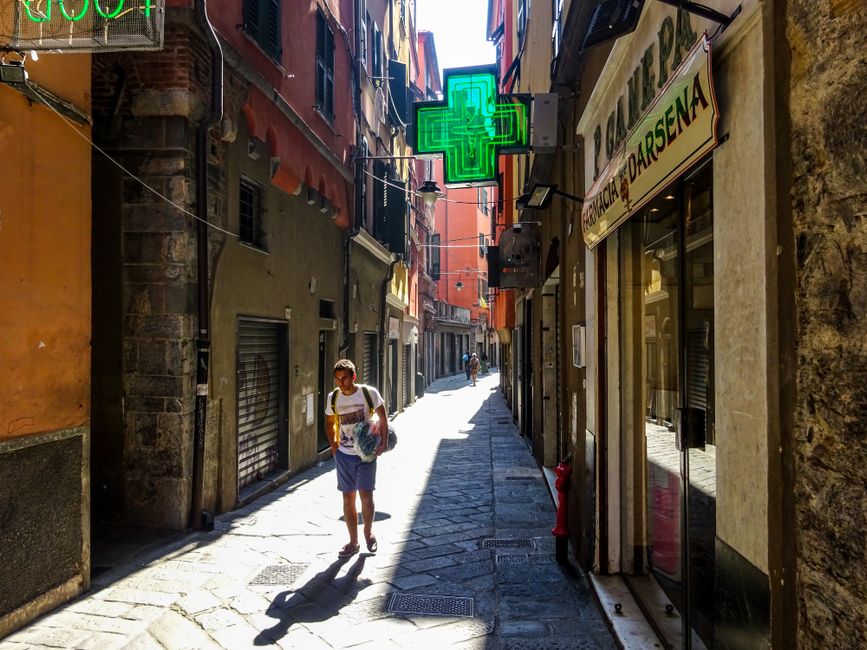
In most of continental Europe, pharmacies are marked by a green cross sign, often illuminated. In Spain they say Farmacia, in France Pharmacie, in Italy Farmacia, in Germany Apotheke. You will spot them everywhere in city centres.
For minor ailments, including stomach issues, mild infections, pain, or skin problems, a pharmacist can advise and dispense medication. Pharmacists in Europe are more empowered to prescribe and recommend than in the UK. They are often the fastest option.
To find one open outside normal hours, use Google Maps and search "pharmacy near me" or "pharmacie de garde" in France. Most cities have a duty rota, and the closed pharmacy will often display the address of the nearest open one in the window.
Seeing a Doctor: Your GHIC Card
The Global Health Insurance Card (GHIC) replaced the EHIC for UK travellers after Brexit. It entitles you to state-provided healthcare in EU countries at the same rate as local residents. For a GP visit or hospital treatment in an EU country, you should not be charged more than locals pay, which in many countries means paying nothing or a small co-payment.
Apply for a GHIC free at gov.uk before you travel. Do not use third-party sites that charge for it.
Important: the GHIC does not work in every country. It covers EU member states. Norway, Switzerland, Turkey, and some other destinations have separate arrangements. Check before you travel.
Private Clinics
State healthcare in Europe can involve queues, language barriers, and waiting times that do not suit a short city break. Private clinics are faster, almost always English-speaking, and will see you within the hour.
Expect to pay £50-200 for a consultation, depending on the city and clinic. A prescription will cost extra. Keep all receipts for your travel insurance claim.
Your travel insurer may have a list of approved clinics, or a 24-hour line that can direct you. If the situation is not urgent, call them first, as they can sometimes pre-authorise treatment and pay directly.
When to Go Straight to A&E
For anything serious — chest pain, serious injury, difficulty breathing, severe allergic reaction — go straight to the nearest hospital emergency department or call 112.
Use Google Maps and search "hospital" to find the nearest one. State hospitals in France, Spain, and Germany are well-equipped and your GHIC will apply.
What to Pack
A basic travel medical kit removes the need for a pharmacy run for most minor issues: paracetamol, ibuprofen, antihistamines, rehydration sachets, plasters, and any prescription medication you take regularly. Bring extra of anything prescribed. Getting a repeat prescription filled abroad in a short timeframe is possible but slow and stressful.