ConciseTravel
The Dom Luís I Bridge is Porto's most recognizable structure: a massive double-deck iron bridge completed in 1886, spanning the Douro River, connecting Ribeira (north) to Vila Nova de Gaia (south). You can see it from everywhere. You can walk across it on two different levels. Walking the upper deck is one of those experiences that looks like it'll be 20 minutes and actually takes 45, but absolutely justifies the time.
The Bridge Basics
Two decks, two experiences:
- Lower deck: For cars and pedestrians, 44 meters above the water. You can walk across here anytime. It's fine. Enclosed, practical, feels safe.
- Upper deck: For the metro only—except pedestrians can walk it too. 45 meters higher than the lower deck. Open to the elements. Genuinely dramatic. This is why you're here.
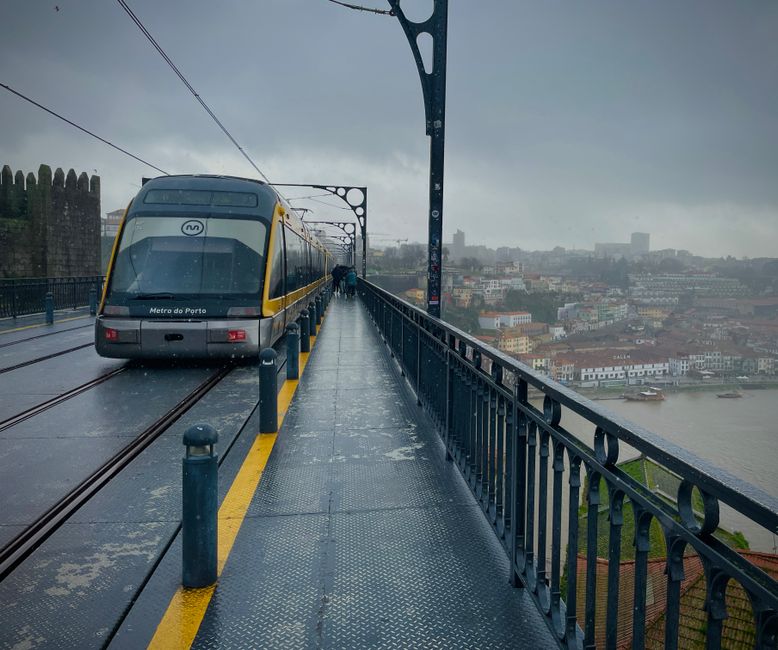
The upper deck walking experience: You access it from stairs at the Ribeira (north) side. No elevator. You climb about 240 steps to reach the pedestrian walkway alongside the metro tracks. Once up there, you're 83 meters (273 feet) above the river walking alongside active metro trains. It's phenomenal and slightly terrifying in equal measure.
Time commitment: 45 minutes total if you're moving steadily and taking some photos. 60+ minutes if you're lingering for views or getting atmospheric shots.
Walking the Upper Deck: What Actually Happens
The climb up: Narrow, winding stairs. About 240 steps. They're not steep, but they're continuous. If you have mobility issues, stop here—the lower deck is your limit. If you're okay with sustained climbing, you'll reach the upper walkway a bit breathless but fine.
The upper walkway: A narrow metal platform alongside active metro tracks. On one side: the river, 83 meters below, constantly framing your view. On the other side: occasionally passing metro trains (they won't hit you—the walkway is separate from the tracks, but they're close enough to feel the rumble). The platforms are grated steel, so you can see through them to the drop below. Some people find this exhilarating. Some people find it deeply unsettling. Both reactions are valid.
The views: 360-degree panorama of Porto's geography. Upstream, the river winds through valleys toward the Douro Wine Valley. Downstream, the river opens to the Atlantic. On both sides of the river, the city stacks vertically—churches, azulejo-tiled buildings, boat tours, the chaos of Ribeira below. On a clear day, you can see beyond Porto entirely.
The wind: It's windy up there. Not "hair in your face" wind. More like "feels like you're flying" wind. Embrace it. It's part of the experience.
The return: You can either retrace your steps down the stairs (easiest) or continue across the entire upper deck to the Gaia side and descend there (more dramatic). Either way, the descent is easier than the climb only because gravity helps.
Timing and Logistics
When to go: Late afternoon (4–5pm) is ideal. Light is golden, crowds are moderate, and you're not climbing in peak heat. Early morning (8–9am) is less crowded but less atmospheric.
Cost: Free. Walking the upper deck is genuinely free, which is astounding for such an iconic experience.
Accessibility: The stairs are narrow and continuous. Not wheelchair-accessible. Not suitable for very young children. The 240-step climb and walkway navigation are significant effort.
Safety: The railings are robust. You won't fall. But if you're afraid of heights, the grated floor (where you can see through to the drop) might trigger vertigo. The lower deck is still available if the upper deck becomes too much mid-walk.
Pro Tips
Go early in the day: Fewer tourists, better light until you're ready to descend.
Bring comfortable shoes: You're walking 45 minutes over metal grating. Flip-flops are a poor choice. Sneakers are perfect.
The lower deck is faster but less interesting: If you're short on time, you can walk the lower deck (10 minutes) and capture the bridge experience. The upper deck adds 35 minutes and exponentially more drama.
Photos from the bridge are stunning but common: The bridge is photographed thousands of times daily. Your photo won't be unique. Take it anyway. It's worth having.
The views change constantly: Morning mist, afternoon clarity, evening light—the bridge looks different depending on time and weather. Visit twice if time allows.
Watch for metro trains: They're frequent and loud. They're part of the experience, not dangerous. The first one will startle you. The second one will thrill you.
The Photography Angle
The Dom Luís I Bridge is one of Europe's most photographed structures. You'll see millions of images: from water level looking up, from Gaia hillside looking across, from the lower deck framing the arches.
The upper deck gives you a third angle: looking down at the chaos of Porto, the river's path, the bridge's engineering. This view is uniquely available from where you are. Take it.
The Engineering Context (If You Care)
The bridge was designed by Gustave Eiffel's student (Théophile Seyrig) and completed in 1886. It's a marvel of iron engineering for its time—the upper deck cantilevers 45 meters across the river without central supports. Seeing it up close, you understand why it's iconic. It's audacious. It's also genuinely old and regularly maintained, which is why you can walk across it without fearing structural failure.
Our Honest Take
The upper deck is worth every step. It's not just a bridge—it's a vertigo-inducing, wind-swept, metro-rumbling, perspective-shifting vantage point of Porto. You can see the city's geography, relationship to the river, and urban density from nowhere else.
The lower deck is adequate if you're time-poor, but it's the tourist equivalent of watching a movie trailer. The upper deck is the full experience.
Master Porto in Minutes
Don't waste hours planning. Get our condensed, digital cheat sheet with everything you actually need.
Shop Guide on Etsy →