ConciseTravel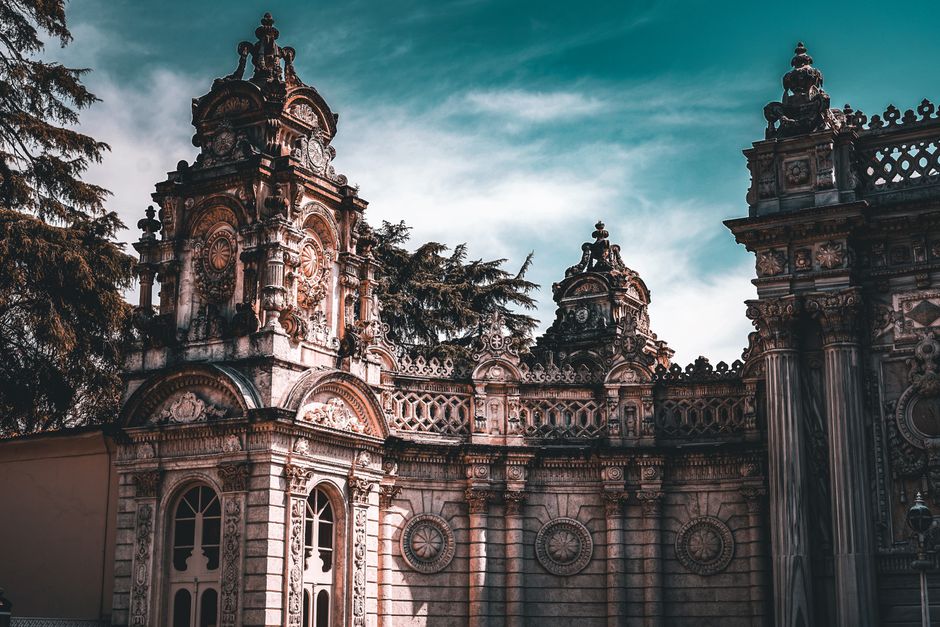
If Topkapi Palace is the Ottoman Empire at its peak, Dolmabahce is the empire trying desperately to prove it's still European-modern. And that tension is actually what makes it fascinating.
Built in 1856, Dolmabahce was a radical shift from the closed, inward-facing Topkapi. It's a palace that says "look, we can be Western too." It's sometimes gaudy, occasionally brilliant, and genuinely weird in ways that Topkapi never is.
The Historical Context (Why It Exists)
In the 1850s, the Ottoman Empire was losing power. European powers were circling. The empire needed to convince the world (and itself) that it was modern and capable.
So they built Dolmabahce. On the Bosphorus. With 4,400 rooms. With crystal chandeliers. With marble everywhere. With a throne room that looks like a 19th-century European ballroom, not an Ottoman chamber.
It's a monument to anxiety. And it's genuinely interesting because of that.
Entry and Logistics
Cost: About 60 euros for the main palace. The harem (women's quarters) is a separate ticket, around 30 euros. Some tours include both.
Hours: 9am-4pm. Closed Mondays and certain Islamic holidays.
Location: Besiktas, on the Bosphorus. Ferry from Eminonu (15 min) or from Karakoy. Or taxi/metro. It's on the water, easy to spot.
Tours: The palace is big and confusing. A guided tour (included or separate) is genuinely helpful. Without one, you're walking through rooms with minimal context.
What Makes Dolmabahce Different From Topkapi
Topkapi is:
- Medieval fortress aesthetic
- Inward-facing (multiple separate courtyards)
- Designed for function and security
- Ottoman in every detail
Dolmabahce is:
- 19th-century European palace aesthetic
- Open to the Bosphorus views
- Designed for display and prestige
- Trying to look French/British while being Ottoman
If Topkapi is architecture, Dolmabahce is a statement of political anxiety made physical.
What You Actually See
The Throne Room: A massive space with a chandelier weighing 4.5 tons. It's excessive. It's also kind of magnificent in a "we spent so much money on this" way. The ceiling is painted, the walls are marble. It's nothing like Ottoman interiors. It's designed to impress foreign dignitaries.
The Crystal Staircase: Genuine Baccarat crystal. It glows. It's beautiful and slightly impractical (maintenance nightmare). But again—the point is that it's there.
Private Chambers: More intimate than the public spaces. Still incredibly decorated but with actual living furniture and personal touches. The last sultan lived here, so some rooms feel almost residential.
The Bosphorus Views: The entire palace is oriented toward the water. The view is unmatched. You're looking across the strait from the European side. Ships pass constantly.
The Harem
The harem (residential quarters for women) is separate. It's less impressive than the main palace but more revealing about daily life. You see bedrooms, bathrooms (with surprisingly good plumbing for 1856), sitting rooms.
Is it worth the extra money? Only if you care about the daily-life aspect. The main palace is the attraction. The harem is supplemental.
Crowds and Timing
Best time: First thing in the morning (when it opens at 9am). You get an hour or so before tour groups arrive. Light is also great on the Bosphorus in early morning.
Worst time: 10am-3pm. Tour groups everywhere. You're shuffling through the Throne Room with 30 other people.
Second best: Late afternoon (3pm-4pm). Quieter as groups leave.
Time Budget
- With a guided tour: 2-3 hours (you learn context, see details)
- Without a tour: 1.5-2 hours (just walking through, reading plaques if you're that person)
- Plus harem: Add 45 minutes
Don't try to do it in 45 minutes. The palace is vast. You'll hate it.
What You Might Be Disappointed By
The palace is sometimes overcrowded and over-touristy. Some people find it gaudy (fair critique). And the loss of the Ottoman aesthetic can feel sad—you're watching an empire trying to be something it's not.
But that's actually the interesting part, if you think about it that way.
Photography
Photos are allowed. Expect decent light from the Bosphorus-facing windows. The throne room is particularly photogenic. Some rooms have restrictions, but generally you're good.
The Bosphorus Location
This is genuinely a bonus. The palace sits on the water. You can see the Asian side clearly. During early morning or late afternoon, the light is perfect for photos of both the palace exterior and the strait.
Grab a ferry back to Eminonu or walk along the waterfront cafes. The location alone justifies part of the visit.
Food and Tea
There's a cafe inside the palace complex. Prices are touristy. Grab a tea and sit on the terrace facing the Bosphorus. That's legitimately pleasant.
How to Get There
Ferry: Besiktas is a ferry terminal. From Eminonu, take the Besiktas ferry (15 minutes, dirt cheap). Walk from the ferry to the palace entrance (5 min).
Metro: The M2 metro goes to Besiktas. Walk from there (10 min).
Taxi: More expensive but direct.
The ferry is honestly the best option. The ferry ride itself is beautiful, and you arrive water-side to the palace.
The Bottom Line
Dolmabahce is worth seeing if you're interested in Ottoman history or you've already done Topkapi. They're complimentary—Topkapi is the empire at its height, Dolmabahce is the empire changing and modernizing.
Dolmabahce is also better than Topkapi if you like 19th-century European aesthetics or if you prefer structured, guided tours.
The main downside: it's less "authentically Ottoman" than Topkapi, and some people find that loss of cultural identity sad or boring.
But taken on its own terms, it's fascinating.
Master Istanbul in Minutes
Don't waste hours planning. Get our condensed, digital cheat sheet with everything you actually need.
Shop Guide on Etsy →