 ConciseTravel
Clérigos Tower is a 75-meter baroque bell tower completed in 1763, standing in the Baixa district of Porto. It's not subtle. You can see it from everywhere (which is why it's easy to navigate to), and from it, you can see everywhere. The climb is 240 steps. The view is worth every one.
The Climb: What You're Actually Doing
The tower structure: Built to house bells for the adjacent Clérigos Church, the tower is hollow inside with a winding wooden staircase spiraling upward. No elevator. No shortcuts. Just you, stairs, and gravity testing your motivation.
The actual climb: 240 steps across roughly eight spiraling sections. The stairs are narrow, worn wooden planks that creak reassuringly. The air gets cooler as you ascend. Natural light enters through small window openings as you go higher. The climb takes 10–15 minutes depending on your pace and how many times you stop to catch your breath (no judgment—everyone stops).
The physical reality: The climb is not technically difficult, but it's steady. You're not ascending steep pitches—you're climbing continuously. If you have knee or cardiovascular issues, take breaks. The wooden railings are stable. The risers are manageable. The primary challenge is cardiovascular, not technical.
The final stretch: The last 20 steps are the steepest. You think you're nearly done, and then they change angle. When you finally emerge at the top, the rush of space and light is disorienting—you've been in a narrow spiral, then suddenly you're in open air surrounded by panoramic views.
The View: Why You're Actually Climbing
The top offers unobstructed 360-degree panorama of Porto:
To the north: The Douro River winding upstream toward the wine valley. You can see the bridges, the Port wine cellars in Gaia stacked on the hillside, and the river's S-curve revealing Porto's geography.
To the south: The river opening toward the Atlantic, the Foz neighborhood where river meets ocean, and the coastal landscape stretching toward Lisbon.
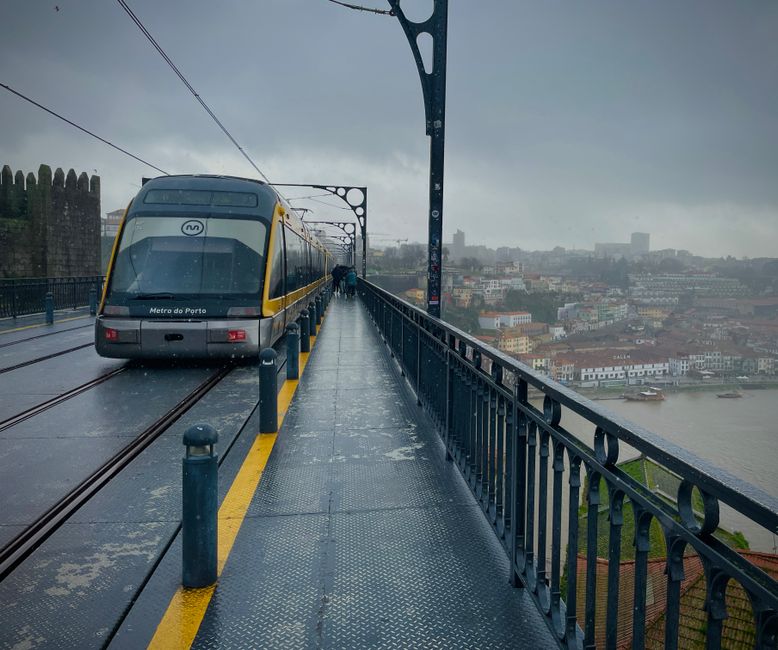
To the west: The Ribeira district cascading down to the river, the medieval rooflines, the church domes and bell towers, the dom Luís I Bridge dominating the landscape.
To the east: The inland city stretching uphill, residential areas, and the urban sprawl of Porto's expansion away from the river.
The quality of the view: On a clear day, you can see roughly 20 kilometers in every direction. You understand Porto's relationship to the Douro, its position between mountains and coast, its urban density, and why it was strategically important as a port city.
Practical Details
Entry cost: €5 per person. Genuinely affordable for the experience.
Hours: Generally 9am–7pm (hours vary seasonally, check ahead). Evening visits mean sunset light, which is golden and romantic.
Time at the top: 10–20 minutes comfortably. You can spend longer photographing, but the essential experience is 15 minutes of processing the view.
Weather dependency: Clear skies are essential. Overcast days reduce visibility dramatically. Rain closes the tower (safety for the wooden stairs). Check the weather forecast before climbing.
Photography: The open-air platform has iron railings at chest height. You can photograph over them. The light reflections off the iron make better shots at certain angles. Bring a phone or camera—the views demand documentation.
The Tower's History
Built 1763 as the bell tower for Clérigos Church, the tower served both spiritual and practical purposes. The bells marked time for the city. The tower's height made it visible for maritime navigation. The church remains one of the city's most important religious structures—baroque architecture at its finest.
You can visit the church as well (different ticket, €3), but the tower is the main event.
Who Should Climb
Do climb if:
- You have reasonable fitness (240 steps is arduous but not extreme)
- Weather is good
- You want the view and don't mind the climb
- You like heights and open-air platforms
Maybe skip if:
- Severe knee/joint issues make stair climbing painful
- You're afraid of heights (the platform has railings, but you are definitely high up)
- Weather is overcast (the view diminishes dramatically)
- You're extremely pressed for time (the round trip is 30 minutes minimum including queuing)
The Photographic Reality
The view from Clérigos is iconic. You'll see thousands of photos online. You'll still want your own—it's different when you're experiencing it in person. The scale is impossible to capture on camera. The sense of the city's geography is only clear when you're surveying it from 75 meters.
The sunset from Clérigos is particularly romantic—golden light over the river, the city's warm tones, the bridges silhouetted. Plan a late-afternoon climb if possible.
The Crowd Factor
Clérigos attracts fewer tourists than the Dom Luís I Bridge but more than most churches. Peak times (10am–4pm) see regular traffic. Early morning or late afternoon is quieter.
The narrow stairs mean groups move single-file. If you encounter a group descending while you're ascending, yielding is expected. The climb feels more intimate because of the tight quarters—you're not jostling with crowds, you're timing your movement around other climbers.
Pro Tips
Wear comfortable shoes: The wooden stairs are worn smooth. Traction is okay, but stable shoes matter.
Bring water: The climb is aerobic. A water bottle helps.
Visit early or late: Fewer crowds, better light, less heat. Early morning (9–10am) is crisp and clear. Late afternoon (5–6pm) is golden and romantic.
Don't expect an elevator: This is part of the charm and the reason the ticket is affordable. You earn the view.
Combine with Baixa exploration: The tower is in Baixa, near Livraria Lello, São Bento Station, and the Clérigos Church. You're already in a culturally dense area.
The descent is easier than the ascent: Mentally prepare for climbing. The descent, even 240 steps downward, feels quicker.
Master Porto in Minutes
Don't waste hours planning. Get our condensed, digital cheat sheet with everything you actually need.
Shop Guide on Etsy →