ConciseTravel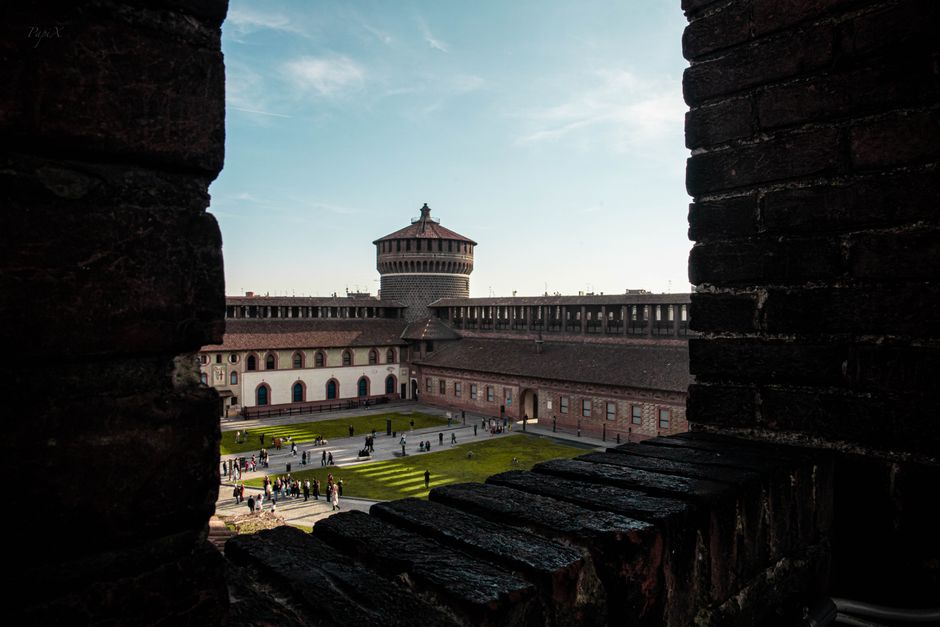
Castello Sforzesco Milan: What to See Inside the Medicis' Fortress (Including Michelangelo's Last Work)
The Castello Sforzesco looms over Milan's northwest quadrant, a red-brick fortress that's been damaged, rebuilt, bombed, and restored. Inside are museums, courtyards, and a Michelangelo sculpture that few visitors know about.
Here's what's actually worth your time.
The History in Brief
The castle was built by the Sforza family (15th-16th century) as a military stronghold. The Medicis later occupied it. Then it became a barracks. Then a warehouse. Then it was bombed in WWII. It's been continuously rebuilt since.
Today it's a public museum complex with multiple collections inside the medieval structure. The fortress itself is the main draw, not necessarily the contents.
The Courtyard (Free)
The main courtyard (Corte Ducale) is free to enter. It's beautiful, arcaded walkways, Renaissance arches, peaceful. Many visitors just come here, enjoy the calm, and leave. That's valid.
Cost: Free.
Time: 15–20 minutes for a stroll.
The Museums Inside (There Are Many)
The Sforzesco complex contains multiple museums:
- Museo d'Arte Antica: Medieval and Renaissance art, frescoes, sculptures. Most important collection.
- Pinacoteca: Paintings (less impressive than Pinacoteca di Brera).
- Museum of Musical Instruments: Historic instruments.
- Museum of Decorative Arts: Furniture, textiles, ceramics.
- Museum of Ancient Glass, Coins, etc.: Smaller, specialized collections.
Honest assessment: Most visitors focus on #1 (Museo d'Arte Antica). The others are optional.
Michelangelo's "Rondanini Pietà"
Michelangelo's final work, a sculpture he was still carving weeks before his death at 88, lives in the Sforzesco.
What it looks like: A fragmented image of Mary holding Christ. Incomplete. The back is rough, unfinished. Only the front is defined.
Why it matters: It's Michelangelo at his most abstract and spiritual. Not the polished perfection of his David or Vatican Pietà, but raw, seeking, unresolved. It's his last conversation with form.
Location: Ground floor of the Castello, Museo d'Arte Antica.
Time needed: 10 minutes of standing before it. Longer if you're thinking deeply.
This sculpture alone justifies a Sforzesco visit.
What Else is Worth Seeing
Frescoes and Panels: The Museo d'Arte Antica holds surviving Renaissance frescoes from Milan's churches. They're beautiful and give context to Milan's Renaissance period.
Armor and Weapons: The Sforzesco has a decent arms collection, reflecting its military history. It's interesting if you like that sort of thing.
The Views from the Walls: If you can access the castle's upper walls (check current access), the view across Milan's northwest is excellent. Modern Milan spreads below historic walls.
Practical Information
Hours: Tues–Sun 9am–5:30pm. Closed Mondays. (Check ahead; hours vary seasonally.)
Cost:
- Courtyard: Free.
- Museums: €10 (or €5 for Museo d'Arte Antica only). Check the official site for current pricing.
- Audio guide: €5.
Duration:
- Quick courtyard walk: 20 minutes.
- Museo d'Arte Antica (essential): 1 hour.
- Everything else: 2–3 hours if you're thorough.
Advance booking: Not required. Walk-in works, though book if you want to feel secure.
Nearest metro: Cairoli (Line 1), 2-minute walk.
The Bigger Picture: Why the Castle Matters
The Sforzesco is Milan's historical anchor. It represents:
- Milan's power during the Renaissance (Sforza family ruled).
- Milan's resilience (bombed in WWII, rebuilt completely).
- Milan's commitment to preserving beauty even in military structures.
Standing in the courtyard, you're standing in a space where power was exercised, art was patronized, and history happened. That's worth something beyond the specific artworks.
Pro Tips
- Go early (9:30am) or late afternoon. School groups clog midday.
- Skip the other museums if time is tight. Focus on Michelangelo's sculpture and the Renaissance frescoes.
- Sit in the courtyard with coffee.30 minutes of quiet contemplation is more valuable than rushing through museum rooms.
- Use the audio guide for Michelangelo. It provides context that deepens the experience.
- Take photos of the Pietà. It's allowed and the sculpture is photogenic from multiple angles.
Combining Visits
The Sforzesco is near Parco Sempione (a large park). You can combine:
- Morning: Sforzesco museums (1–1.5 hours).
- Mid-morning: Parco Sempione walk (45 minutes).
- Lunch: Nearby cafe or restaurant.
Or combine with Brera neighborhood (20-minute walk east).
Honest Assessment
The Sforzesco exterior is more impressive than the interior. The castle, the courtyard, and Michelangelo's Pietà are essential. The other museums are secondary.
For a one-day Milan itinerary, focus on:
- Duomo and its roof.
- Sforzesco courtyard and Michelangelo sculpture.
- Pinacoteca di Brera.
That's Milan's cultural core.
The Bigger Context
The Sforzesco shows Milan as a military power and artistic patron. For how this fits into broader Milan culture, history, and neighborhood context, our Milan guide covers that.
Summary
Visit the Castello Sforzesco for three things: the fortress structure itself, Michelangelo's final sculpture, and the Renaissance art inside. The castle is as much history as building; understanding it gives you deeper access to Milan's identity.
Allow 90 minutes minimum. You'll leave understanding something essential about Renaissance Milan and human ambition.
Master Milan in Minutes
Don't waste hours planning. Get our condensed, digital cheat sheet with everything you actually need.
Shop Guide on Etsy →