 ConciseTravel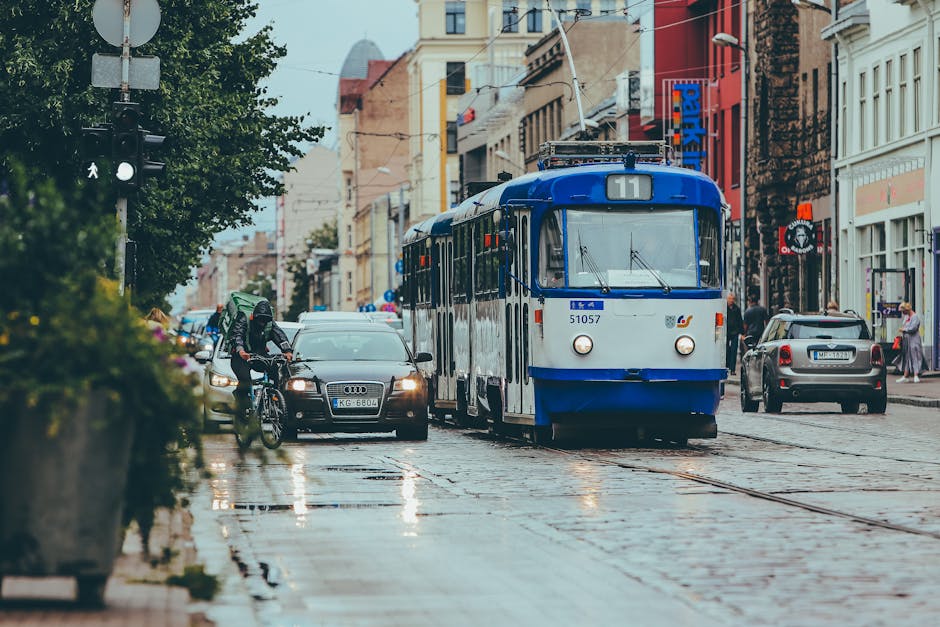
The most sustainable European city break is not the one with the most eco-labels. It is the one you can reach by train, get around without a car, and where the existing infrastructure already runs on clean energy. These five cities meet that standard comfortably.
The Cities
Amsterdam
Amsterdam's cycling infrastructure is the most developed of any major European city. The city has more bikes than people, separated cycling paths on almost every main route, and a public transport network that integrates with cycling through bike parking at every tram and metro stop. Walking and cycling account for the majority of journeys in the central city. The environmental argument for Amsterdam is not just the infrastructure: the city's canal belt geography limits sprawl and keeps distances short. Reachable from London by Eurostar and direct train in around 4 hours.
Best for: travellers who want a city where low-impact transport is the default rather than the alternative.
Copenhagen
Copenhagen has made formal commitments to carbon neutrality that go further than most European capitals, and the built environment reflects it. The cycling network is extensive and heavily used, the harbour clean enough to swim in, and the metro and S-tog rail system now runs on 100% renewable electricity. The city's food culture has also shifted toward sustainability in ways that filter into restaurants at most price points, not just the Michelin-starred ones. Reachable by Eurostar to Brussels, then train via Hamburg and Copenhagen, or by direct flight with the trade-off acknowledged.
Best for: travellers who want a city where sustainability is embedded in policy and culture rather than just marketing.
Vienna
Vienna's public transport system runs on 100% renewable electricity and covers the city comprehensively: the U-Bahn metro, trams, and buses reach every neighbourhood. A 24-hour or 48-hour transit pass costs very little and eliminates any need for taxis or cars. The Ringstrasse and the city's compact core are walkable. Vienna is reachable by overnight train from London via Paris and Munich using the Nightjet service, which means arriving without flying is genuinely practical. The city also has an extremely low waste culture, high recycling rates, and water infrastructure that produces drinking water directly from Alpine springs.
Best for: travellers who want a city that functions entirely without a car, with a train journey from the UK as a realistic option.
Zurich
Zurich's tram network is one of the best in the world: frequent, punctual, extensive, and efficient. The city is small enough that trams cover most of what you would want to reach, and Switzerland's broader rail network means Zurich integrates seamlessly with Basel, Bern, Lucerne, and the wider country. The city scores exceptionally on air quality, water quality (the Zürichsee and Limmat rivers are clean enough to swim in regularly), and energy infrastructure. Zurich is reachable by Eurostar to Paris and TGV to Basel, then direct train.
Best for: travellers who want world-class tram infrastructure, clean swimming water in the city, and onward Swiss rail connections.
Ljubljana
Ljubljana's old town is car-free, and the city has been steadily expanding its pedestrianised and cycle-friendly zones since the mid-2000s. It is one of Europe's smallest capitals, which means walking is a genuine primary transport mode rather than an aspiration. The city has won European Green Capital awards and takes urban sustainability seriously at both planning and lifestyle levels. Ljubljana is less well-connected by direct train from the UK, but it pairs naturally with Vienna or Zagreb as part of a Balkan or Central European route entirely by rail.
Best for: travellers who want the most car-free, pedestrian city on the list, and are building a slower multi-city European rail trip.