 ConciseTravel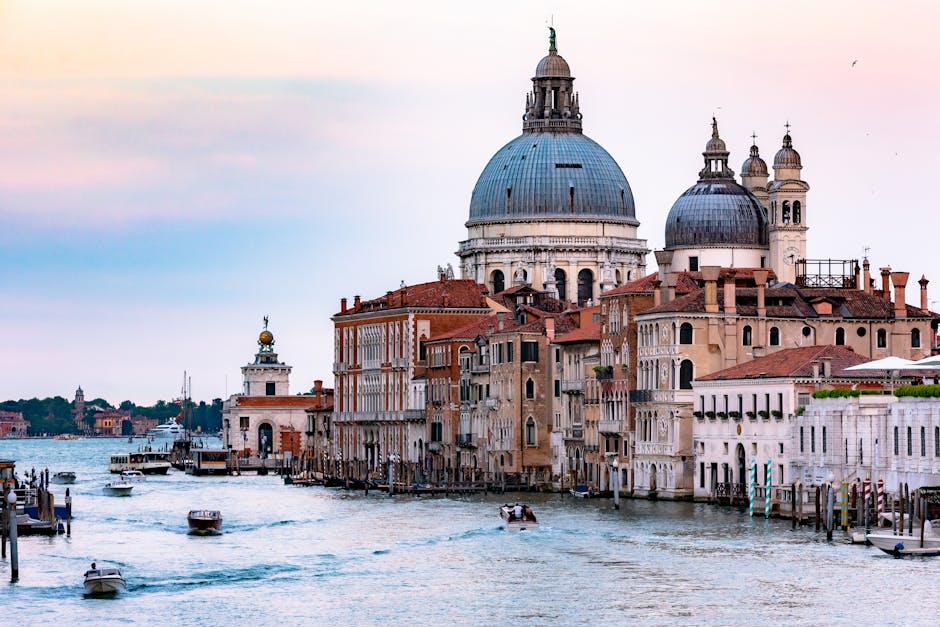
Water shapes a city in ways roads never quite manage. These six cities have built entire identities around their canals and rivers — the architecture, the culture, the daily rhythm. All of them are worth visiting for it.
The Cities
Amsterdam
Amsterdam has roughly 100 kilometres of canals arranged in a deliberate arc around the medieval centre. The Grachtengordel — the UNESCO-listed canal ring — is the obvious draw, but the real character lives in the smaller side canals of Jordaan and De Pijp, where houseboats line the banks and locals cycle along the water with zero interest in your camera. Canal cruises are worth doing once; walking the canal ring at dusk is worth doing every evening.
Best for: Architecture nerds who also want a drink on a terrace by the water.
Venice
Venice is the most extreme canal city on earth — no roads, no cars, just 150 canals and 400 bridges connecting 118 islands. The Grand Canal is genuinely jaw-dropping, and the vaporetto (water bus) is both the main transport system and the best sightseeing route in the city. Beyond the tourist crush around the Rialto, the outer sestieri of Cannaregio and Castello feel genuinely lived-in. Stay at least two nights: the city at 7am, before the day-trippers arrive, is something else.
Best for: Anyone who wants to understand what a city without cars actually feels like.
Bruges
Bruges sits at the opposite end of the scale from Venice: quiet, compact, and extraordinarily preserved. Its medieval canal network threads through the historic centre, past guild houses, beguinages, and chocolate shops. The Rozenhoedkaai viewpoint is overshot by every photographer in Belgium, and rightly so. Take a boat tour for the perspective, then walk the canal paths on your own. It's small enough to cover everything in a weekend.
Best for: A romantic weekend that doesn't require much planning.
Copenhagen
Copenhagen's canal culture centres on Nyhavn — the famous coloured-house harbour that appears on every travel poster. The reality is even better: the inner harbours have been cleaned up to swimming standard, and locals actually jump in during summer. Christianshavn, across the water from the centre, is the neighbourhood to spend time in — canal-side cafes, independent shops, and a genuinely relaxed pace. The harbour bus connects it all for next to nothing.
Best for: Canal cities with proper swimming and a Nordic food scene.
Ghent
Ghent is Bruges without the tourist saturation. The canal network is less extensive but the medieval core around the Graslei and Korenlei quaysides rivals anything in Belgium. The city has a strong university population which gives it an energy Bruges lacks — there are good bars, live music venues, and restaurants that aren't aimed at day-trippers. Two hours from London by Eurostar via Brussels, it's one of Europe's most underrated short breaks.
Best for: Canal lovers who want a city with actual nightlife attached.
Porto
Porto's river culture runs along the Douro rather than canals, but the relationship between the city and the water is as compelling as anywhere on this list. The ribeira (riverside district) is a UNESCO-listed waterfront of crumbling townhouses and wine lodges, connected to Vila Nova de Gaia across the river by the iconic Dom Luis bridge. The rabelo boats moored along the bank were once used to transport wine barrels from the Douro Valley — many are still in use for tourist cruises that are actually worth doing.
Best for: River culture with wine cellars and bridge walks thrown in.