 ConciseTravel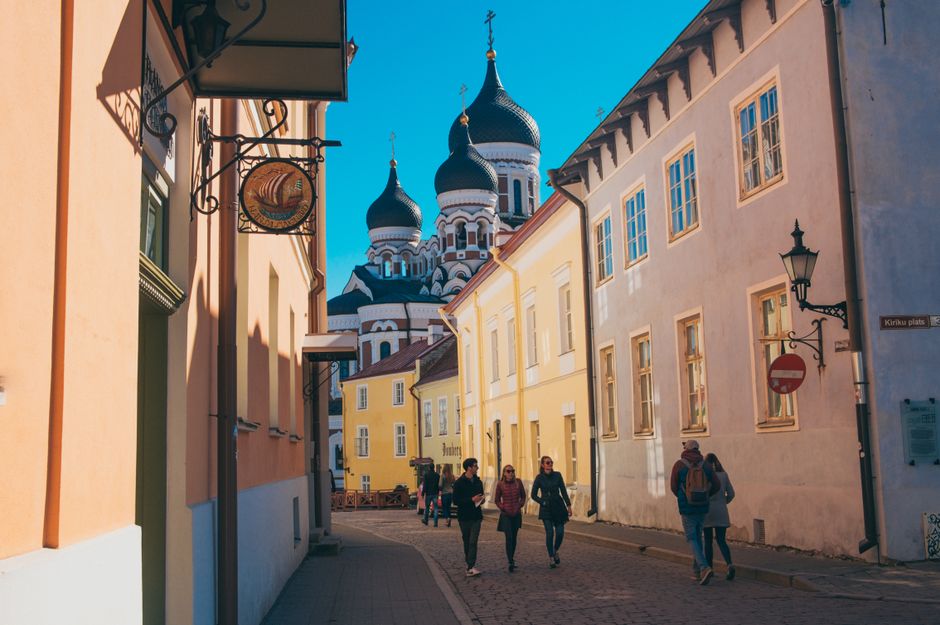
Village energy is not the same as charming. Plenty of cities are charming — decorated, preserved, pleasant to walk through. Village energy means something different: the sense that you recognise faces after a day, that the streets have a pace you can match without effort, that you are in a place rather than passing through a backdrop. These six destinations deliver it.
The Cities
Tallinn
Tallinn's Old Town is contained within medieval walls and covers an area small enough to walk end to end in twenty minutes. Within those walls, the rhythm genuinely slows. The Toompea (Upper Town) neighbourhood, with its viewpoints, churches, and near-empty streets in the early morning, has a village quality that is startling given Tallinn's status as a European capital. The city is large enough to offer restaurants, bars, and culture, but the historic core has the intimate scale and the pedestrian priority that makes you feel like a resident rather than a visitor. Outside the summer peak, the crowds thin to almost nothing.
Best for: Medieval village atmosphere inside a functioning European capital.
Galway
Galway is a city by designation and a town by feel. The medieval Latin Quarter, the Spanish Arch area, and the Salthill promenade all operate at a pace that makes a few days feel genuinely restorative. The city has a strong live music culture that fills its pubs without overwhelming them, and the Claddagh neighbourhood — the old fishing village absorbed into the city — still has a distinct village identity. The surrounding landscape (Connemara to the north, the Aran Islands accessible by ferry) amplifies the sense of being somewhere specific rather than somewhere generic. You will hear your name from across the street by day two.
Best for: Irish town warmth and pub culture that has not been polished smooth.
Bruges
Bruges is technically a city but operates entirely at village scale. The historic centre is surrounded by canals and largely car-free, which gives it a quiet that feels almost anachronistic. The streets empty at night in a way that no large city ever does, and the morning light on the canals, before the day-trippers arrive, is genuinely peaceful. The city has good restaurants, serious beer culture, and enough museums to sustain several days, but the overwhelming feeling is of smallness — in the best sense. The horse-drawn carriages and the church bells are not affectations; they are simply how Bruges sounds.
Best for: Quiet, walkable, and genuinely small — village scale with excellent food and beer.
Valletta
Valletta is the smallest capital city in the European Union, with a population of around 6,000 within the city walls. It is a grid of Baroque streets, most of them traffic-restricted, contained on a narrow peninsula between two harbours. The scale is so intimate that locals genuinely know each other and visitors become familiar within hours. The recent wave of cultural investment — Renzo Piano's redesigned city gate, the MUZA national museum — has raised the quality without expanding the footprint. Walking from one end to the other takes fifteen minutes. Everything is within fifteen minutes.
Best for: The smallest capital in the EU — a genuine village that happens to have a parliament.
Ljubljana
Ljubljana is Slovenia's capital, but its population of around 280,000 and its compact, largely pedestrianised centre give it a scale that feels closer to a prosperous university town than a European capital. The Triple Bridge, the castle hill, and the cafe-lined Ljubljanica riverfront are all within a short walk of each other, and the city's habit of closing its central streets to traffic for long periods makes the atmosphere genuinely unhurried. The food scene, wine bars, and craft beer culture are all well above what the city's size would suggest. It is consistently one of the most liveable-feeling cities in Europe.
Best for: Pedestrianised riverfront city that moves at a pace you can actually keep.
Porto
Porto proper — Ribeira, Bonfim, Miragaia, the historic riverside — has a neighbourhood intimacy that the city's growing reputation has not yet erased. The steep streets, the azulejo-tiled facades, and the wine lodge culture across the river in Vila Nova de Gaia all concentrate in an area compact enough to feel personally navigable within a single day. Porto lacks the polished anonymity of Lisbon's tourist-facing neighbourhoods: the locals are present, the streets are lived-in, and the corners are irregular enough to produce genuine surprise. It is a real city that still feels like several villages placed end to end.
Best for: A working port city with the texture and intimacy of a neighbourhood rather than a destination.